Research

Friday, December 19, 2025

Our top 12 trending stories of 2025

by Darren McAlmont, University Relations

This year brought countless reasons to celebrate as Waterloo students, alumni and researchers took bold new steps to innovate and create solutions for a complex future. 

As we wrap up 2025, we reflect with pride and share just a glimpse of student success, on-campus initiatives and groundbreaking research of our Waterloo community. 

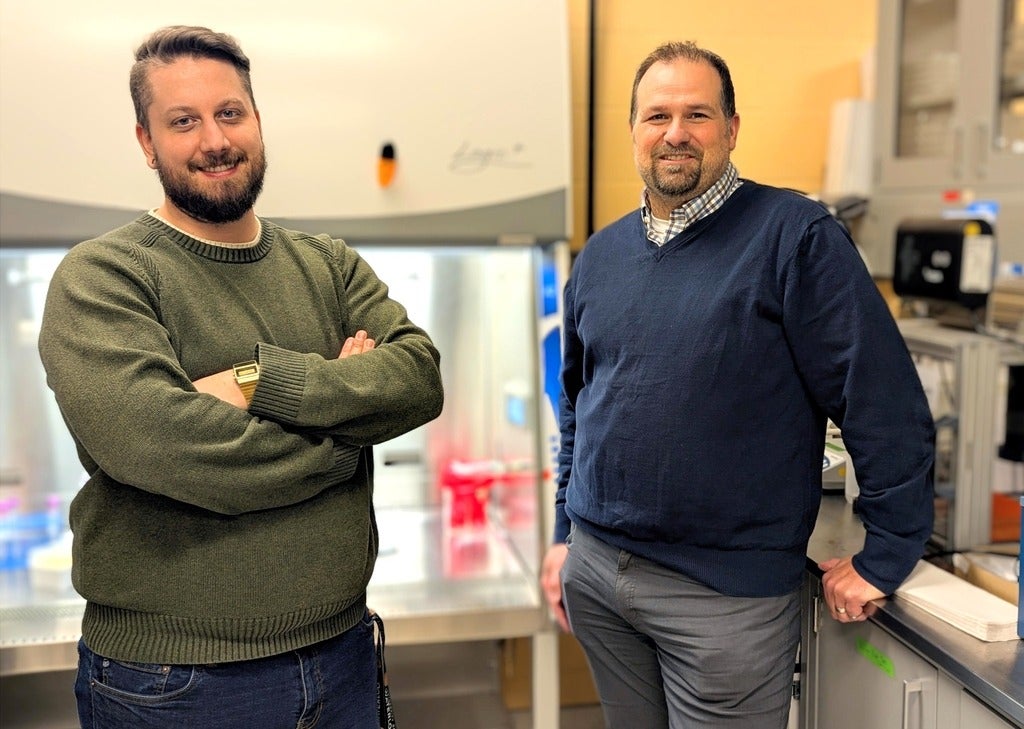
If it feels as though more people get sick when the weather turns cold, that’s because they do. Dr. Brian Dixon, a professor in the Department of Biology at the University of Waterloo, says there is a connection between outside temperatures and our bodies. He recently collaborated with Dr. Julie Old from Western Sydney University on a recent academic paper and an informative video on temperature and immunity.

Can you catch a cold from the cold?

Friday, December 12, 2025

Rockin’ around the sustainable Christmas tree

by Chantal Vallis, Faculty of Environment

A balsam fir for its sweet fragrance or a white pine for its soft needles?

Picking a real Christmas tree is a beloved tradition for many and a proven environmentally friendly choice. But as our climate changes, tree growers are having to adapt to new conditions from shifting seasons to the arrival of unfamiliar pests. While the challenges are significant, innovation is growing.
Wednesday, December 10, 2025

Quantum computers learn how to simulate quarks

by Institute for Quantum Computing

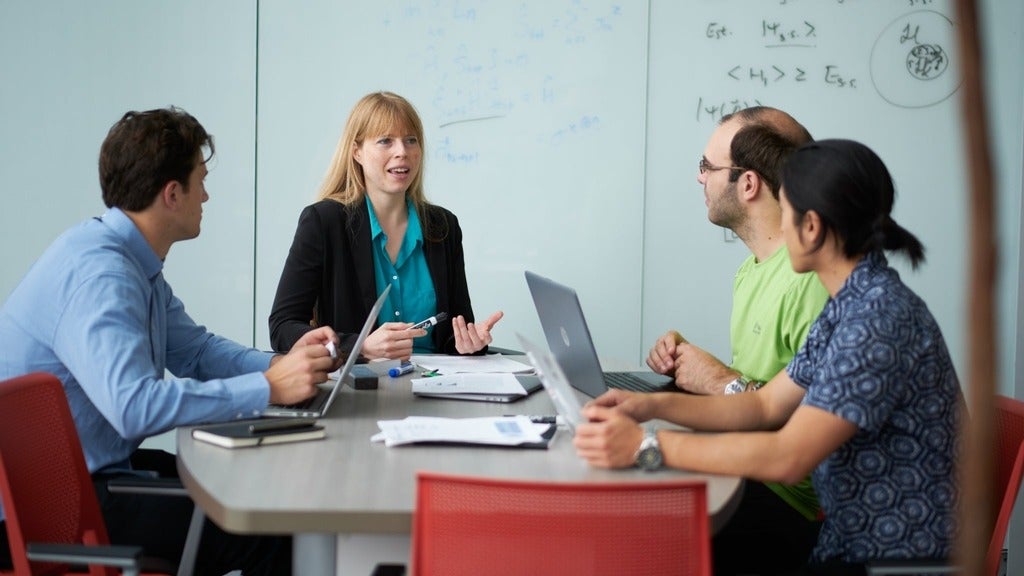
Researchers at University of Waterloo’s Institute for Quantum Computing (IQC) have reached a milestone in quantum information science: using a quantum computer to simulate how matter can behave in extreme environments, like the early universe after the big bang. 

Tuesday, December 9, 2025

Giving history a voice

by Sam Charles, University Relations

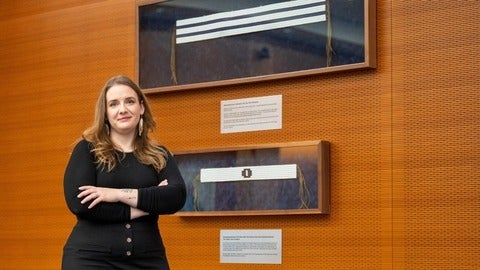
In her role as associate director of Science Indigenous Initiatives at Waterloo, Savannah Sloat has plenty of opportunities to interact with students, faculty and members of Indigenous communities in the region. As a Tuscarora educator and a registered member of Six Nations of the Grand River, Sloat focuses her work on community identity, politics and personhood.

Tuesday, December 9, 2025

Making powerful AI more accessible to everyone

by Media Relations

A much faster, more efficient training method developed at the University of Waterloo could help put powerful artificial intelligence (AI) tools in the hands of many more people by reducing the cost and environmental impact of building them.

Large language models (LLMs) are advanced AI systems designed to understand and generate human language by learning patterns in how words and ideas are connected from massive amounts of text in books, articles and websites.

Monday, December 8, 2025

Chasing its tail in the cosmos

by Katie McQuaid, Faculty of Science

Scientists, including Waterloo’s Professor Lisa Dang from the physics and astronomy department, have discovered a huge cloud of helium gas is escaping from the atmosphere of the exoplanet WASP-121 b, an “ultra-hot Jupiter.” Using the James Webb Space Telescope (JWST), scientists found that the helium stretches into long tails in front of and behind the planet as it orbits around its star. The planet is losing atmosphere in dramatic ways, but current models can’t fully explain the observed structure, leaving scientists searching for more information. 

Monday, December 8, 2025

Four Indigenous scholars bridge Traditional Knowledge with modern practices

by Sam Charles, University Relations

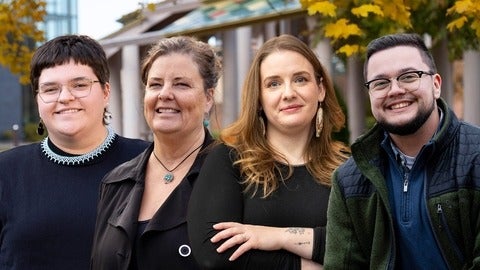
Four Indigenous students at the University of Waterloo are the recipients of Social Sciences and Humanities Research Council (SSHRC) awards. The $392,000 in funding supports research in the Faculties of Arts, Environment and Health and bring together Traditional Knowledge and western science.  

For 18 years in a row, the University of Waterloo has been recognized as Research University of the Year in the comprehensive category by Research Infosource Inc. The achievement reflects Waterloo’s ongoing commitment to solving the world’s most pressing challenges through research collaboration, innovation and impact.