Research

The Intergovernmental Panel on Climate Change (IPCC) released its latest authoritative scientific report on the global consequences of climate change in Yokahama, Japan today. 

The report indicates that changes in climate in recent decades have caused impacts on natural and human systems on all continents and across the oceans. The risks of climate change are going to increase substantially as the climate continues to change in the decades ahead, the report’s authors conclude.
Friday, March 28, 2014

Fish stories: Tales from the ear bone

by Suzanne Bowness, Marketing and Strategic Communications

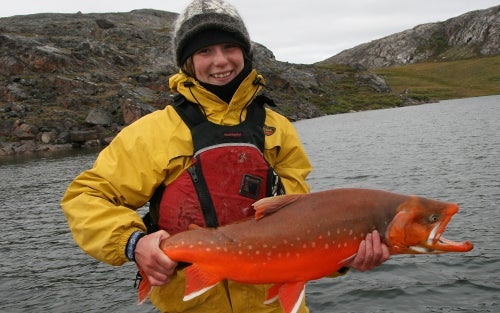
Fish ear bones are only a few millimetres in size but a University of Waterloo biologist is examining them for big answers to climate change and pollution.

Fish ear bones, or otoliths, set down annual growth rings that can be measured and counted like tree rings. They also function as “flight recorders,”  containing information about where the fish lived, how fast it grew, and what water temperature it lived in.

Heidi Swanson holding fish

Critical research into health care operations, medical imaging systems, micro-nano devices for cancer detection and smart energy distribution received a boost with four University of Waterloo engineering professors receiving new and renewed appointments as Canada Research Chairs today.

The appointments add more than $2 million in funding to the University.

Thursday, March 27, 2014

Startup wins new hardware award at Velocity Fund Finals

by Media Relations

Palette, a company that created a freeform hardware interface that can be built like Lego to control your favourite software, won the first-ever award for best hardware-based startup at the Velocity Fund Finals, and was one of several big winners at the event that took place at the University of Waterloo today.

Tuesday, March 25, 2014

Three Minute Thesis Finals

by Staff, Graduate Studies

Graduate students present their research at conferences, lab meetings and committee meetings. They can also share their research at the University of Waterloo’s Three-Minute Thesis (3MT) competition.

The innovative event, being held at the Humanities Theatre in Hagey Hall on March 27 from 2:30 until 4 p.m., gives students the opportunity to explain the significance of their research to a general audience in three minutes using one static slide.

Monday, March 24, 2014

Floating houses that rise and fall with flood waters

by Suzanne Bowness, Marketing and Strategic Communications

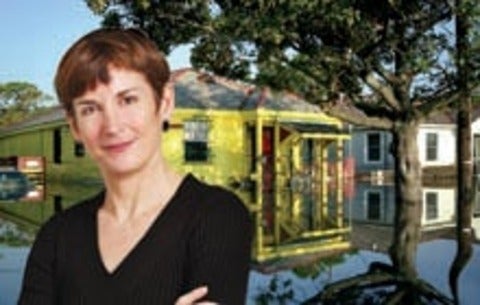
Amphibious houses that rise and fall with flood waters would help save lives and protect First Nations and other vulnerable communities devastated by flooding every spring, says a University of Waterloo architecture professor.

Elizabeth English says amphibious housing allows homeowners to evacuate with peace of mind, knowing that when they return, their houses will find little, if any, damage. Remaining during a flood is not recommended, except in emergency situations

Waterloo prof establishes Buoyant Foundation Project

Monday, March 24, 2014

Bringing up the heat on superconductors

by Katharine Tuerke, Faculty of Science

Physicists are one step closer to developing the world’s first room-temperature superconductor thanks to a new theory from the University of Waterloo, Harvard University and the Perimeter Institute.

The theory explains the transition phase - known as the pseudogap phase - to superconductivity. It’s one of the last obstacles to developing the next generation of superconductors and one of the major unsolved problems of theoretical condensed matter physics.