Research

Sunday, January 19, 2014

Decline in Canadian smoking rates stalling

by Media Relations

After years of steady decline, rates of tobacco use in Canada have stalled, according to a new report published by the Propel Centre for Population Health Impact at the University of Waterloo.

The report found that 16.1% or 4.6 million Canadians were current smokers in 2012, which was not a significant change from 2011.
As the debate continues in several cities surrounding the potential impact of light rail transit (LRT), a researcher from the University of Waterloo is harnessing the power of big data to help gather new insights into how transit systems might transform urban redevelopment and affect the housing market.

Professor Dawn Parker of the Faculty of Environment at Waterloo is the lead researcher on a project that will also analyze and compare data from computerized simulation models.

Thursday, January 9, 2014

Nanotech device could save thousands of lives

by Staff, Office of Research

A $20 sensor invented by two University of Waterloo researchers could save lives by letting ordinary people detect contaminated drinking water using their cell phone.

“No one should ever have to become sick or die from contaminated food or water,” says Simarjeet Saini, a professor in the Department of Electrical and Computer Engineering. “This sensor could save thousands of lives.”    

Researchers at the University of Waterloo have developed a new technology that could dramatically reduce the number of open-heart surgeries for people with pacemakers.

Professor Armaghan Salehian’s research group has developed wideband hybrid energy harvesters that use different types of smart materials to convert ambient vibrations into electricity. Used in pacemakers, the technology could mean that batteries last longer and patients will have to endure fewer open-heart surgeries.

Young adults want to live close to transit, high-density housing, and urban amenities, says research out of the University of Waterloo appearing in an upcoming issue of the Canadian Geographer.

Contrary to traditional ideas of neighbourhood gentrification defined along class lines, this research examines a new division of space, in urban core areas increasingly populated by young adults who have delayed child-bearing and increased educational attainment with a decline in economic prospects and the extension of a youthful phase.

Sunday, December 15, 2013

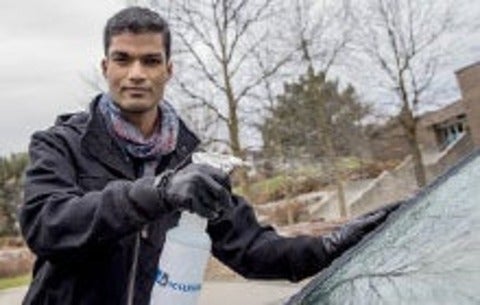
Startup creates spray that prevents frost on your windshield

by Staff, Office of Research

Harsh winter conditions may be easier for Canadians to manage with a new product invented by University of Waterloo graduates.

“Frost is a major problem for individuals and businesses daily. Not only is it inconvenient but it has an impact on safety and can even hinder economic activity,” said Abhinay Kondamreddy, a nanotechnology engineering graduate who developed Neverfrost along with three classmates.

Thursday, December 12, 2013

Researchers will grow quantum materials in new Waterloo lab

by Tobi Day-Hamilton, Institute for Quantum Computing

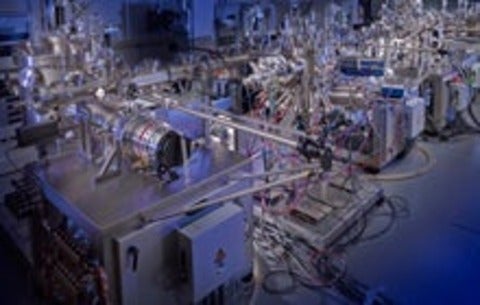
Researchers will create quantum materials that could lead to the development of the first quantum computer in a new laboratory at the University of Waterloo’s Institute for Quantum Computing (IQC.)

The lab houses a unique deposition tool to grow materials that could form the building blocks of quantum technologies. Deposition systems ‘deposit’ layers of materials, a nanometer to several micrometers thick, to create materials for use in a wide range of technologies.

Quantum materials are building blocks

Thursday, December 12, 2013

New $5 million lab to grow building blocks of quantum devices

by Media Relations

A first-of-its-kind, world-class laboratory that could lead to the creation of quantum materials for use in a new generation of technologies opened at the University of Waterloo’s Institute for Quantum Computing (IQC) today.

Quantum materials are needed as the building blocks of robust quantum devices that will be able to function outside of laboratory settings bringing the possibility of a quantum computer one step closer.