Is buying green too much work for you?
Many salespeople can’t find energy efficient televisions and they don’t have information when buyers probe for eco-options, a University of Waterloo study has found.
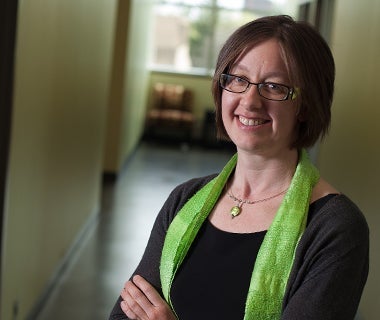
Many salespeople can’t find energy efficient televisions and they don’t have information when buyers probe for eco-options, a University of Waterloo study has found.
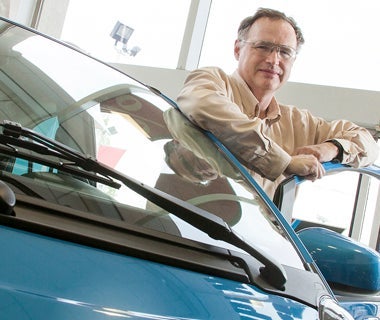
A wireless “data logger” planted in electric cars will give University of Waterloo researchers the information they need to build and support the electric car of the future.

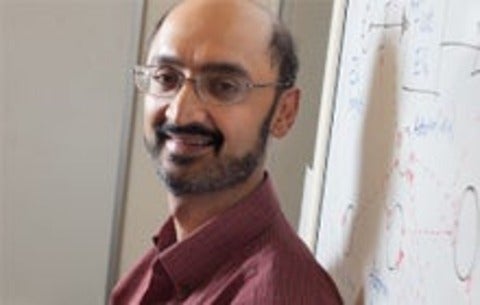
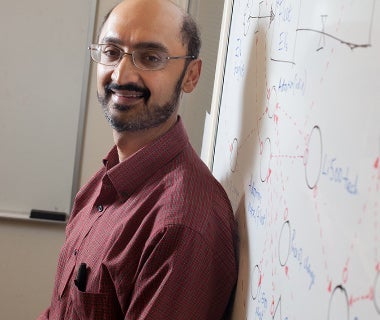
As researchers design the next generation of solar panels with nanomaterials, Siva Sivoththaman is already looking 10 years ahead: He’s thinking about how the new, nano-enabled technologies will be safely deployed.
Sivoththaman, a professor in the Department of Electrical and Computer Engineering, says he looks at emerging technologies through a health and safety lens so that a full picture can be considered early on.
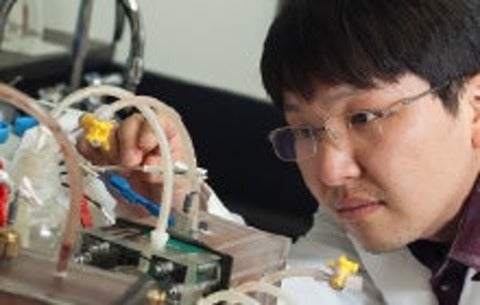
Most people would turn up their noses at anything to do with sewage. Hyung-Sool Lee smells opportunity.
It might seem like a small problem – office workers who can’t get warm; others who complain it’s too hot. Trying to keep everyone happy in a building usually means nobody wins and energy costs soar.

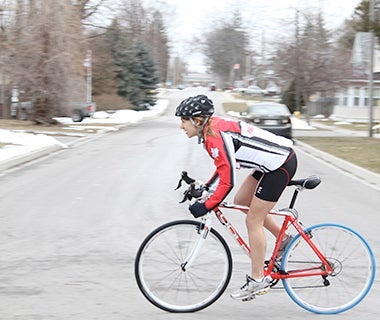
This summer, Jessica VandenBussche will put the pedal to the pavement—and gravel, and dirt roads.


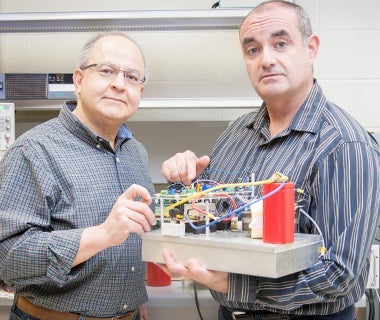
Before electric cars can rule the road in a greener future, someone has to answer the question: How will we all plug them in at night without overloading the power grid?
Electrical engineering professor Claudio Cañizares is working on an answer.
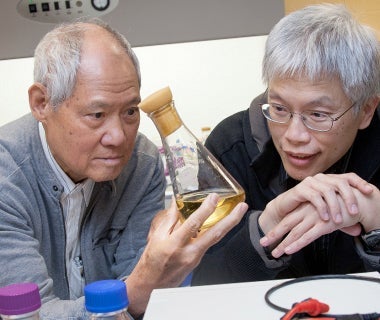
An innovative biofuel that may one day be cheaper to produce than gasoline is being developed at the University of Waterloo by two chemical engineering researchers.

WATERLOO, Ont. (Friday, May 3, 2013) - A professor of physics at the University of Waterloo has won the prestigious Brockhouse Medal, along with a professor from McMaster University, in recognition of their shared accomplishments in the field of soft condensed matter physics.
WATERLOO, Ont. (Friday, May 3, 2013) – A nanotechnology research project to explore new battery chemistries that could lead to high-density energy storage received funding today from Natural Resources Canada’s ecoENERGY Innovation Initiative.
The research, led by Professor Linda Nazar of the Faculty of Science and the Waterloo Institute for Nanotechnology at the University of Waterloo, will examine completely new approaches to materials and chemical components of batteries that could result in more powerful, and longer-lasting batteries for hybrid electric or electric cars.