Research

Friday, April 5, 2013

RSVP: Responding to a need

by Christian Aagaard, Communications and Public Affairs

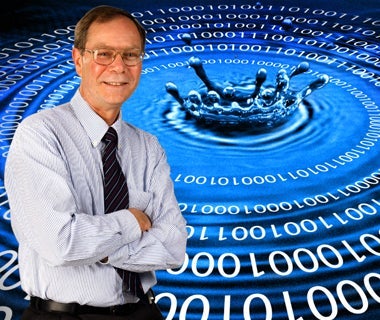
Who is the prime minister of Canada? Ask Ming Li’s cell phone.
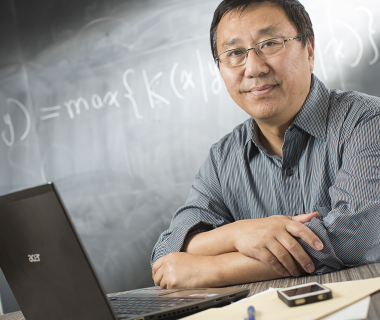
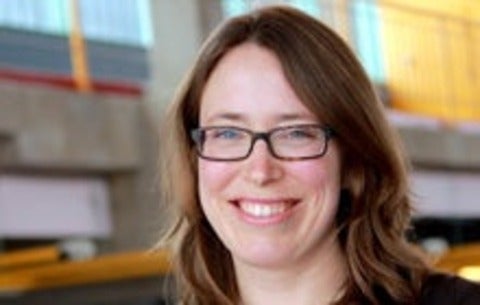
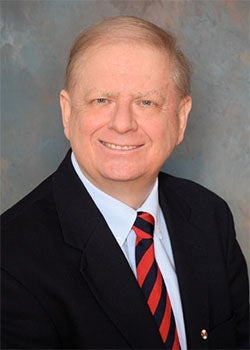
Ming Li
Li, a professor at the University of Waterloo’s David R. Cheriton School of Computer Science is working on RSVP - a multiple-language voice interface with the Internet, via smartphone.

Ask a question, it will answer.      

Li is hoping that RSVP will open up the Web to millions of people who don’t have Internet access or speak English.
Wednesday, April 3, 2013

2013 Killam Prize winner explores the mind through philosophy, science

by Communications & Public Affairs

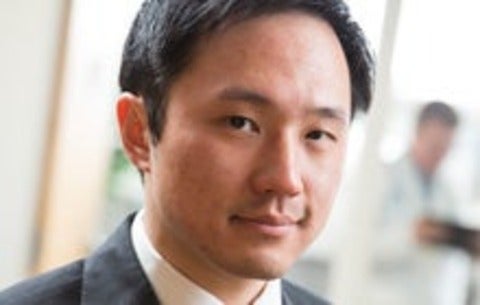
Paul Thagard
Paul Thagard, Professor of Philosophy in the Faculty of Arts at the University of Waterloo.

You can’t figure out how the mind works just by being an engineer, a neuroscientist, a philosopher or a psychologist, says Paul Thagard. You have to pull them all together.

Thagard, a professor of philosophy in the Faculty of Arts, is the winner of the 2013 Killam Prize for the humanities.

Wednesday, April 3, 2013

MEDIA ADVISORY: UNIVERSITY OF WATERLOO EXPERT

by Media Relations

Homegrown terrorism and religious radicalization: University of Waterloo expert

University of Waterloo’s Professor Lorne Dawson is available to talk about the recent reports that two, or possibly three, young men from London, Ontario were involved in the terrorist attack on the gas facility in Algeria in January.

Wednesday, April 3, 2013

Waterloo Arts professor wins prestigious Killam Prize

by Media Relations

WATERLOO, Ont. (Wednesday, April 3, 2013) - A University of Waterloo professor who creates computer models of human emotions and consciousness has won the coveted 2013 Killam Prize for humanities.

Professor Paul Thagard of the Department of Philosophy is the director of the cognitive science program. His research examines the implications of how feelings influence our decisions.

Thursday, March 28, 2013

Playing with fire

by Christian Aagaard, Communications and Public Affairs

Game theory applied by a University of Waterloo researcher could help crews battle raging forest fires in Canada.

Kate Larson

“Forest fires are inherently unpredictable,” says Kate Larson, associate professor at the David R. Cheriton School of Computer Science. “You get situations where the (individual) provinces don’t have the resources to fight these fires. In times of need, they share.

Thursday, March 28, 2013

Using data to treat patients right

by Christine Bezruki, Applied Health Sciences

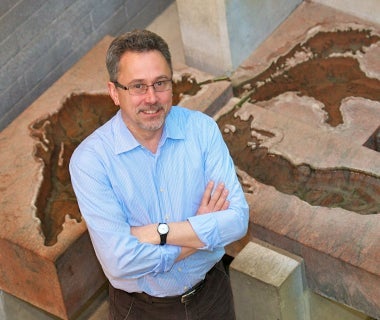
Joon Lee is changing the way doctors make decisions and patients receive care.

Joon Lee

For the last three years, Lee, a health informatics researcher with the School of Public Health and Health Systems, has been collaborating with researchers at MIT to answer some of Boston’s top clinicians’ most difficult questions.

WATERLOO, Ont. (Friday, March 15, 2013) – Important research into global food security and nanoscale materials has earned national recognition for two University of Waterloo professors whose Canada Research Chair (CRC) grants were announced today.

One of the researchers is a new chair at the Tier 1 level, and one is a renewal at the Tier 2 level.

Thursday, March 21, 2013

Local startup solves complex water problems

by Christian Aagaard, Communications and Public Affairs

Ed Sudicky occasionally pushes a sports car beyond 250 km-h on a race track. But he is just as fascinated by the performance of water systems, where speeds below ground might be measured in as little as millimetres per decade.

Ed Sudicky, professor of earth and environmental sciences at the University of Waterloo.

Thursday, March 21, 2013

Every drop counts:

by Christian Aagaard, Communications and Public Affairs

Philippe Van Cappellen uses a quick lesson in human anatomy to explain the work he does at the University of Waterloo.

Philippe Van Cappellen, Faculty, Earth and Environmental Sciences, University of Waterloo
Philippe Van Cappellen,  Faculty, University of Waterloo, Department of  Earth and Environmental Sciences.

Thursday, March 21, 2013

A river runs through it: Keeping an eye on the Alberta oil sands

by Dave Pink, Communications and Public Affairs

The world will need petroleum for many years, says a Waterloo biology professor. The challenge, he says, will be getting it out of the ground while leaving the smallest possible environmental footprint.

For almost two decades, George Dixon — a renowned eco-toxicologist — has been a major player on the team of scientists examining the ecological impact of the Alberta oil sands and the efforts to contain any environmental damage to the Athabaska River.