Research

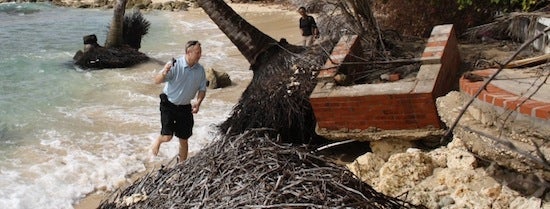
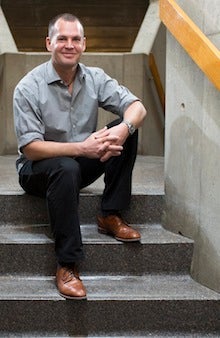
WATERLOO, Ont. (Tuesday, Oct. 2, 2012) – An international team of scientists, including University of Waterloo researcher Brian Kendall, has uncovered evidence for extensive ocean oxygenation about 635 million years ago. In the most recent issue of the journal Nature, the research team led by the University of Nevada Las Vegas makes a link between one of the most dramatic glaciations in the Earth’s history, the subsequent oxygenation of surface environments, and the appearance of the earliest animals.

Monday, October 1, 2012

Waterloo Hybrid cuts its own path with small carbon footprint

by Christian Aagaard, Communications & Public Affairs

Waterloo Hybrid Engineering team with competition vehicle

A mass of wires, hoses clamps and two motors — one electric, one gas — Waterloo Hybrid’s competition vehicle looks like a buggy bound for a distant planet.

But its purpose lies much closer to home: Push a few technological boundaries and challenge the students who put it together.

Friday, September 28, 2012

Crunch time: Team's research puts auto industry on weight-loss plan

by Christian Aagaard, Communications & Public Affairs

Michael Worswick
In Michael Worswick’s automotive research lab, metal and other materials are put to the test, to measure how much stress, tension, pressure and strain they can take.

A professor and Canada Research Chair in the University of Waterloo’s Department of Mechanical and Mechatronics Engineering, Worswick leads a research team that punishes metal and other materials en route to a lighter, safer automobile.

Thursday, September 27, 2012

The thinking car’s commute: Waterloo researchers seek a better way to drive

by Christian Aagaard, Communications & Public Affairs

Amir Khajepour
Amir Khajepour’s ideal trip from A to B goes something like this: Drivers in electric cars get on the road feeling relaxed, and leave the road feeling relaxed.

No gritted teeth or finger-flipping. No dented fenders, bruised egos or missed exits. Certainly fewer lives lost.

The key, he says, is intelligence, and not just the kind that rests in the human mind.

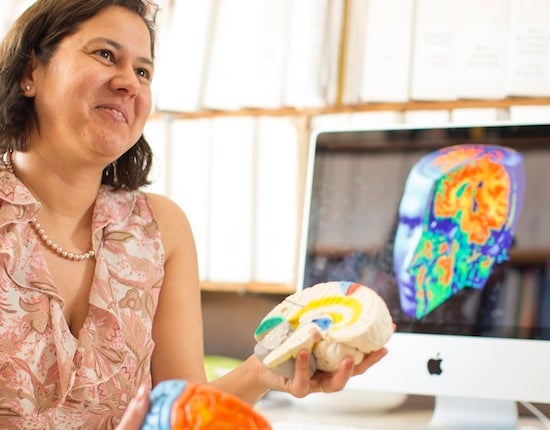
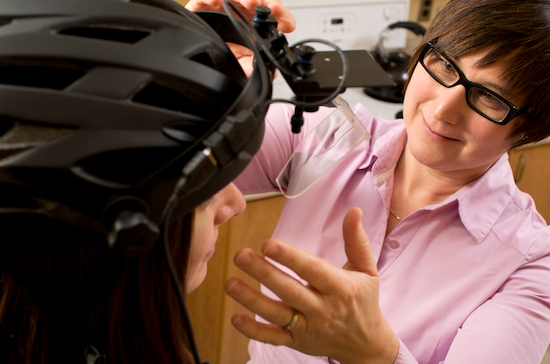
WATERLOO, Ont. (Tuesday, Sept. 25, 2012) – A University of Waterloo professor leads a team of researchers that has developed a new method of detecting Alzheimer's disease by looking into the eye. The discovery may lead to earlier, better and less expensive treatment for patients, and it was recognized with a significant government grant announced today.

Monday, September 17, 2012

In nanotechnology, what you can't see may help you

by Christian Aagaard, Communications & Public Affairs

Frank Gu standing in the engineering lab
Tiny machines being developed at the University of Waterloo will someday move through the bloodstream of a cancer patient to attack a tumor.

Wild science fiction? Not at all, says Frank Gu.

“I always refer to nano-therapeutics as the smart bomb,” he says. “We guide the delivery of ammunition to tumor cells, then detonate it at the site, while making sure the neighboring healthy cells are OK.”