A century of quantum
Bridging theoretical insight and academia with experimental expertise and industry application has been key to advancing quantum information science — and a defining strength of the Waterloo quantum ecosystem.

University of Waterloo researchers have received more than $4.3 million in funding from the Canada Foundation for Innovation (CFI), a non-profit corporation that support research infrastructure through the John R. Evans Leaders Fund (JELF).
The University of Waterloo has broken ground on WaterFEL, the Infrared Free Electron Laser (IR-FEL) facility scheduled to open in 2028. The new facility will be the only one of its kind in North America and will revolutionize research with its capabilities to address global challenges, from understanding and treating complex health conditions to creating pathways for a healthier environment.
The iron ring is small, sized to fit the little finger of an engineer’s working hand. Today it is more often made from stainless steel than iron. Though it doesn’t weigh much physically, it carries enormous symbolic weight, acting as a reminder to Canadian-trained professional engineers of the oath they took to do good, safe work that advances society.
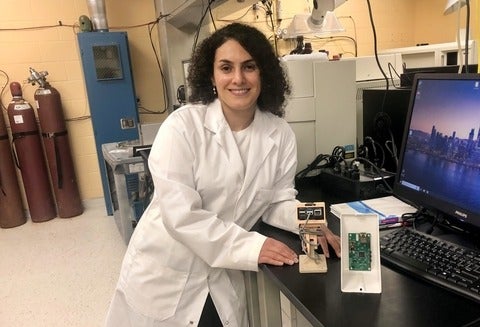
Engineering and health researchers at the University of Waterloo have developed a radar and artificial intelligence (AI) system that can monitor multiple people walking in busy hospitals and long-term care facilities to identify possible health issues.
The new technology — housed in a wall-mounted device about the size of a deck of cards — uses AI software and radar hardware to accurately measure how fast each person is walking.
As new Statistics Canada data reveals that two-thirds of Canadians are considered overweight or obese, researchers are urging the public and policymakers to rethink how we define and measure health — starting with one of the most used metrics — the body mass index (BMI).
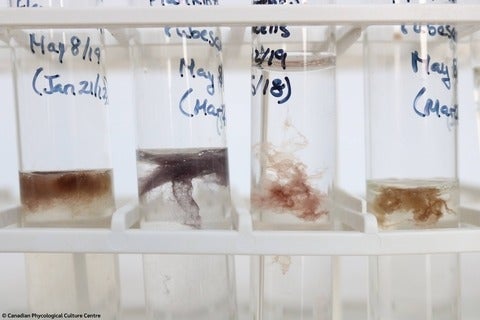
Algae may call to mind discoloured pool water or the green film floating to the top of your rain barrel, but
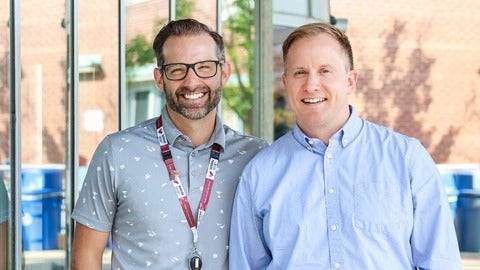
The Region of Waterloo is one of the fastest-growing regions in the province. To keep up with current and emerging needs, attracting, retaining and training top health-care talent is a priority. Waterloo Regional Health Network (WRHN) have launched a 52-week pharmacist hospital residency program in partnership with the University of Waterloo School of Pharmacy to attract and train talent within the region.
An international study surveying microbiome scientists found that when it comes to data reuse, a universal set of ethical guidelines driven by the scientific community needs to be adapted.
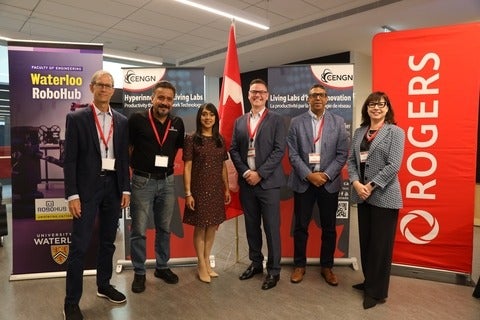
The Centre of Excellence in Next Generation Networks (CENGN) announced a new partnership with the University of Waterloo and Rogers Communications to advance Canadian innovation through its Living Lab Initiative.