
Thursday, September 25, 2025
Opinion: Canada needs a community rating system to tame rising flood costs
This opinion piece by Dr.
This opinion piece by Dr.

Routine blood samples, such as those taken daily at any hospital and tracked over time, could help predict the severity of an injury and even provide insights into mortality after spinal cord damage, according to a recent University of Waterloo study.
The research team utilized advanced analytics and machine learning, a type of artificial intelligence, to assess whether routine blood tests could serve as early warning signs for spinal cord injury patient outcomes.
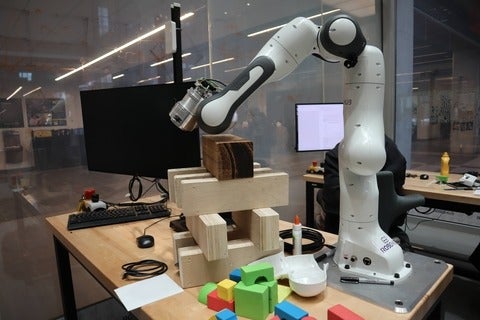
A new study from the University of Waterloo has unveiled major privacy weaknesses in collaborative robots — calling for stronger defenses.

Although modest in size, small and medium-sized enterprises (SMEs) have a massive impact on the Canadian economy. Their owners employ 90% of the Canadian private-sector workforce and make up most of the companies in Canada. But beyond business, these entrepreneurs are increasingly recognized as key actors in driving social, economic and environmental value for community well-being both in Canada and around the world.

Founders from the University of Waterloo raised more than $14 billion USD in venture capital, according to the latest 2025 rankings by PitchBook, a company that tracks global venture capital and private equity markets. Waterloo’s entrepreneurial ecosystem continues to make an impact locally and globally with more than 639 founders launching 527 companies.

The Event Horizon Telescope (EHT) collaboration has unveiled new, detailed images of M87*, the supermassive black hole at the center of the galaxy M87, that reveal a dynamic environment with changing polarization patterns near the black hole. The new images, constructed and validated by researchers from the University of Waterloo and Perimeter Institute, show how the environment around the black hole may be changing more than we previously thought.
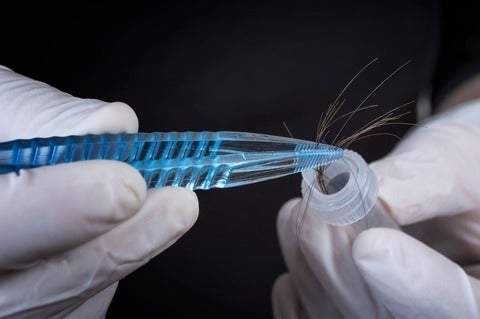
Long-term stress levels, measured through hair samples, may provide important clues about mental health risks in children with (CPI), according to new research from the University of Waterloo.
The study highlights how high hair cortisol, a type of steroid hormone, acts as a powerful early warning sign that could help identify children who live with CPI and who could be most at risk of mental health challenges, helping guide prevention and treatment strategies to better support their health and well-being.

Six University of Waterloo researchers are being recognized as Royal Society of Canada (RSC) fellows and a member of the RSC College.

Professional sports teams pour millions of dollars into data analytics, using advanced tracking systems to study every sprint, pass, and decision on the field. The results of that analysis, however, are industry secrets, making many sports difficult for researchers to study.
Now, two University of Waterloo researchers, Dr. David Radke and Kyle Tilbury, are using AI to level the playing field.
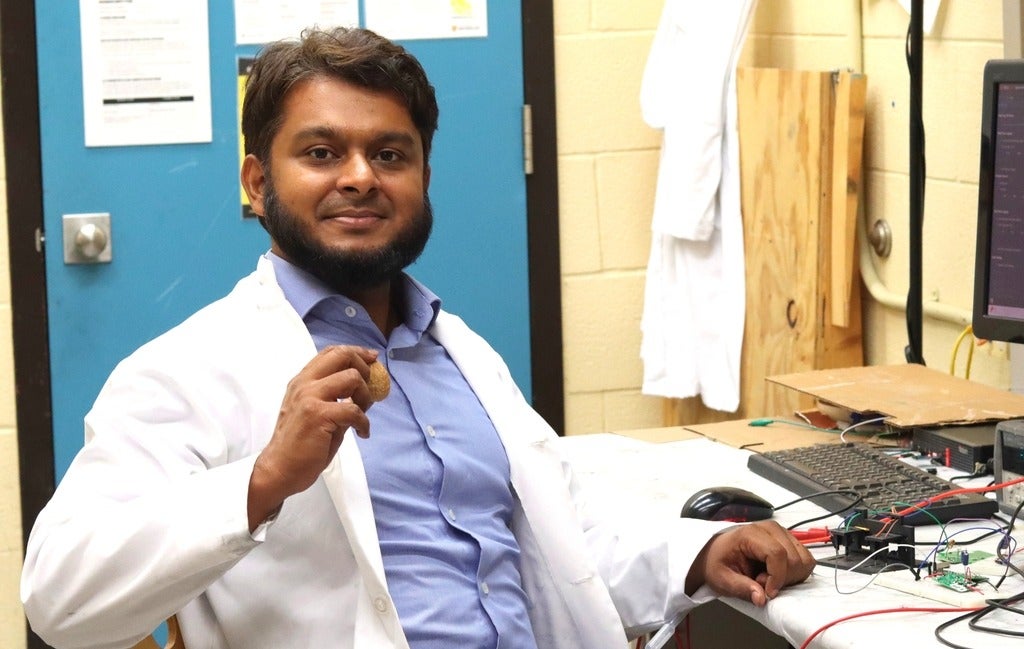
Researchers at the University of Waterloo have developed an inexpensive device that generates enough electricity to power a calculator using only waste walnut shells and drops of water.
The coin-sized device – known as a water-induced electric generator (WEG) – produces electrical energy as water evaporates from a complex network of pores that make up the shell structure.