Research

Diverse knowledge and expertise are critical in understanding the intersections between health and climate change. Indigenous and local knowledge are fundamental in tackling this area of research and supporting the co-production of knowledge, bringing generations of wisdom, experience and practices to the discussion.

Wednesday, August 16, 2023

Countdown to XRISM

by Jordan Flemming, University Relations

In a quest to decipher the enigmatic power of black holes and the intricate role they play in galaxy growth and structure — Waterloo scientists are gearing up for a much-anticipated launch. The X-Ray Imaging and Spectroscopy Mission (XRISM), led by the Japan Aerospace Exploration Agency (JAXA) in collaboration with NASA and global partners, is poised for liftoff on August 26, 2023.

The mission aims to delve into the heart of supermassive black holes and their profound influence on the universe's evolution.

Friday, August 11, 2023

Waterloo alumni named among Forbes 30 Under 30 in Toronto

by Darren McAlmont, University Relations

For the first time ever, Forbes’ 30 Under 30 produced a “local Toronto” list, which features four individuals with connections to the University of Waterloo. The list highlights some of the most entrepreneurial minds in Toronto, who work in industries like technology, finance, health, sports and the arts.

The game-changers named to this inaugural list have been making a significant impact with their businesses across the finance, creative and health-science industries.

With their abundance of sunlight, deserts are valuable locations to harness solar energy. But in addition to sun, deserts also have an abundance of dust which settles on solar panels and reduces their efficiency.

This is the problem that Miswar Syed’s new company, Swish, is trying to solve with the help of Velocity, the University of Waterloo’s startup incubator.

Wednesday, August 9, 2023

Collaborative research to advance sustainability

by Nicola Kelly , Faculty of Engineering

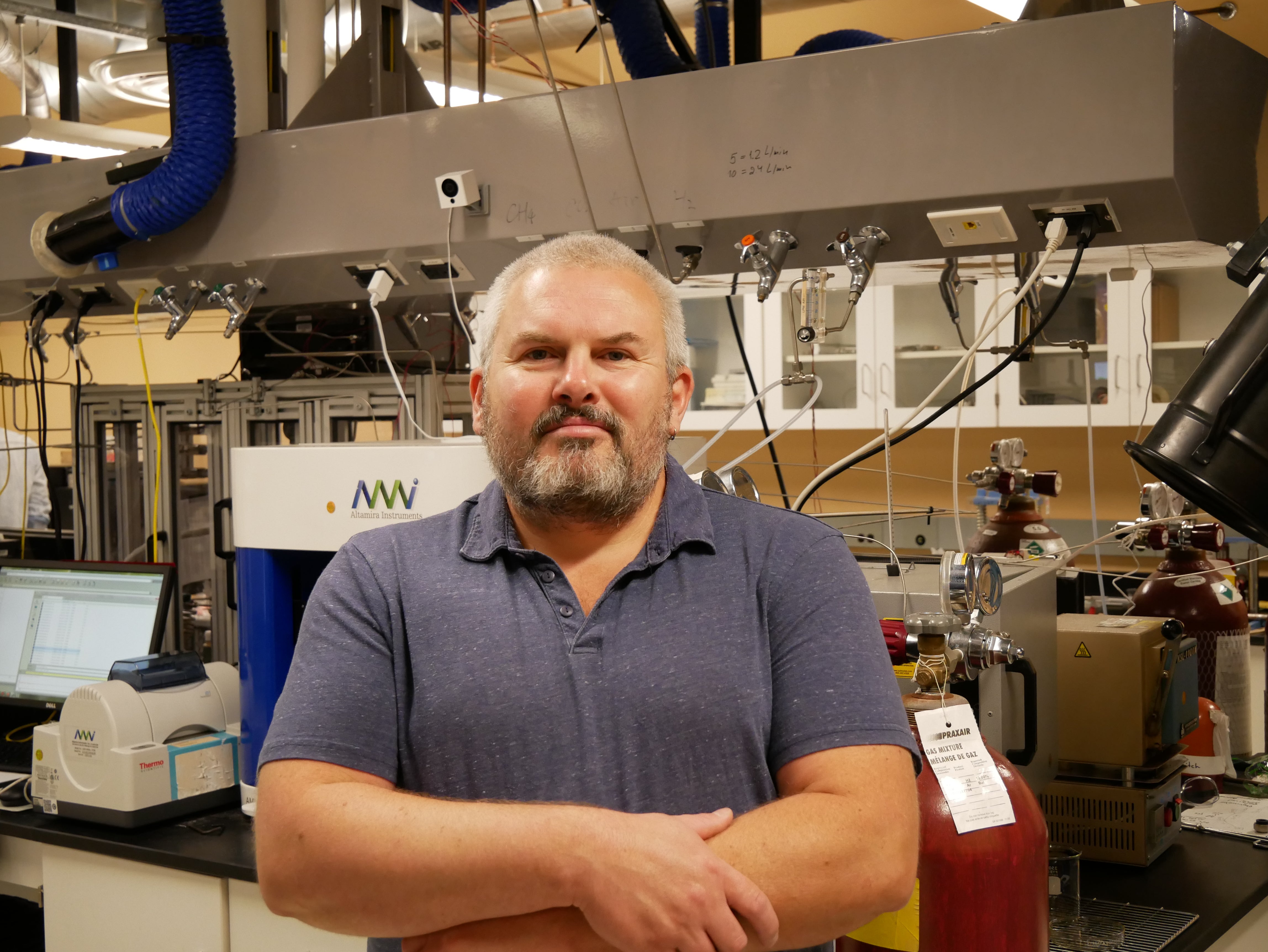
David Simakov, a professor in the Department of Chemical Engineering, is actively engaged in two bold interdisciplinary collaborations with Canadian and international partners to advance UN Sustainable Development Goals. These initiatives are focused on two areas: affordable clean energy and clean water. Simakov’s research focuses on the conversion of CO2 into renewable synthetic fuels and sustainable hydrogen generation.  

Dr. David Simakov

University of Waterloo researchers have developed a new explainable artificial intelligence (AI) model to reduce bias and enhance trust and accuracy in machine learning-generated decision-making and knowledge organization.

Traditional machine learning models often yield biased results, favouring groups with large populations or being influenced by unknown factors, and take extensive effort to identify from instances containing patterns and sub-patterns coming from different classes or primary sources.