Research

Wednesday, August 2, 2023

Protecting Waterloo’s biodiversity 

by Angelica Marie Sanchez, University Relations

This past weekend, the University of Waterloo hosted its first BioBlitz, where more than 100 Waterloo community members participated as citizen scientists to record various plant and animal species across main campus. Waterloo students, staff, faculty and alumni experts led guided hike sessions and provided tips on how we can protect the University’s biodiversity.  

In the digital age, a new Twitter strategy can have implications for a healthy bottom line. How companies handle customer complaints on social media plays a critical role in their customer-focused performance management systems. However, there has been a notable lack of descriptive information related to assessing managerial performance based on the handling of online complaints. 

Monday, July 31, 2023

Upcoming workshop dives deep into health data science

by Melodie Roschman, Faculty of Mathematics

“Trying to answer important health questions often requires the collection and ultimately the analysis of human health data,” says Joel Dubin, an associate professor of statistics and actuarial science who is cross appointed in the School of Public Health Sciences.

Monday, July 31, 2023

AI can grow mushrooms

by Media Relations

Mushrooms are used to make plant-based meat alternatives, as a base for sustainable bioplastics, styrofoam alternatives, vegan leather products and more - so efficient and cost-effective fungi farming is foundational to bringing sustainable products into the hands of consumers. But currently, mushroom production is bottlenecked.

Enter Mycro Harvest, a startup that has recently joined Velocity, the University of Waterloo's incubator, to develop an artificial intelligence-driven mushroom smart farm.

Friday, July 28, 2023

Q and A with the experts: What is watermarking?

by Media Relations

AI companies such as OpenAI, Alphabet, the parent company of Google, and Meta Platforms have made voluntary commitments to implement measures such as watermarking AI-generated content to help make the technology safer. Watermarking is a process where a message is embedded into content, e.g., a text or an image, which can later be retrieved even if the content has been modified. Dr. Florian Kerschbaum, professor at the David R.

Friday, July 28, 2023

Supporting safer cities with 5G technology

by Office of Research

Smart cities are moving towards the automation of many essential services. Quality of life for city residents relies on the safety of its buildings, roads, bridges and other infrastructures. Manual inspection of these infrastructures, besides being costly, is a tedious task that requires special skills and intense labour — especially when access to some sites, like bridges, is not easy. Due to the sheer number of bridges and inspection timelines, there is a critical backlog for inspecting bridges in Canada that requires an immediate solution.

The planet experienced the hottest day on record earlier this month and climate projections estimate the intensity of heat waves and poor air quality will increase and continue to cause severe impacts. Researchers from the University of Waterloo and Toronto Metropolitan University have refined and expanded a method of data collection to assess their health impacts.   

Wednesday, July 26, 2023

Bringing physical climate risk into institutional investing

by Media Relations

Incorporating physical climate risk into portfolio management – think flooding, wildfire or hurricanes that disrupt business operations for weeks at a time – has largely eluded investors despite warnings by the Task Force on Climate-Related Financial Disclosures (TCFD), and more recently, the International Sustainability Standards Board (ISSB). A new report by the Intact Centre on Climate Adaptation (Intact Centre) at the University of Waterloo will help to fill this void.

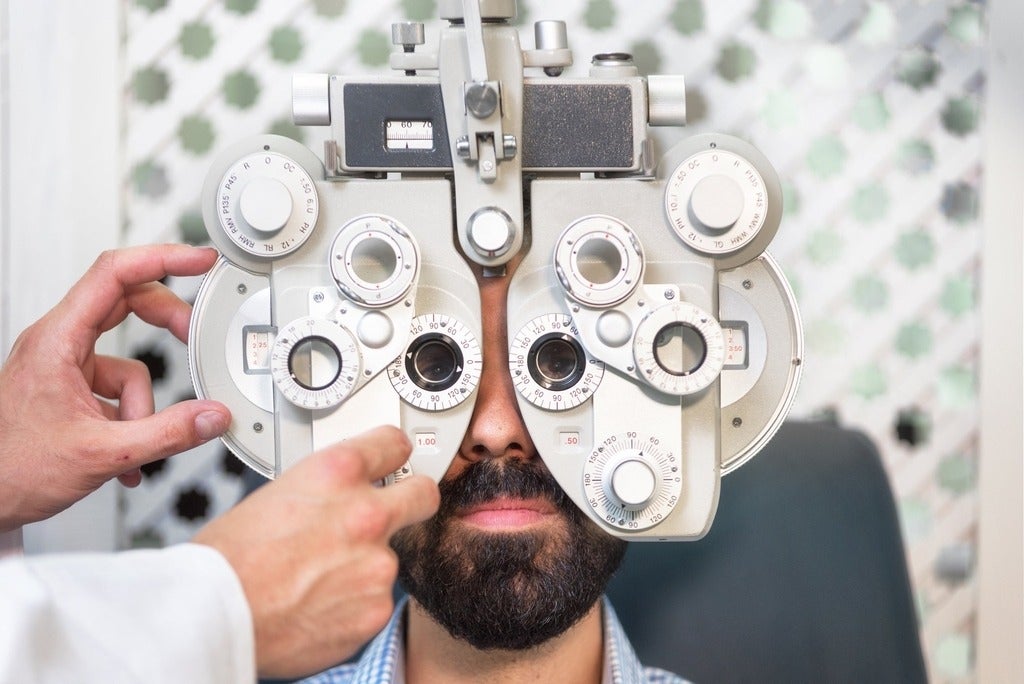
Researchers have developed a novel synthetic protein to treat macular degeneration and other incurable eye diseases that lead to blindness in millions of people. It is the first drug of its kind and is currently in human trials.

Neovascular age-related macular degeneration (AMD) affects more than 200 million people worldwide. In addition, millions more with type-1 or type-2 diabetes are at risk of developing diabetic macular edema (DME). Both diseases currently have no cure.