Research

Monday, July 24, 2023

Liberum Bio raises seed round

by Media Relations

Artificial intelligence has made protein design lightning fast, creating digital blueprints for cures to some of the most life-limiting ailments. While this means we now have thousands of new potential therapeutics, for these cures to be realized the designs need to be synthesized and validated in a laboratory environment, which can take a considerable amount of time.

Thursday, July 20, 2023

Dreaming in technicolour

by Media Relations

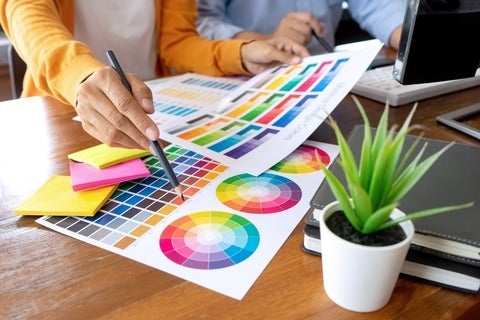
A team of computer scientists and designers based out of the University of Waterloo have developed a tool to help people use colour better in graphic design. 

The tool, De-Stijl, uses powerful machine learning technology to suggest intuitive colour palettes for novice designers and inexperienced users. The software combines and improves on the functionalities of existing tools like Figma, Pixlr, and Coolor, allowing users to select important theme colors and quickly visualize how they’ll impact a design.

Internet search engine queries and social media data can be early warning signals, creating a real-time surveillance system for disease forecasting, says a recent University of Waterloo study.

Using the example of COVID-19, researchers found there was an association between the disease’s prevalence and search engine queries and social media posts.

Wednesday, July 5, 2023

Moving biomedical research forward with IRONSperm

by Janet Armstrong, Faculty of Engineering

How would the treatment experience and outcomes change for cancer patients if we could actively deliver chemotherapy drugs directly to their tumours?

What if large and complex kidney stones could be dissolved without the need for invasive procedures?

Would the success rate of fertility treatments increase if specialists could guide live sperm directly to the most advantageous location for fertilization?

Tuesday, July 4, 2023

The vampire einstein

by Joe Petrik, Cheriton School of Computer Science

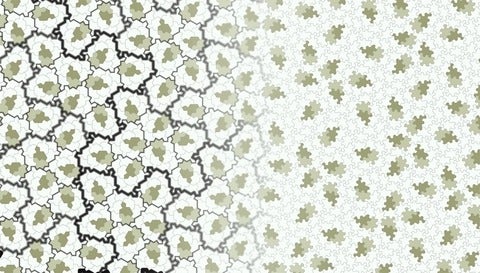
Just months ago, an international team of four that includes Cheriton School of Computer Science professor Dr. Craig Kaplan discovered a single shape that tiles the plane — an infinite, two-dimensional surface — in a pattern that can never be made to repeat.

The discovery mesmerized mathematicians, tiling enthusiasts and the public alike.

The shape, a 13-sided polygon they called “the hat,” is known to mathematicians as an aperiodic monotile or an “einstein,” the German words that mean “one stone.”

Tuesday, July 4, 2023

Discussing ethical tech is a journey we should all be taking

by Stephanie Longeway , University Relations

Building ethical technology is “not a destination, it’s a journey,” said Jennifer Boger, professor in the Faculty of Engineering and chief science officer at ESG.AI. 

As tech evolves, so must our approach to its responsible development. But the increasing complexity and speed of innovation make it feel impossible to keep up.