Research

Monday, May 15, 2023

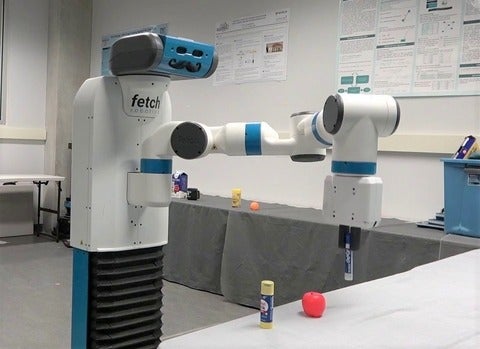
Can’t find your phone? There’s a robot for that

by Media Relations

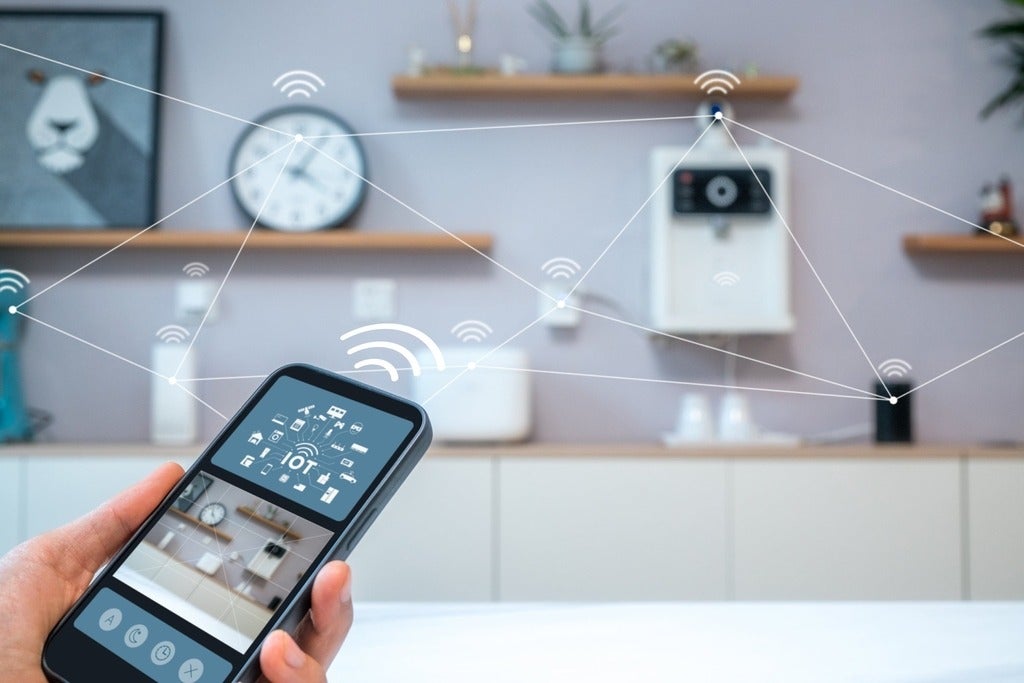
Engineers at the University of Waterloo have discovered a new way to program robots to help people with dementia locate medicine, glasses, phones and other objects they need but have lost.

And while the initial focus is on assisting a specific group of people, the technology could someday be used by anyone who has searched high and low for something they’ve misplaced.

Tuesday, May 9, 2023

Understanding and changing how we see ourselves

by Elizabeth Rogers and Zoe Tipper, Faculty of Arts

Throughout our lives, our experiences shape how we view ourselves and the world around us. These views, known in psychology as schemas, can negatively impact our mental health and be difficult to change.

Now, a new model of how we understand these schemas opens doors to new and innovative therapies in mental health treatment.

Tuesday, May 9, 2023

Commercializing her doctoral research

by Jasmin English, Conrad School of Entrepreneurship and Business

Kelly Zheng has a lot on her plate. She’s an engineering doctoral student at the University of Waterloo who is building a startup while also working towards a graduate business degree. It can be a balancing act, but she’s tackling it all.

Her PhD research in quantum machine learning for spatial temporal modeling can be difficult for many to wrap their heads around. This emerging, quantum-based branch of AI and machine learning allows large data sets to be analyzed in a fraction of the time that a regular computer can manage.

Thursday, May 4, 2023

Teaching with kindness and care

by Jon Parsons, University Relations

What does it mean to teach with kindness and care?

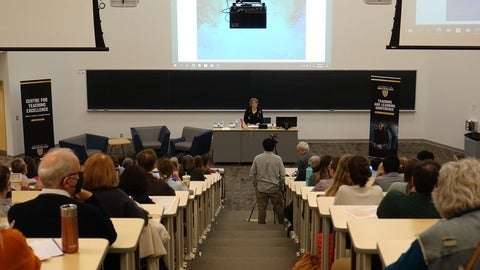
That’s the central theme of the 14th annual University of Waterloo Teaching and Learning Conference, taking place May 3 to 4.

Waterloo’s Centre for Teaching Excellence (CTE) organizes the annual conference, which features sessions and speakers from UWaterloo and other post-secondary institutions.

In a world hungry for clean energy, engineers have created a new material that converts the simple mechanical vibrations all around us into electricity to power sensors in everything from pacemakers to spacecraft.

The first of its kind and the product of a decade of work by researchers at the University of Waterloo and the University of Toronto, the novel generating system is compact, reliable, low-cost and very, very green.