Research

The way our senses adjust while playing high-intensity virtual reality games plays a critical role in understanding why some people experience severe cybersickness and others don’t.

Cybersickness is a form of motion sickness that occurs from exposure to immersive VR and augmented reality applications.

A new study, led by researchers at the University of Waterloo, found that the subjective visual vertical – a measure of how individuals perceive the orientation of vertical lines – shifted considerably after participants played a high-intensity VR game. 

Thursday, April 27, 2023

Using microbes to get more out of mining waste

by Media Relations

Researchers have developed a new mining technique which uses microbes to recover metals and store carbon in the waste produced by mining. Adopting this technique of reusing mining waste, called tailings, could transform the mining industry and create a greener and more sustainable future.

Tailings are a by-product of mining. They are the fine-grained waste materials left after extracting the target ore mineral, which are then stacked and stored. This method is called dry-stack tailing.

Thursday, April 27, 2023

Gautam Kamath among eight Canada CIFAR AI Chairs named Vector Institute Faculty Member

by Joe Petrik, Cheriton School of Computer Science

Cheriton School of Computer Science Professor Gautam Kamath has been named a Canada CIFAR AI Chair and a Vector Institute Faculty Member in recognition of his contributions to differential privacy, machine learning and statistics. He is among eight outstanding researchers in the latest cohort of Canada CIFAR AI Chairs to receive this prestigious national recognition.

Wednesday, April 26, 2023

Pedagogy of the streets

by Jon Parsons, University Relations

“I grew up on the margins,” he says. “I was in a school system that wasn’t built for success, or was built for success for some people and not others. The seed was planted for me to think about pedagogy way back then.”

In his work as an assistant professor in the Department of Sociology and Legal Studies, Dr. Adam Ellis is now practicing an approach to teaching and learning that aims to undo the very systems that pushed him to the margins, a liberatory pedagogy he is developing organically.

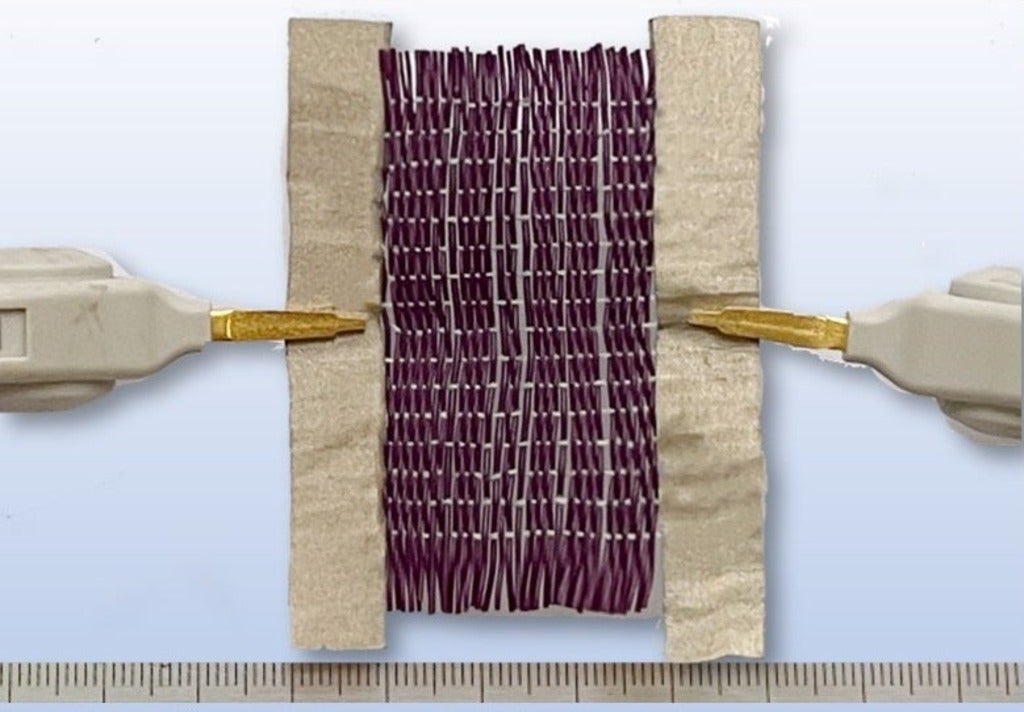
A new smart material developed by researchers at the University of Waterloo is activated by both heat and electricity, making it the first ever to respond to two different stimuli.

The unique design paves the way for a wide variety of potential applications, including clothing that warms up while you walk from the car to the office in winter and vehicle bumpers that return to their original shape after a collision.

Inexpensively made with polymer nano-composite fibres from recycled plastic, the programmable fabric can change its colour and shape when stimuli are applied.

Friday, April 21, 2023

Sustainable innovation needs societal change

by Stephanie Longeway, University Relations

“The climate crisis is our biggest existential threat,” said the University of Waterloo’s President, Vivek Goel, in his opening address at the Waterloo Innovation Summit on Friday, April 21. 

It’s no coincidence that the Summit, centred on sustainable transportation, took place on the eve of Earth Day.

The calls and commitments to reduce our carbon emissions have never been louder, but our global energy related CO2 emissions continued to climb in 2022.