
Public health campaigns have warned about the dangers smoking poses to the heart and lungs. But one area often overlooked is eye health, yet the consequences can be just as threatening.
Professor Emerita and Adjunct Professor Dr. Marlee Spafford has researched what the public misunderstands about smoking and eye disease. She recalls receiving a call from an irate 80-year-old woman who had read a newspaper article about her research. After smoking for 50 years, the patient had cataracts and age-related macular degeneration (AMD) and was astounded that no one had told her about risks to her eyes.
This reflects a broader gap in public awareness. Cigarettes contain more than 4,000 chemicals and research has linked smoking to several major eye diseases, including cataracts, glaucoma and thyroid ophthalmopathy. But the strongest link is with AMD. Smokers are two to four times more likely to develop AMD than non-smokers, with the disease developing earlier and progressing faster.
While age remains the biggest risk factor for AMD, environmental systemic and genetic influences also play a role – and smoking accelerates many of them. It can reduce blood flow to the retina, introduce toxic chemicals that damage retinal tissue, increase oxidative stress, trigger chronic inflammation, and weaken the immune system’s ability to respond.
“There is no cure for AMD. Most Patients (roughly 80 to 90 per cent) have the dry form, which progresses more slowly and has no medical treatment. Vitamin supplements such as AREDS2 may help slow down its advance but cannot restore lost vision,” says Dr. Spafford.
Treatments do exist for wet AMD, including anti-VEGF injections, laser surgery and photodynamic therapy, all aimed at stopping the growth of fragile blood vessels. These treatments may improve vision but cannot fully reverse the damage.
“AMD affects the macula, the part of the retina responsible for sharp, central vision. People with the disease keep their peripheral vision, but whatever they look at directly becomes blurred or distorted. Reading, recognizing faces, cooking or following a moving object can become difficult,” shares Dr. Spafford.
Melinda Szilva, PhD – is a Registered Psychotherapist counsellor at the Waterloo Eye Institute, who is trained in smoking cessation counselling. If a patient expresses an openness to stop or reduce using tobacco products, the optometrist will arrange a virtual appointment with Melinda to discuss their goals for smoking cessation. The approach she uses is very non-threatening, non-judgmental and person-centered, designed to help patients of the Waterloo Eye Institute meet their health-related goals around tobacco use.
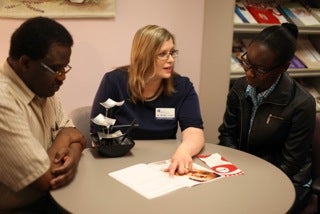
If you or someone you know is ready to take the first step, resources are available through the Waterloo eye Institute or the University of Waterloo's Smoke Free Waterloo initiative: Resources for quitting smoking | Smoke-Free Waterloo | University of Waterloo.