Astro Seminar Series - Hybrid Seminar
Ryley Hill - Resolving galaxy protoclusters from the cosmic infrared background
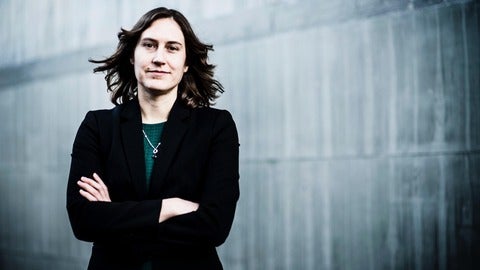
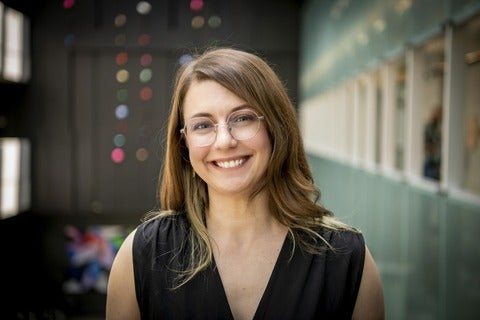
Dr. Katie Mack is a theoretical astrophysicist exploring a range of questions in cosmology, the study of the universe from beginning to end. She is currently an assistant professor of physics at North Carolina State University, where she is also a member of the Leadership in Public Science Cluster.
Astronomy At Home Lecture Series: Perseid Meteor Shower
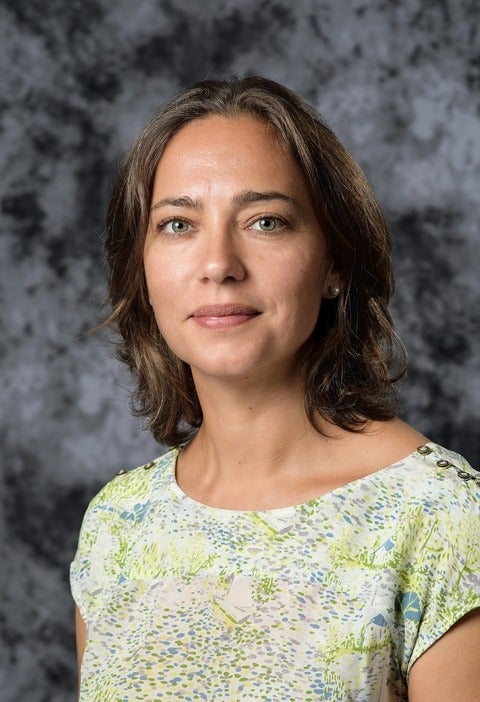
Jessie Muir is a postdoctoral fellow at the Perimeter Institute for Theoretical physics working on cosmology theory and data analysis. Previously she was a Porat Fellow at KIPAC, at Stanford University, and she obtained her PhD at the University of Michigan. As part of the Dark Energy Survey Theory and Combined Probes working group, she has co-led the analysis team constraining model extensions to LCDM with the survey's first three years of galaxy clustering and weak lensing.
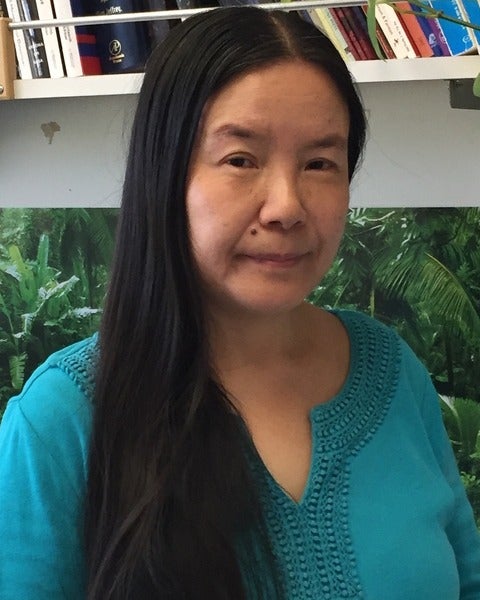
Yun Wang has led Galaxy Clustering science on the Roman Space Telescope, and is the deputy lead for Euclid Galaxy Clustering SWG. She is the PI for the proposed NASA space mission concepts, ISCEA (Infrared Satellite for Cosmic Evolution Astrophysics) and ATLAS (Astrophysics Telescope for Large Area Spectroscopy). She is a Senior Research Scientist at IPAC at California Institute of Technology.
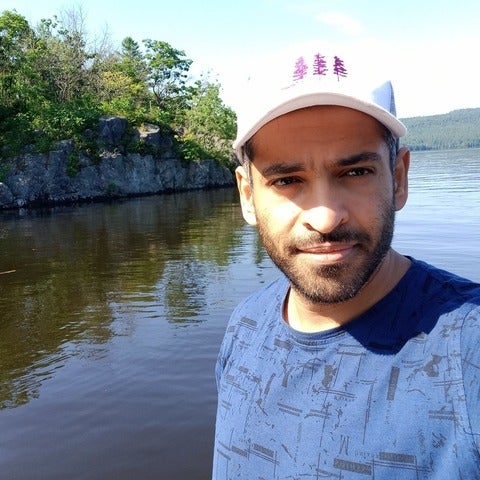
Mohamad Shalaby is a senior postdoctoral researcher at the Leibniz institute for astrophysics Potsdam (Germany). His research focuses on studying acceleration, transport and non-thermal radiation processes from plasmas that permeate our visible universe, i.e., from stellar to intergalactic environments and thus their implied complex feedback on various observables. Mohamad attended AIMS (South Africa) and PSI programs before finishing his PhD under the supervision of Avery Broderick in 2017 at University of Waterloo and perimeter institute for theoretical physics.
Claudia Scarlata received her PhD from Padova University, in 2004. After holding postdoctoral positions at ETH-Zurich (CH) and Caltech, in 2011 she moved to the University of Minnesota, Twin Cities, where she is currently a Distinguished McKnight professor. Her research focus on problems related to the formation and evolution of galaxies. She is involved in the upcoming Euclid space mission, supporting the planning and optimization work for the cosmological surveys. More recently, her work has focused on the physical conditions that enable the reionization of the Universe at z>6.
Felipe Andrade-Oliveira is a postdoctoral researcher at the University of Michigan. His research is focused on the investigation of the Large Scale Structure and the Dark Energy nature through Cosmological Surveys. He works as a Pipeline Scientist for Legacy Survey of Space and Time (LSST) where he is also the co-leader of the covariance topic team.
Roan Haggar is a postdoctoral fellow, working with simulations of galaxy clusters. He has a particular interest in cluster dynamics, galaxy evolution and large-scale structure, and is also involved in science communication and outreach.
Stefano Camera is an Associate Professor at the University of Turin (Italy), where he returned after having been postdoc and research fellow at the High Technical Institute of the University of Lisbon (Portugal) and at the Jodrell Bank Centre for Astrophysics of The University of Manchester (UK). His research spans various areas of cosmology with surveys of the large-scale structure of the Univers