Outreach

Monday, April 7, 2014

Molding a thermoplastic

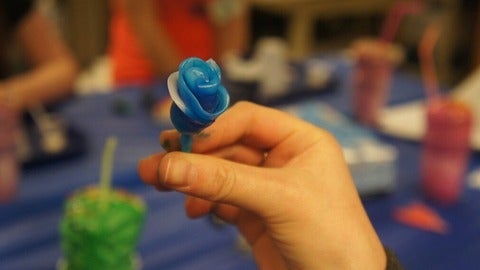
Elaine “Lainey” Williams learned the procedure for the thermoplastic shaping activity, tried out various combinations of the dyes, instructed her classmates and shared this activity with 4th to 6th grade girls who recently participated in the FEMMES (Females Engaged in More Math, Engineering, and Science) Capstone event. The following are Lainey’s thoughts about learning the procedure, the underlying chemical concepts and sharing the thermoplastic activity with others.

Oobleck, a mixture of cornstarch and water, derives its name from the story “Bartholomew and the Oobleck” by Dr. Seuss (Random House), in which the king, tired of the rain, snow, and sleet falling from the sky, wishes for something different. Soon his wish is granted; green, sticky, gooey oobleck falls making a mess of his kingdom, leading the king to regret his wish. Bartholomew saves the day by getting the king to say the magic words, “I’m sorry.”

The determination of the limiting and excess reagents in a chemical reaction tends to be a challenge for many chemistry students. Teachers have used the making of cookies and hamburgers, or combinations of nuts and bolts, among other common items to help students understand these concepts. While students understand that if you have 10 hamburger patties and only 6 pickles one can only make 3 hamburgers, if each requires 2 pickles.

Demonstrating the magnetic ink used in printing US currency has proven to engage audiences of all ages because of its relevance to everyday life. Nearly everyone has used machines that distribute and/or accept currency but few understand how the machines distinguish between the various denominations. The key is in the face of each denomination.