
Monday, September 5, 2022
Chemistry and Inuit Life and Culture
A message from the editor, Professor Bill Power.
A message from the editor, Professor Bill Power.

If you travel to the far north of Labrador, you will find a mine: no, not the mine at Voisey’s Bay, site of one of the world’s richest nickel deposits, but way farther north at Ramah Bay. One difference is that the mine (or more accurately, quarry) at Ramah Bay was first being worked at least 7,000 years ago.

Living and thriving cultures innovate, adapt and incorporate from other cultures. As the next topic in our series on chemistry and Inuit life and culture, we have chosen soy sauce. Though part of Chinese cuisine from way back in the mists of time, it is a relatively recent addition to the Inuit diet and in a unique context.

The Earth is a giant distillation apparatus in a process known as the Grasshopper Effect, or Global Distillation. Persistent organic pollutants (POPs) have been transported to the poles for decades via Global Distillation, where they concentrate in fatty tissues of animals and fish. Now there is a new threat to northern (predominantly Inuit) well-being: the PFOS family.

The Inuit live half of their lives in subzero temperatures. So, along with the sometimes elegant and sometimes aggressive snowfalls, sea ice is part of Inuit life for a substantial portion of the year. It's a means of transportation; it ensures access to food; and it drives the deep-water ocean currents.

In this article, we have chosen to focus upon a few Inuit remedies and show how their action can be linked in many cases to specific, active molecules.
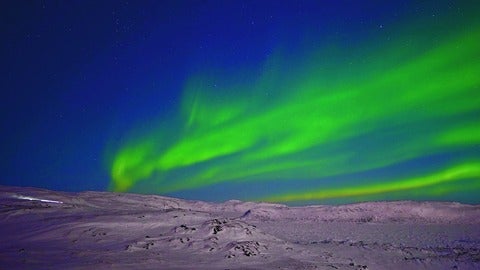
For Inuit, the aurora light up the darkness in the long winter nights, and have a profound spiritual role in their culture. To chemists, the chemistry underlying them is of equal fascination and even today, there are still gaps in our knowledge about them.

In this series, we have shown the importance of ice coverage of the Arctic Ocean for Inuit survival. But equally important, particularly through the long, cold, winters, is the solid crystalline form of dihydrogen oxide – snow. For this article, we will look at the chemistry of snow and its importance in Inuit life.

In the Arctic, food resources are very scarce. In this article, we will look at some of these foods, though it should also be kept in mind that only a few will be available to any specific community. This is because Inuit communities occupy locations over a tremendous geographical area and climate range.

Previously in this series, we showed that solid water, as ice and as snow, is an essential material in Inuit culture. Water is a pure substance. However, most materials used in Inuit life are not pure substances, but composites. So the first question to answer is: “What is a composite?”