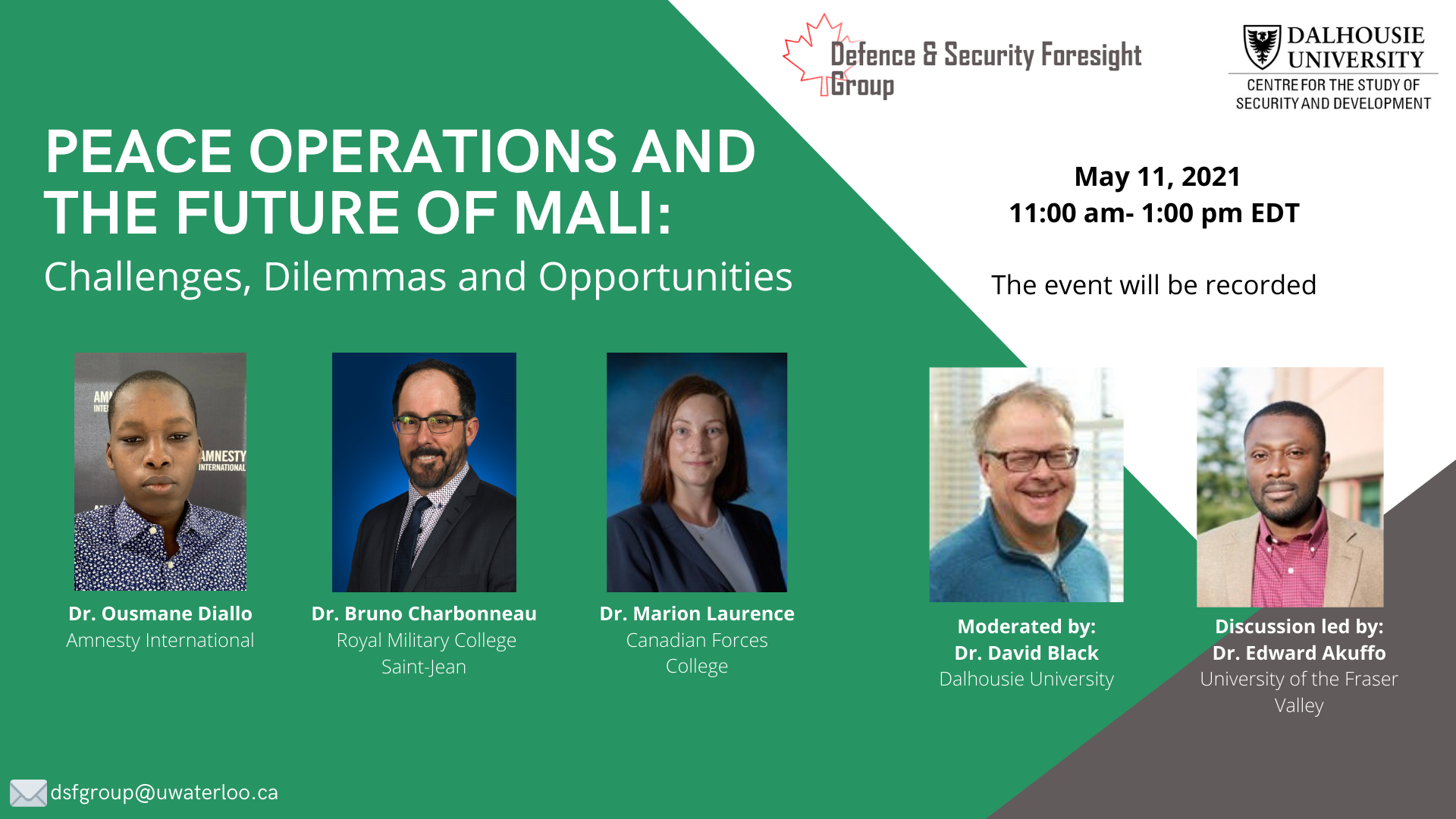
Our three speakers bring a deep understanding of the internal and transnational context of the conflict, and of the multidimensional challenges facing UN peacekeepers and other international intervenors in supporting stabilization.
After the panel, Edward Akuffo, an expert on inter-regional security cooperation in Africa, will lead our post-panel explorations as discussant.
Panelists
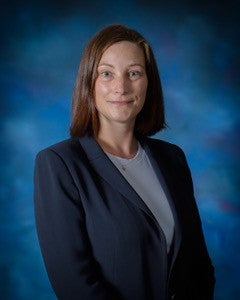
Dr. Marion Laurence
Marion Laurence is an Assistant Professor working in the Dallaire Centre of Excellence for Peace and Security within the Canadian Defence Academy. She completed her PhD in Political Science at the University of Toronto, where she specialized in International Relations. She holds a Master of Arts degree from Queens University and she completed her undergraduate studies at Dalhousie University. Her research has been supported by grants and fellowships from the Social Sciences and Humanities Research Council of Canada, the Ontario government, the University of Toronto, and Global Affairs Canada. She is a research associate at the Centre for International Policy Studies at the University of Ottawa.
Dr. Laurences research focuses on global security governance, peacekeeping and peacebuilding, protection of civilians, and child protection in conflict settings. Her current book project draws on fieldwork she conducted in Sierra Leone, Côte dIvoire, and New York City to investigate changes in how United Nations peacekeepers interpret the norm of impartiality on a day-to-day basis. Recent publications include an article in International Peacekeeping that uses evidence from the Democratic Republic of the Congo to examine normative ambiguity in UN peace operations. Based out of the Canadian Forces College in Toronto, her responsibilities include teaching students in the Joint Command and Staff Programme, which prepares selected senior officers for command and staff appointments in national and international settings.
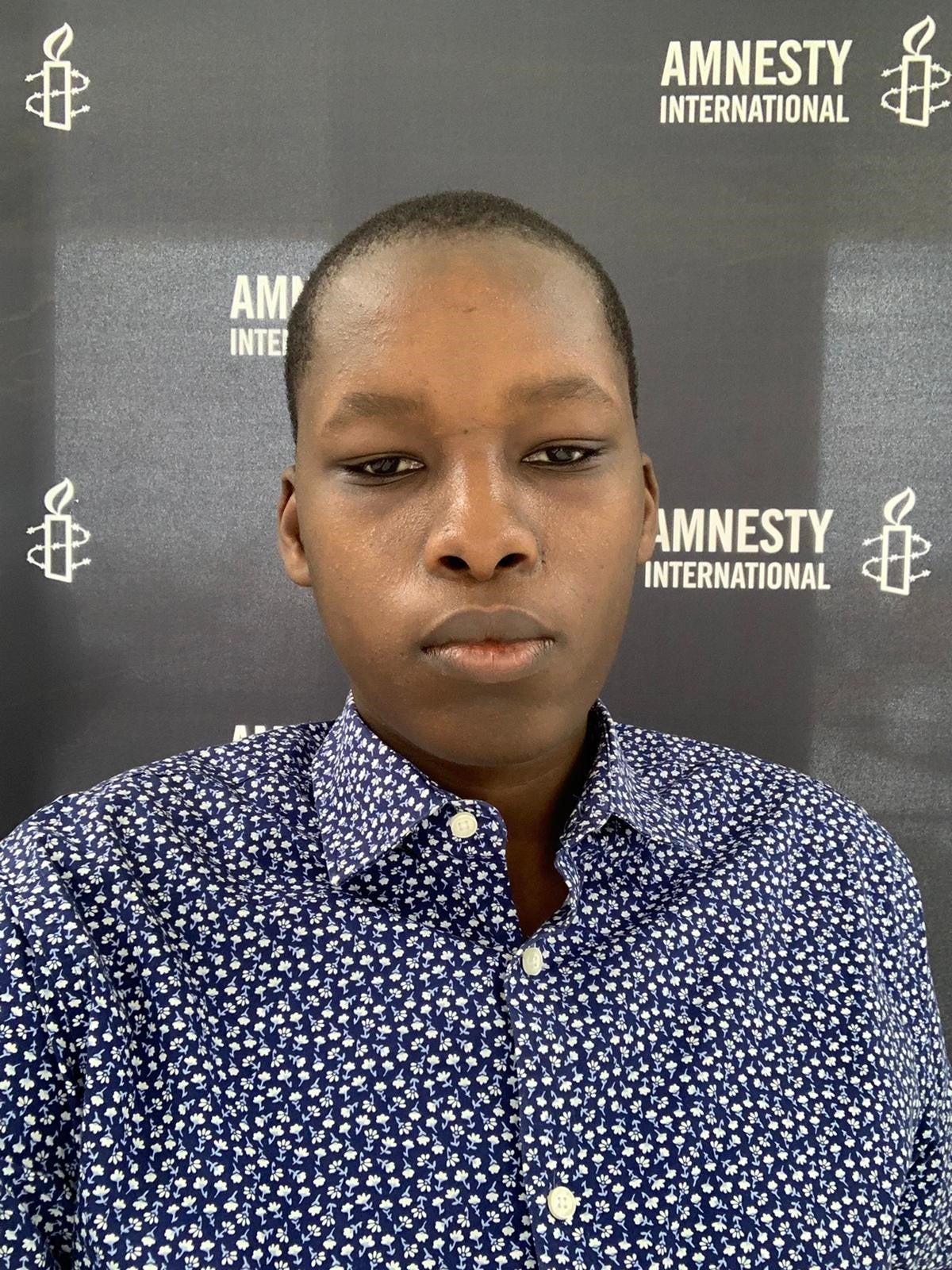
Dr. Ousmane Aly Diallo
Ousmane Aly Diallo is a PhD in Global Governance from the Balsillie School of International Affairs, Wilfrid Laurier University (Canada). His thesis focused on the adaptation of the African Peace and Security Architecture (APSA) to the security dynamics in the Sahel. Since November 2019, he works as a human rights researcher at Amnesty Internationals regional office for West and Central Africa (WCARO) on the Sahel (Mali, Niger, Burkina Faso) and Senegal.
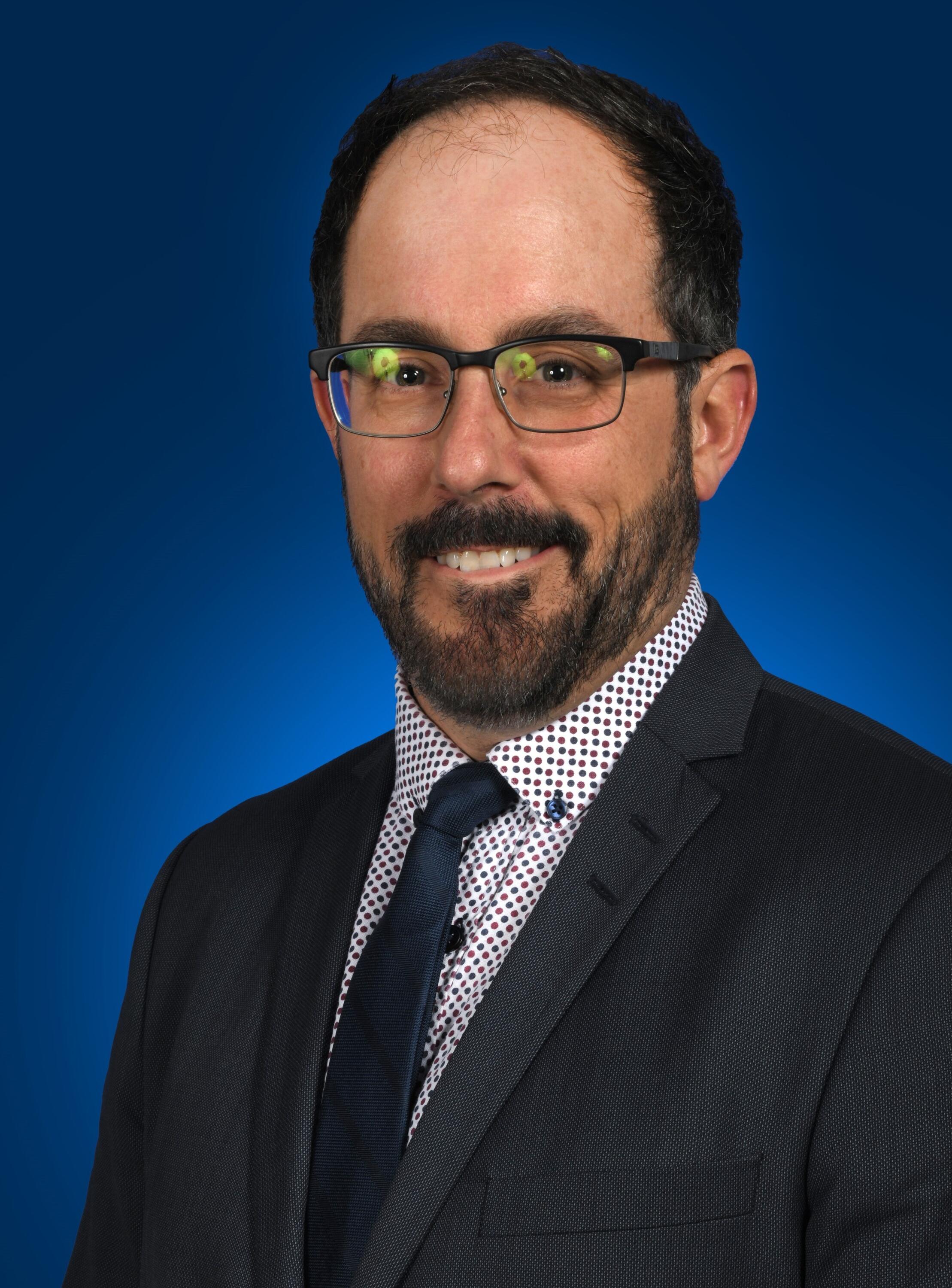
Dr. Bruno Charbonneau
Bruno Charbonneau (PhD, Queens University) is Associate Professor and Director of the Centre for Security and Crisis Governance (CRITIC) at the Royal Military College Saint-Jean, Canada. He is also founder and Director of the Centre FrancoPaix in Conflict Resolution and Peace Missions of the Raoul-Dandurand Chair at the Université du Québec à Montréal. His work examines the international politics of conflict management, with a particular focus and expertise on the Francophone West African Sahel. He is currently working on the links between armed conflict, counterinsurgency, and climate change in the Sahel.
He is widely published, including being the author or coeditor of six books. His research has been funded by, among others, the Social Sciences and Humanities Research Council of Canada, the Organisation internationale de la Francophonie, and Global Affairs Canada. He is the author of France and the NewImperialism: Security Policy in sub-Saharan Africa (Ashgate, 2008), coeditor of Peace Operations in the Francophone World: Global Governance Meets Post-Colonialism (Routledge, 2014), Peacebuilding, Memory and Reconciliation: Bridging Top -down and Bottom-up Approaches (Routledge, 2012) and Locating Global Order: American Power and Canadian Security After 9/11 (UBC Press, 2010), and coeditor of the forthcoming Comparing Armed Conflicts (Routledge, 2021) and The Routledge Handbook of African Peacebuilding (Routledge, 2021). His research has been published in several world-renowned academic journals: Review of International Studies, International Political Sociology, International Peacekeeping, Les Temps modernes, Afrique contemporaine, Journal of Contemporary African Studies, Journal of Intervention and Statebuilding, Conflict, Security Development, Canadian Journal of Political Science, and more. He has collaborated with various agencies of the Canadian, US, and French governments, with the UN, the EU, the G5 Sahel, and the OIF.
He can be reached at bruno.charbonneau@cmrsj-rmcsj.ca or followed at @charbonneau_b
Moderator

David Black, Dalhousie University
David Black is Professor and Chair of Political Science at Dalhousie University in Halifax, Canada, and Lester B. Pearson Chair of International Development Studies. He has a longstanding research interest in Canadian involvement in Sub-Saharan Africa, including human security and peace operations, development cooperation, the extractive sector, and multilateral diplomacy. Other research interests include: post-apartheid South African foreign policy, particularly in Africa; sport in global politics and development; and disability and global development. His current research includes a SSHRC-funded project on the new politics of partnership in Canadian development cooperation. His more recent publications include: Canada and Africa in the New Millennium: the Politics of Consistent Inconsistency (2015); Rethinking Canadian Aid (2016, co-edited with Stephen Brown and Molly den Heyer); and South African Foreign Policy: Identities, Intentions, and Directions (2016, co-edited with David Hornsby).
Discussion led by
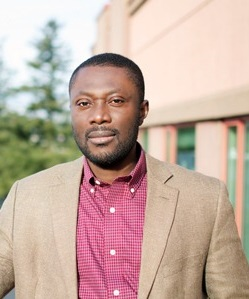
Dr. Edward Ansah Akuffo
Edward Ansah Akuffo is an Associate Professor of International Relations, in the Department of Political Science, and Lead Associate of the Center for Global Development at the University of the Fraser Valley, Abbotsford, Canada. He is also the President of International Studies Association-Canada. Edwards research focuses on Canadas foreign and security policy in Africa, and African Union-NATO interregional security cooperation. His work has appeared in several academic journals and edited books. He is the author of Canadian Foreign Policy in Africa: Regional Approaches to Peace, Security, and Development (Ashgate/Routledge, 2012).