As organizations increasingly recognize sustainability as a driver of innovation and long-term value, the University of Waterloo’s Hub for Sustainability Integration is helping bridge the gap between academic insight and business action. A joint initiative of the School of Accounting and Finance (SAF) and the School of Environment, Enterprise and Development (SEED), the Hub connects academia, industry and government to embed sustainability thinking into business strategy, education and leadership.
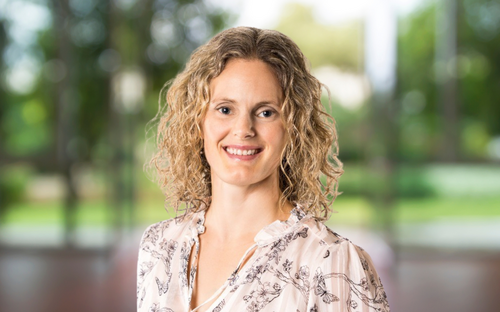
Ahead of the 2nd Annual Sustainability Integration Conference, we sat down with Claire Purvis, Assistant Professor and Associate Director of the Hub for Sustainability Integration. A Waterloo alum and sustainability leader with more than 15 years of experience across corporate, consulting and nonprofit sectors, Purvis brings a global perspective and a passion for developing the next generation of changemakers. In this Q&A, she shares her vision for the Hub, her insights on the evolving sustainability landscape, and what excites her most about returning to Waterloo.
Q. You completed your master’s at Waterloo in Environmental Studies. How does it feel to be back on campus in a new capacity?
A. It seems like a lifetime ago that I finished my master’s—and in many ways, it is. I’ve grown as a person, developed knowledge and skills in the sustainability space, lived in different places, travelled the world, and am now raising my own three children to hopefully be earth champions. Our life experiences shape how we see the world and influence the decisions we make.
While I still have much to learn, I’m returning to campus wiser than the day I left and excited to bring those perspectives and experiences back to help develop the next generation of sustainability advocates—no matter what industry they pursue. The campus looks a little different now, but it still pulses with energy and I sense a real eagerness in the students. Overall, I’m thrilled to be returning!
Q. In your own words, what is the Hub for Sustainability Integration—and why is this kind of initiative important right now?
A. By definition, a hub is a focal point of activity—and that’s exactly how I see this initiative. Right now, it’s a bit of a blank slate, which provides incredible opportunity to build out this work, collaborate with organizations and bridge the gap between academia and industry.
I see it as a place for authentic conversations, research and innovation, professional development, student-led projects and initiatives and of course, the sustainability consulting course that will prepare students to enter the workforce with a sustainability mindset—regardless of their chosen profession.
I look forward to bringing in perspectives from students, faculty and staff, as well as industry contacts across the public, private and NGO sectors, to tackle sustainability’s biggest challenges. There’s so much great work being done on the academic side that industry doesn’t often know about. The Hub will be a great avenue to showcase that work and bridge the gap.
Q. You’ve led major climate and ESG projects across sectors. From your experience, what are the biggest opportunities and challenges organizations face when turning sustainability commitments into action?
A. I’ve spent many years advising companies on how to bring sustainability principles into their operations and decision-making—and yes, there are many challenges. In the past few years, we’ve seen companies pull back on sustainability commitments due to concerns about greenwashing, resourcing and internal support.
Some organizations can get a plan on paper but lack the governance framework to ensure internal alignment. Others try to implement sustainability in silos without integrating it into their overall strategy. Truly embedding sustainability takes time and effort—it’s a long game. Success depends on clear accountabilities, budget, leadership support, internal champions and a plan to track progress.
But there are also exciting opportunities—like developing new products, improving efficiency, generating local renewable energy, or restoring habitats. When a sustainability initiative begins to deliver cost savings or open a new, responsible market, that’s when the work really comes alive.
Q. What can students expect from the sustainability consulting course you’ll be teaching?
A. The consulting course is all about real-world experience. Students will work in groups with actual companies on sustainability projects—whether implementing a waste management program, building a business case for target-setting, drafting a sustainability policy or conducting a greenhouse gas baseline assessment.
Beyond the projects, we’ll focus on professional skills like proposal writing, project management, consensus building, and cross-functional collaboration. These are skills students can take into any future role, not just consulting. My goal is to help students experience what it’s like to integrate sustainability within an organization, and to build a mindset that keeps sustainability top of mind throughout their careers.
Q. The Hub’s Sustainability Integration Conference takes place on October 27 in Toronto. What themes or discussions are you most excited about?
A. I’m most excited to see the conversations unfold between academia and industry leaders. We’ll have speakers from across sectors exploring how sustainability implementation is transforming business—from climate resilience and biodiversity protection to Indigenous partnership and sustainable finance.
It’s an opportunity to connect, share ideas, and build partnerships that can drive meaningful change. I hope attendees leave inspired to see sustainability not as a separate function, but as an integral part of strategy, innovation, and leadership.
Q. What keeps you motivated in this field, especially when progress can feel slow or incremental?
A. It’s true—working in sustainability can be discouraging at times. You can pour your heart into reducing emissions for one organization and then watch devastating climate news that makes it feel like we’re moving backwards. But I stay motivated because I feel a strong responsibility to leave the world better than I found it.
I have three children who are still too young to fully grasp the gravity of the climate crisis, but I think about the conversations we’ll have as they grow. Taking them to South Africa this year—where they saw elephants, baboons, and the Indian Ocean—was a powerful reminder of what’s at stake. We have a responsibility to future generations to protect biodiversity, eradicate poverty and ensure access to basic needs. Individually, our contributions may seem small, but together, we can make an impact.
Q. What do you like to do in your free time?
A. Being “mom” doesn’t leave much free time, but when I do have an hour, you’ll usually find me hiking—often with my dogs, who are always up for an adventure. I find that quiet time in nature therapeutic. As a family, we love camping, being outdoors and travelling and living in Muskoka gives us endless opportunities to explore. Our life is busy and chaotic—but we love it.
The Hub for Sustainability Integration will host its 2nd annual conference on October 27th, 2025 at RBC WaterPark Place in Toronto, bringing together leaders from academia and industry to share ideas and drive real-world impact.