News

Filter by:

Limit to news where the title matches:
Limit to items where the date of the news item:
Date range

Waterloo researchers discover how to make a soft ball roll – not fall, slide or tumble – down a vertical surface that “challenges our basic understanding of physics”

The academic journal Soft Matter, which published a study on the work, Spontaneous rolling of a soft sphere on a vertical soft substrate, said in a summary that the discovery “challenges our basic understanding of physics.”

In practical terms, Mitra said, the finding could be used in the development of soft robots to inspect pipes, explore cave systems, or assist in the manufacturing of better equipment for missions to Mars or other space exploration endeavors.

“This opens up a whole new way of thinking about movement on vertical surfaces,” said Mitra. “Currently, robots and vehicles are limited to horizontal or slightly inclined surfaces. This discovery could change that.”

The research teams also included Dr. Boxin Zhao, a professor of chemical engineering at Waterloo, and post-doctoral fellows Dr. Surjyasish Mitra and Dr. A-Reum Kim.

For details, click here.
A new study suggests a way to more accurately test sperm health from home.

MME Professor Dr. Sushanta Mitra led a research team with two postdoctoral fellows, Shirshendu Misra and Sudip Shyam, and a professor in systems design engineering, to discover a simpler method to test the fertility of male sperm. Through their research they have found a positive correlation between sperm cell activity and droplet adhesion. This discovery could lead to the development of at-home strip test kits that can assess the viability of sperm cells.  

Dr. Suhsanta Mitra collaborated with systems design professor Dr. Veronika Magdanz, because of her expertise on sperm cell behaviour. Meanwhile, the team led by Dr. Mitra used their knowledge used their knowledge that spanned multiple engineering disciplines with interface science to approach this topic in a new direction. 

For details, click here.

Waterloo engineering researchers discover secreted mucus traps microplastics floating in the ocean.

"By understanding the forces involved in microplastic adhesion, we can design solutions that not only prevent further harm, but also mitigate further microplastic pollution in coral reefs," said Dr. Sushanta Mitra, executive director of the Waterloo Institute for Nanotechnology

The study, which also included Dr. A. Reum Kim, a post-doctoral fellow at Waterloo,  recently appeared in ACS ES&T Water

For details, click here

Researchers at the University of Waterloo have developed a simple, low-cost method for accurately encapsulating core materials (which could be pure liquid or liquid containing suspended functional ingredients) that could make important contributions to a wide range of industry applications.

“The key to this technology is that everything is in liquid state – the core, the shell, and finally submerged inside a liquid bath. This provides extraordinary flexibility in terms of core shell combinations. At least 15 of these types of combinations have already been demonstrated,” said Sushanta Mitra, executive director, Waterloo Institute for Nanotechnology and professor of Mechanical & Mechatronics Engineering at the University of Waterloo. "It is ultrafast with each encapsulation taking only 50 milliseconds. This technology is at least 5000 times less energy intensive and it avoids the introduction of any microplastics in the encapsulation process.”

For details, click here

New research is underway to develop a coating that will kill the COVID-19 virus immediately upon contact with any surface. The antiviral coating could be applied to all personal protective equipment and high-touch surfaces, greatly reducing the risk of community transmission of the virus.

For details, click here.

Four professors at Waterloo Engineering, including Lab Founder Sushanta Mitra, were recently awarded $570,000 in provincial funding to build their research teams and pay for research-related infrastructure.

Sushanta Mitra (mechanical and mechatronics engineering) was awarded $150,000 through the Ontario Research Fund-Research Infrastructure program for equipment to characterize capillarity and wetting for under-liquid systems.

Two researchers at Waterloo Engineering will receive more than $240,000 through a federal program to provide the tools and equipment needed for them to become leaders in their fields.

Thursday, March 30, 2017

Innovation in STEM teaching app

Partnering with York Region’s St. Robert’s School in Markham and Quanser, we are developing apps that will help in easy transition of high school students to university STEM program. Our goal is make sure every student is successful in Canadian post-secondary education system.

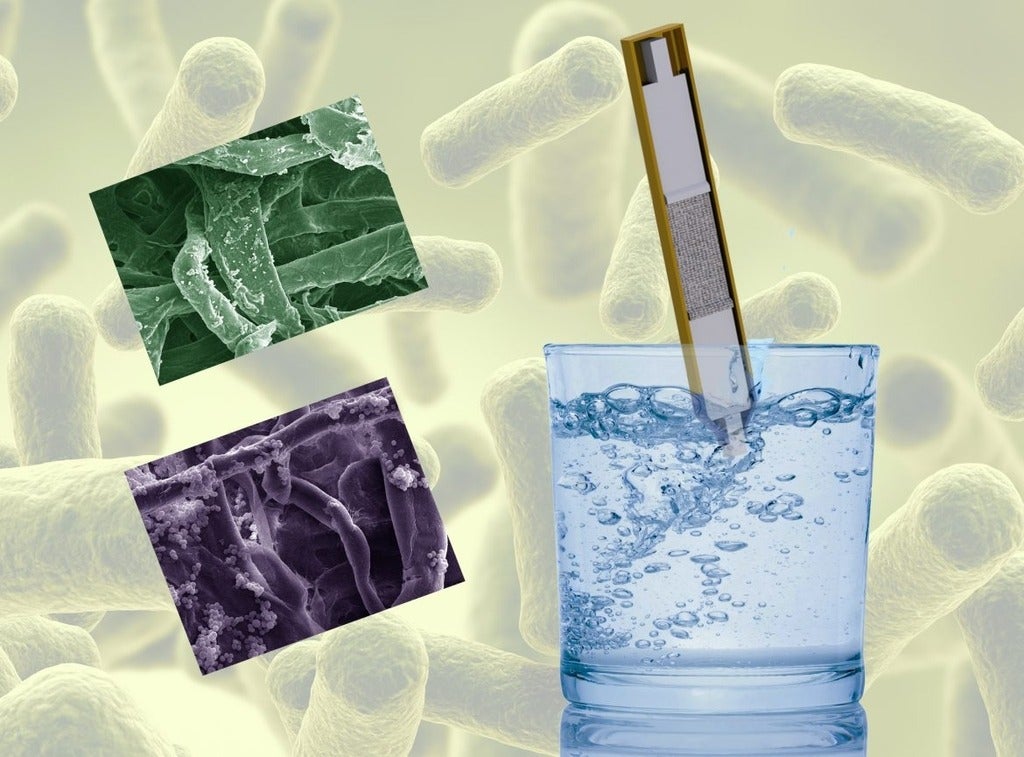
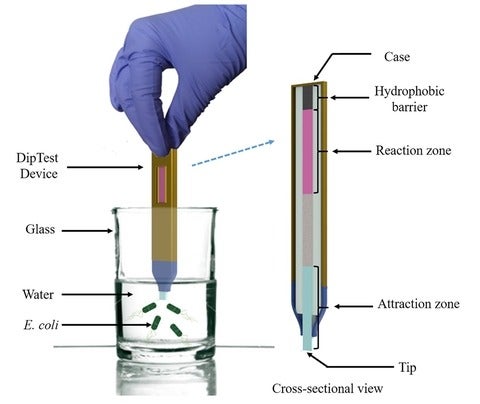
York researchers invent “sweet” solution to kill E. coli in drinking water. It is a novel paper-based water treatment technique, DipTreat, which uses glucose to fish E. coli from water, trap them within the porous paper matrix, and kill them using the antimicrobial properties of Moringa oleifera seed extract.