Dr. John Hirdes named to the Order of Canada
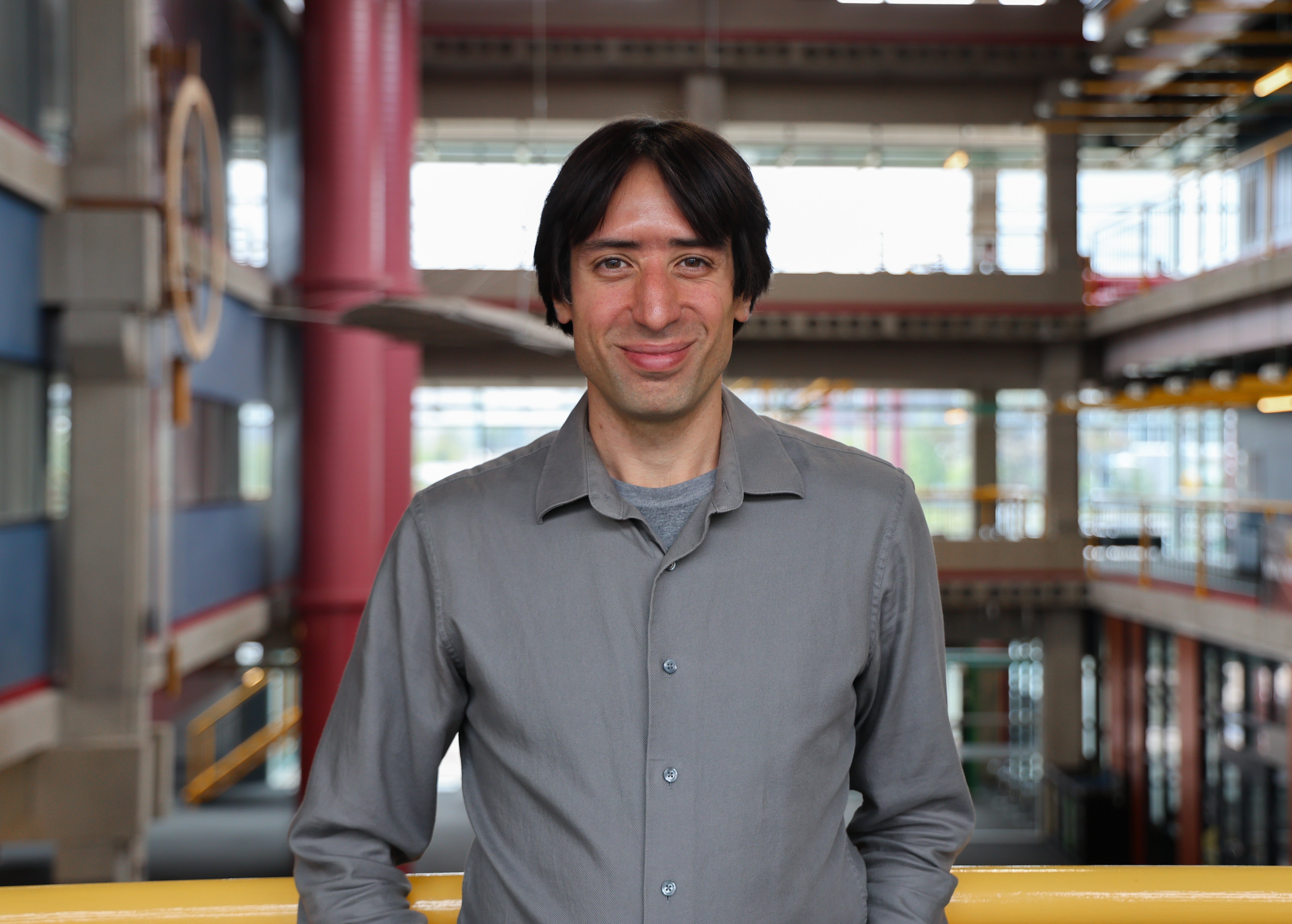
Dr. John Hirdes, a professor in the School of Public Health Sciences, has been appointed a member of the Order of Canada
The year 2023 has unfolded with a dynamic blend of challenges and opportunities, offering us a fresh page to write the story of our University of Waterloo community.
As we embark towards 2024, we can reflect with pride on the continued dedication and achievements of our students, alumni, researchers and staff — all of whom have played an integral role in shaping on-campus initiatives, global events and cutting-edge education and research.
These trending stories highlight just some of the community’s profound impact on our collective future.
Two University of Waterloo departments earned recognition on the international stage last week in the United Arab Emirates.
Both Co-operative and Experiential Education (CEE) and WatSPEED earned honours at the Quacquarelli Symonds (QS) Reimagine Education Conference Awards held in Abu Dhabi at Khalifa University.
Known as the “Oscars of education”, the awards recognize innovative approaches that enhance student learning outcomes and employability. Award categories include the future of learning, future of universities, future of work and sustainability education.
This past October, Grand River Transit staff proposed service changes for 2024 with recommendations to reduce evening service on the Ion light rail in favour of a slightly more frequent daytime schedule that would complicate departure times.
“When I first heard about the preliminary Grand River Transit budget where the off-peak hours would be cut from every 15 minutes to 30 minutes, I was shocked,” says Rodney Chan, a third-year undergraduate student in the School of Planning.
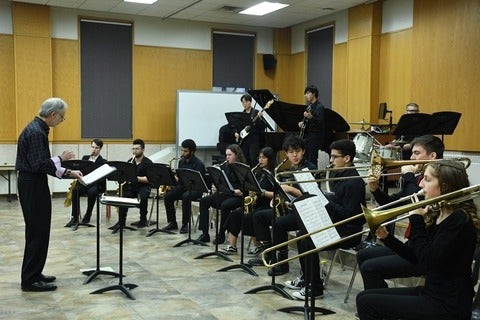
In an interview with Down Beat magazine, the jazz legend Thelonious Monk once said that “All musicians are subconsciously mathematicians.”
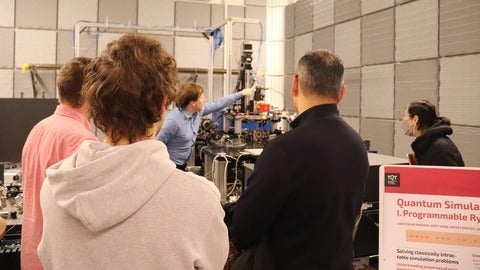
Practical and scalable quantum computers are still in the early stages of development, and many technical challenges need to be overcome before they can be widely used for various applications. Researchers and companies globally, as well as right here at the University of Waterloo, are diligently pushing the boundaries of quantum computing technology, driving forward innovations in this emerging field.
What beats good food and an electrifying dance party during the season of holidays? The answer: nothing. That’s why, the annual Waterloo tradition recently attracted more than 300 international students who came together to celebrate the winter break and to give back to their fellow Warriors.
For only $5, international students from across our campuses were treated to a two-course festive dinner and later crowded the dance floor at Fed Hall during the end-of-year gathering.
Whenever you walk past Dr. Matthew Satriano’s office, it seems like two or three people are inside, scribbling equations on his whiteboard and chatting in animated tones. Even the notice board next to his door reflects this spirit of constant collaboration: it features a caricature portrait of Satriano grinning and gesturing to his next-door neighbor, Matthew Kennedy, whose front door features a matching portrait.

Detecting a deadly tumor as early as possible is vital to stopping its spread. However, creating the solution doesn’t necessarily solve the problem — it needs to be widely adopted by medical professionals. That’s why standards like the new IEC 62220-2-1: 2023 Medical electrical equipment – Characteristics of digital X-ray imaging devices are so important.
Waterloo School of Public Health students won an international evaluation case competition with a plan that focused on a Clean Start Africa program called Circles of Healing