Future students

Monday, March 9, 2015

Kickstarter king has Pebble Time on his hands

by Carol Truemner, Faculty of Engineering

Eric Migicovsky is the king of Kickstarter. For the second time in three years his brainchild, the Pebble smartwatch, reigned supreme on Kickstarter, the crowd-funding phenomenon. In just 49 minutes, the campaign raised over $1 million. Two days later, 47,000 people had backed the Pebble campaign to the tune of $10 million.


A black, white, and red Pebble Time Smart Watch

Tuesday, February 17, 2015

The Waterloo Pump and the flood of excellence that followed

by Angela Pause, Faculty of Engineering

The Waterloo Pump was invented in 1978 by University of Waterloo professors Alan Plumtree and Alfred Rudin at the request of Canada’s International Development Research Centre (IRDC). The goal was to invent an inexpensive pump that could be manufactured in developing countries with local materials that could be easily repaired by villagers using readily available materials.

Monday, February 16, 2015

No humans required with autonomous flying vehicle research

by Julie Stauffer, Faculty of Engineering

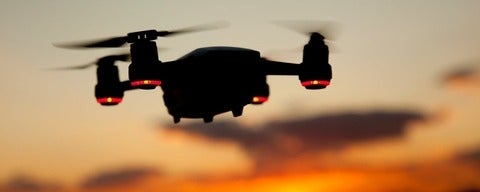
Some days walking into Steven Waslander’s lab feels like you’re entering the set of a science fiction movie. Drones hover and dance in front of a group of students, while wheeled vehicles scoot across the polished concrete floors.

Monday, February 16, 2015

Cleaning up dirty water lands major research award for Waterloo nanotechnology engineer

by Carol Truemner, Faculty of Engineering

Each day, contaminants from pharmaceuticals make their way into municipal water systems. Add in things like caffeine and artificial sweeteners poured down kitchen sinks and you have a mix of pollutants that can’t fully be removed by conventional treatments like filtration or chlorination.

Nanotechnology engineer Stuart Linley has been working on safely eliminating naphthenic acids, one of the most scientifically challenging contaminants in our water reservoirs.

Sunday, February 15, 2015

World’s smallest single-chip atomic force microscope is a really big thing

by Carol Truemner, Faculty of Engineering

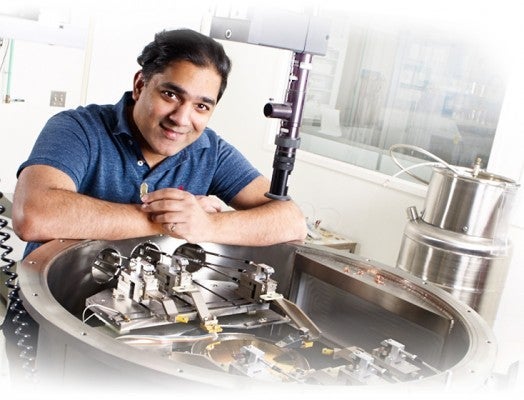
Neil Sarkar has given new meaning to the expression “put under the microscope.”

The electrical engineering post-doctoral researcher has developed the world’s first single-chip atomic force microscope (AFM) that opens up a world of possibilities for research and development in industries ranging from electronics to bioscience.

Portrait of Neil Sarker

Sunday, February 15, 2015

All-weather drones are eyes in the sky during disasters

by Julie Stauffer, Faculty of Engineering

When a 7.8-magnitute earthquake hit Nepal in April 2015 Aeryon Labs Inc. provided aerial support to disaster relief teams on the ground. In 2014 when Typhoon Hagupit hammered the eastern Philippines, it ripped up trees, overturned buildings, flooded roads and forced thousands of people to flee their ruined homes. To deliver aid, relief organizations first had to navigate the chaos.

Saturday, February 14, 2015

Revealing the long-lost secrets of HMS Erebus shipwreck

by Julie Stauffer, Faculty of Engineering

For more than 160 years, the HMS Erebus has been quietly lying on the Arctic Ocean floor roughly 1,500 kilometres northwest of Iqaluit. The wreck marks the end of Sir John Franklin’s tragic attempt to find a passageway linking the Atlantic and Pacific oceans — an attempt that saw all 128 crew members perish when the Erebus and her sister ship the HMS Terror became trapped in Arctic ice.

Saturday, January 31, 2015

Science fiction becomes fact with 3D printed bones

by Kira Vermond, Faculty of Engineering

Anyone who has ever hobbled around on bad knees knows how painful and debilitating it can be. Immobility can last for years before an orthopedic surgeon removes damaged bone and cartilage and replaces it with an artificial joint crafted from metal alloys or polymers.

The pain and recovery time becomes even worse if those implants need to be replaced years later.

Thursday, January 9, 2014

Nanotech device could save thousands of lives

by Staff, Office of Research

A $20 sensor invented by two University of Waterloo researchers could save lives by letting ordinary people detect contaminated drinking water using their cell phone.

“No one should ever have to become sick or die from contaminated food or water,” says Simarjeet Saini, a professor in the Department of Electrical and Computer Engineering“This sensor could save thousands of lives.”