A call to consciousness
Across their professional activities as artist, theatre designer, and University professor, Jay Havens creates welcoming channels for indigenization, reconciliation, and decolonization.
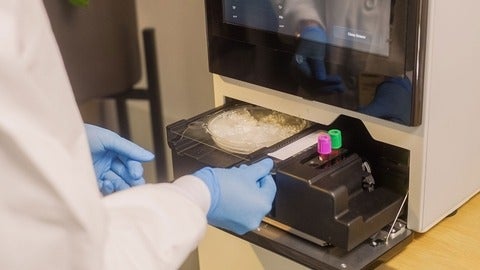
Four and a half years ago, the VitalOne was an ambitious idea. Today, the desktop computer-sized blood diagnostics device can run comprehensive tests on comparatively small blood samples — in 20 minutes.
Made by Vital Bio, a company founded at Velocity, the VitalOne was unveiled to the public and scientific community at a conference held by the American Association for Clinical Chemistry (AACC) last month, where Vital Bio also won the Disruptive Technology Award.
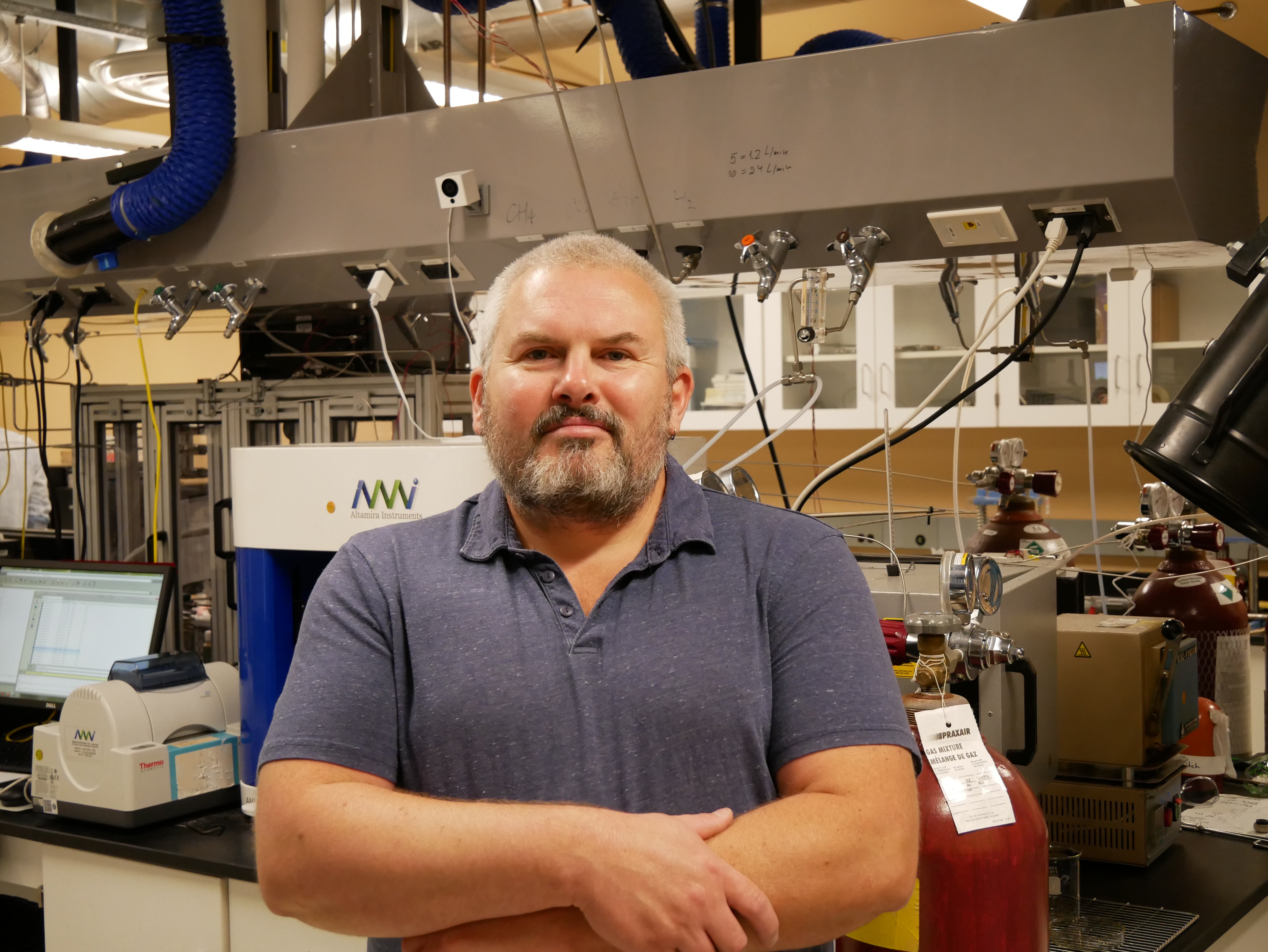
David Simakov, a professor in the Department of Chemical Engineering, is actively engaged in two bold interdisciplinary collaborations with Canadian and international partners to advance UN Sustainable Development Goals. These initiatives are focused on two areas: affordable clean energy and clean water. Simakov’s research focuses on the conversion of CO2 into renewable synthetic fuels and sustainable hydrogen generation.

This past weekend, the University of Waterloo hosted its first BioBlitz, where more than 100 Waterloo community members participated as citizen scientists to record various plant and animal species across main campus. Waterloo students, staff, faculty and alumni experts led guided hike sessions and provided tips on how we can protect the University’s biodiversity.
The road to building a company with advanced technology from the ground up can be winding.
For those who choose to travel that road in good company, meeting a co-founder can be methodical: taking on extracurricular projects while in school, attending professional networking events, tapping into family and friendships, and networking. But whether that relationship formalizes into a solid foundation that works in the startup’s favour can depend on more nebulous components.
Smart cities are moving towards the automation of many essential services. Quality of life for city residents relies on the safety of its buildings, roads, bridges and other infrastructures. Manual inspection of these infrastructures, besides being costly, is a tedious task that requires special skills and intense labour — especially when access to some sites, like bridges, is not easy. Due to the sheer number of bridges and inspection timelines, there is a critical backlog for inspecting bridges in Canada that requires an immediate solution.
Jack Farlow, a second-year engineering student at the University of Waterloo has achieved a remarkable feat by qualifying for the 2023 CrossFit Games. The games are a multi-day competition that brings together elite athletes from around the world to showcase their fitness and compete for the title of Fittest on Earth.
After two previous attempts, making it to the semifinals each time, Farlow secured his spot in to compete in this years’ finals taking place August 3 to 6 in Madison, Wisconsin.
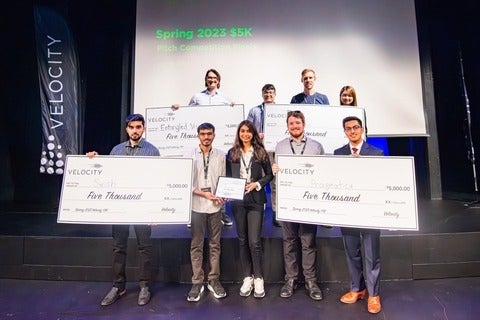
On July 19th, the University of Waterloo community came together to support seven finalist teams as they pitched their business ideas for a chance at one of four $5,000 grants, and one $500 grant for People’s Choice Award.
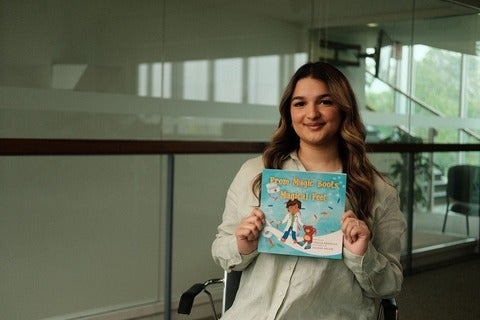
Unzila Shahzad, a University of Waterloo co-op student, recently wrote and published her own children’s book following a work term at SickKids Hospital. Shahzad’s book, Haseeb and Teddy: From Magic Boots to Magical Feet, adds a touch of magic to empower children with clubfoot while shedding light on the congenital condition. Clubfoot is present at birth which causes an infant’s foot to turn inward or downward because of a shortened Achilles tendon.
On Tuesday, July 7, the Office of Indigenous Relations invited Waterloo President and Vice-Chancellor Vivek Goel and other campus community members for an event to celebrate the official launch of the Indigenous Strategic Plan 2023-2028. The purpose of this plan is “to assist in guiding the University of Waterloo towards its goal of indigenizing and decolonizing the institution,” according to Jean Becker, associate vice-president of the Office of Indigenous Relations.