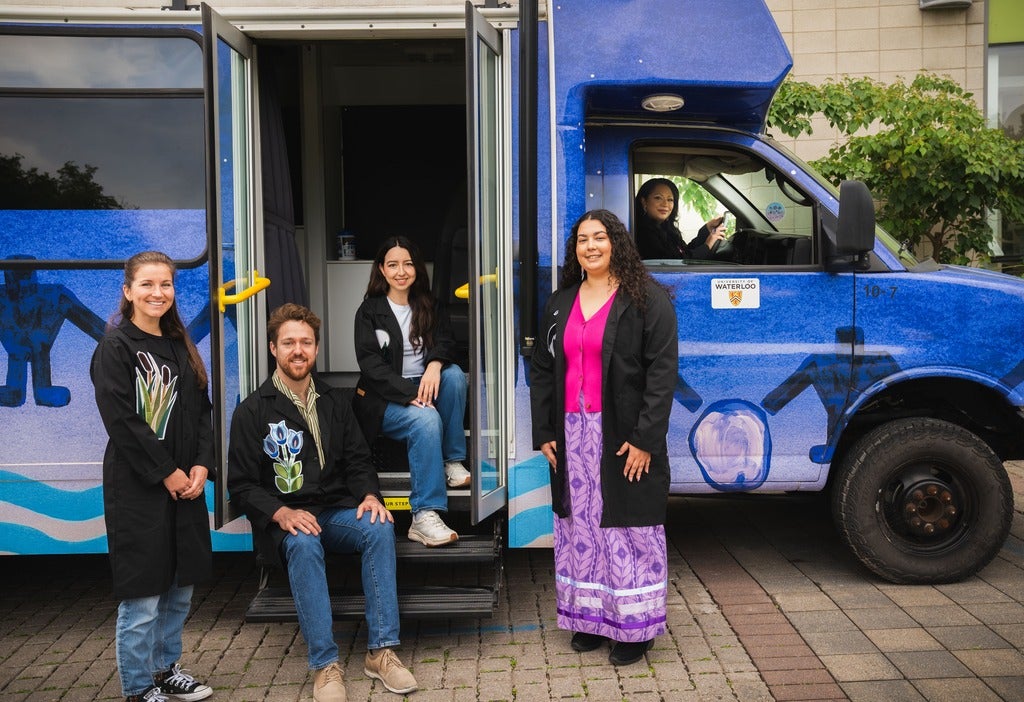
Riding bikes reconnects rivers and communities
Water Cycles enables bike-powered learning and community science that explores how we value and manage water
How do we empower communities to better manage and share water? A group of students and partners, supported by Dr. Dustin Garrick, professor in the Faculty of Environment, had an idea to get people together on bikes and it set a movement in motion.
The idea became Water Cycles Expeditions, a blend of social enterprise, experiential education and community science. Their mission is to reconnect people and water through the simple, but powerful act of cycling.
Led by volunteers around the world, each ride tells a story, celebrates natural wonders, cultural heritage and the powerful connections that humans have to water and each other.
What makes this work so valuable is the hypothesis underpinning it: the act of biking in groups near water will have a ripple effect in three stages. First, group rides cultivate a stronger personal connection to local waterways and build empathy among participants who share those spaces. Second, riders learn about the waters they share, as well as the values they want to protect. Finally, the combination of empathy and empowerment can inspire communities to work together to better manage it, working toward healthier, more resilient futures.
Building partnerships and relationships
This ripple effect is currently playing out thanks to the most recent pilot project, Two Row by the Grand. The initiative brings together members of Six Nations and the University of Waterloo to share a Reconciliation-focused bicycle tour along the Grand River that runs alongside the annual paddling event, Two Row on the Grand.
The inaugural ride was co-led by Spring Carter of Six Nations Tourism and Garrick. The goal was to co-create the route, build the team, develop the learnings and explore partnership and learning models that could be taken forward in future years.
“The fact that the initial relationship-building seemed effortless, coupled with the enthusiasm and immediate bonding of the Two Row By the Grand Team, my own interest in cycling as a lifestyle was fueled,” Carter says. “Maybe it was the endorphins from our team rides talking, but I easily saw opportunities for future group rides focused on connection, community and the natural beauty we have in abundance along the Grand. The chance to partner with Water Cycles to create these rides is a highlight of this cycling season!”
Wildfires change the route
Activities began long before the start line with team building rides, orientation and leadership sessions. However, smoke from wildfires in northwestern Ontario provided a sobering challenge before they officially hit the road. The poor air quality prompted Environment and Climate Change Canada to issue an orange-level weather warning in mid-July, advising that activities be moved indoors.

Wildfire smoke on the Grand River.
To keep people safe, the pilot followed suit. But activities weren’t cancelled. As the impacts of climate change become more visible, so too did the participants commitment to learning, collaboration and stewardship.
“Our plan was to travel up to 40 kilometers per day and participate in cultural teachings with Indigenous knowledge holders and other allies on different aspects around Reconciliation,” Garrick says. “The ride may not have happened, but the teachings did, starting with the Two Row Wampum and the history of those relationships and agreements between Six Nations and the Dutch. Then we moved to other aspects of the culture, the economy, the natural heritage throughout Six Nations and across the Grand River.”
The unique experience of pivoting has solidified participants’ commitment to the cause as they continue to volunteer for initiatives to advance learning through cycling in the local area, including at the upcoming public event Water Cycles Thanksgiving in Belwood on October 3.
A ‘bike’s eye view’ locally and globally
Since 2022, Water Cycles has led 15 rides with 500 participants across Canada, the United States and Kenya. These events have built momentum towards partnerships with outdoor learning programs and tourism initiatives and have always focused on relationships first, with partnerships driving the initiatives.
Now it’s about expansion, allowing more community members, the general public and students to experience the “bike’s eye view” as Garrick likes to say.
Part of this work includes integrating into Waterloo’s curriculum by offering a course on cycling for sustainability and offering an educational scavenger hunt for primary and secondary students. Water Cycles has also been approved for funding from the Canada Foundation for Innovation to build out a fleet of 30 bikes to create a system for managing a bike share program with partners.

Water Cycles adventure game.

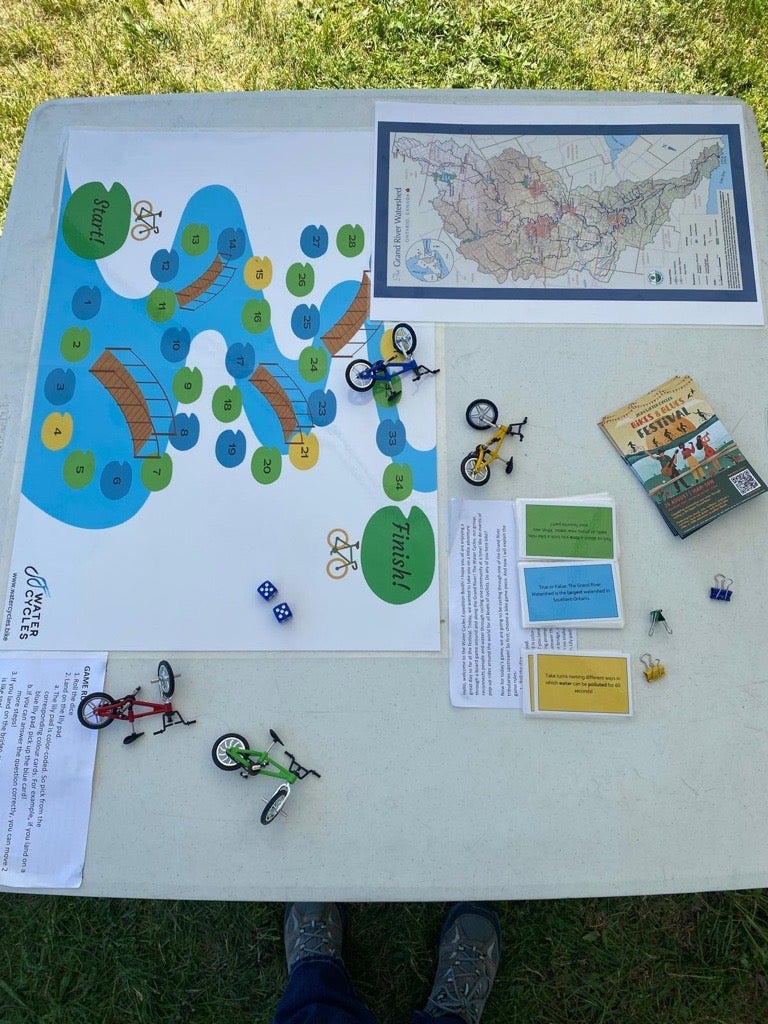
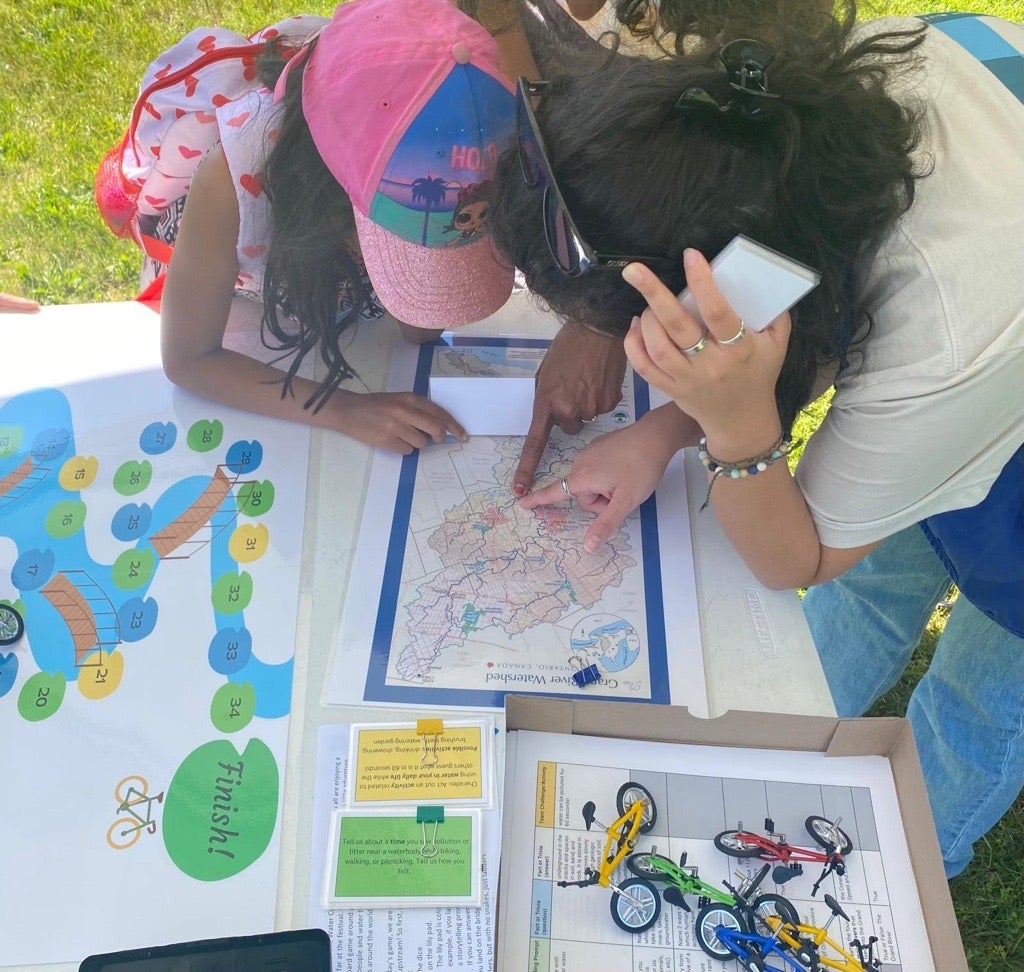
Initiatives like Water Cycles underscore the leadership in sustainability research and education happening at the University of Waterloo where Faculty of Environment researchers are working with the world, for the world to be a catalyst for environmental innovation, solutions and talent.
“These are just some of the components of a co-created long-term vision for bike-powered learning and community science that explores how we value and manage water,” Garrick says. “And it’s only the beginning.”
Photo credits: Greg Hill and Dustin Garrick. Two Row by the Grand pilot crew, from left to right: Chris “Bubba” Courtney, Spring Carter, Greg A. Hill, Will Rauch-Davis, Cathryn Smart, Fridah Silas, Leah Sault.