Sustainable Futures

Thursday, July 10, 2025

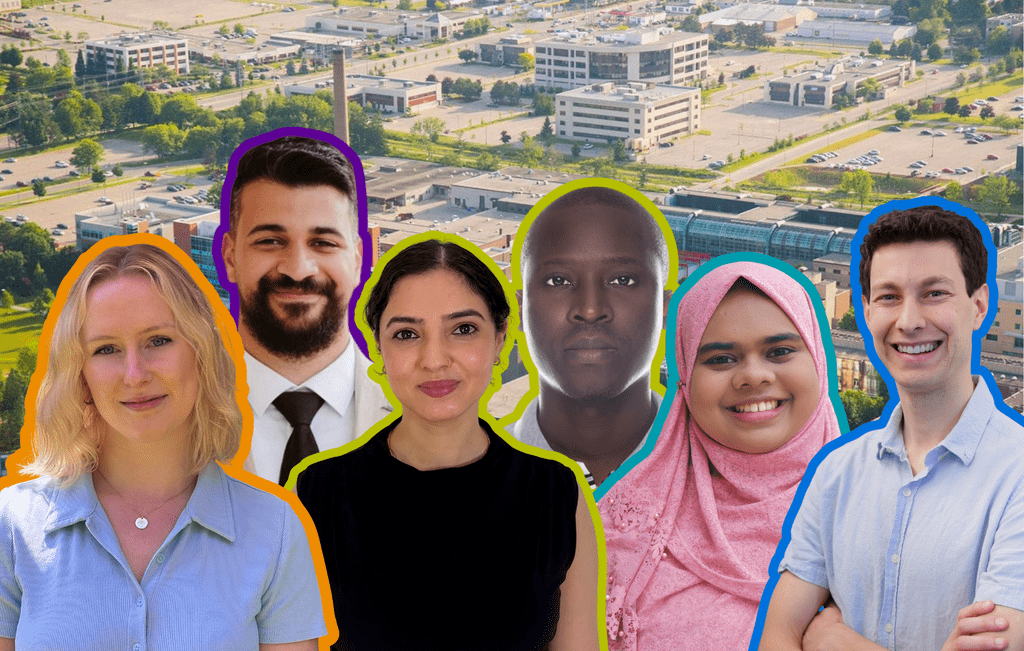
Celebrating the 2025 Vanier scholars

by Zoe Tipper, Graduate Studies and Postdoctoral Affairs

As part of a recent Government of Canada announcement, six University of Waterloo doctoral students were named recipients of the Vanier Canada Graduate Scholarship (Vanier CGS). 

The Vanier CGS is one Canada’s highest academic honours, awarded to doctoral students who demonstrate academic excellence, research potential and leadership. These scholars join a community of researchers at Waterloo who are tackling today’s most pressing challenges through both fundamental discovery and applied innovation.  

Monday, July 7, 2025

New technologies may hold the key to climate resiliency

by Sam Charles, University Relations

Forecasting and tracking wildfires and flooding is extremely complicated as multiple variables are involved. Weather, topography and groundwater flows are just some of the elements that need to be considered when preparing or responding to natural disasters.

Artificial intelligence (AI) and machine learning (ML) technologies are enabling these variables to be analyzed and interpreted quickly and more accurately than ever before allowing decision makers and first responders to make informed decisions that can save lives and safeguard infrastructure.

Thursday, July 3, 2025

Keep calm, adapt and carry on

by Sam Charles, University Relations

After emerging from the pandemic on a relatively strong footing, the Canadian economy is now dealing with considerable trade and investment uncertainty because of U.S. policies, including tariffs.

Friday, June 27, 2025

Natural disasters are increasingly putting the value of properties at risk

by Sam Charles, University Relations

Whether it’s flooding in Toronto or forest fires raging in Alberta and Manitoba, climate change is pushing natural disasters into populated areas and having a dire impact on communities.

The threat to many homeowners extends beyond property damage and risk of life. The value of their homes and properties could be at risk.

Monday, June 23, 2025

Waterloo represents within BetaKit Most Ambitious List of 2025

by Sam Charles, University Relations

As a hub of entrepreneurship and innovation, it’s no surprise that companies and founders linked to the University of Waterloo have a noticeable presence among those featured within BetaKit’s Most Ambitious List.

Waterloo ranks as the top university in Canada for startup founders and 21st in the world according to the Pitchbook University Rankings. Recently released data shows that Velocity, Waterloo’s core entrepreneurship incubator, has more than 500 companies with a combined enterprise value of $40 billion.

Wednesday, June 18, 2025

How to suspend one liquid inside another

by Media Relations

Researchers led by a team at the University of Waterloo have developed a way to create tiny droplets of one liquid inside another liquid without mixing the two together.

Known as droplet templating, the technique enables the creation of a new class of nanoparticle-based soft materials with potential applications in carbon capture and wastewater treatment.

Wednesday, June 18, 2025

More than 1,200 founders and counting

by Sam Charles, University Relations

The University of Waterloo startup ecosystem has long been a driver of innovation across its campuses, in Waterloo region and around the world. Entrepreneurship is woven deep within the Waterloo DNA and continues to grow and prosper because of a solid foundation of support and resources.

Tuesday, June 17, 2025

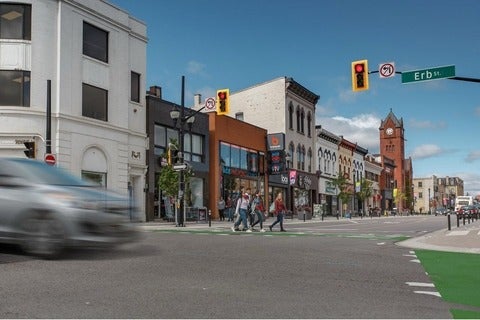
Is Waterloo Region ready for a million people?

by Skyler Hammond, Future Cities Institute founded by CAIVAN

As Waterloo Region grows closer to the 2050 projection of one million people, it faces challenges shared with many growing regions and municipalities across Canada. This hopeful milestone comes with big questions about infrastructure, housing, transit, livability and the overall readiness of the region to support its residents in responsible, resilient ways.

Friday, June 13, 2025

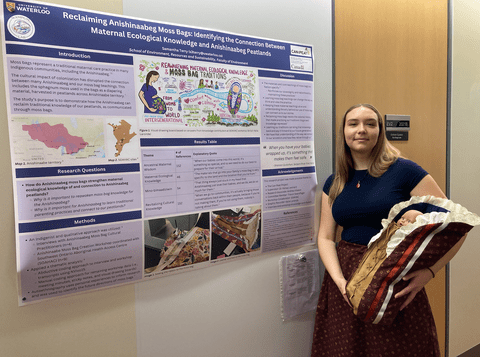
Reclaiming Anishinaabeg moss bags for cultural and ecological healing

by Chantal Vallis, Faculty of Environment

Culture doesn't vanish—it sleeps until stirred again. This idea lies at the heart of Samantha Terry’s research on Anishinaabeg moss bags.

Terry, a fourth-year undergraduate student in the Faculty of Environment is Ojibwe from Temagami First Nation and of settler descent. Working with the Can-Peat research team at the WAMPUM Lab, her research documented the reclamation process of moss bags to relearn the ecological knowledge held by Indigenous mothers that connects the Anishinaabeg to peatlands.