Thursday, September 25, 2025
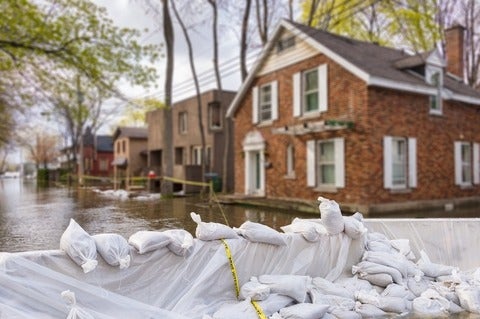
Opinion: Canada needs a community rating system to tame rising flood costs
This opinion piece by Dr.
This opinion piece by Dr.

An eclectic mix of 30 students joined forces at the University of Waterloo to participate in this year’s Sustainability and Social Entrepreneurship Fellowship (SSEF) program, hosted by the Pearl Sullivan Engineering Ideas Clinic and developed in partnership with Halton Region.
The annual, nine-week program challenges students from Waterloo and abroad to explore ideas for improved urban development and present innovative solutions that address the impact of climate change and mitigate further environmental damage.

Although modest in size, small and medium-sized enterprises (SMEs) have a massive impact on the Canadian economy. Their owners employ 90% of the Canadian private-sector workforce and make up most of the companies in Canada. But beyond business, these entrepreneurs are increasingly recognized as key actors in driving social, economic and environmental value for community well-being both in Canada and around the world.

Service and generosity run deep in the Waterloo community, inspiring countless acts of impact both on and off campus. From participating in opportunities like the Environment Leadership Series to initiatives that reach well beyond Ring Road, alumni are making a difference for people and the planet. We caught up with Susan Brown (BES '08), Michael Hazell (BES '77), Maria Legault (BES '11; MES '14), Ryan Lo (BES '14) and Betty Rozendaal (BES ’83; MA ’87) to learn what motivates them to give their time and talents so generously through their work and volunteer activities.

The Global Futures Office is proud to announce the inaugural recipients of the Global Futures Fund

Researchers at the University of Waterloo have developed an inexpensive device that generates enough electricity to power a calculator using only waste walnut shells and drops of water.
The coin-sized device – known as a water-induced electric generator (WEG) – produces electrical energy as water evaporates from a complex network of pores that make up the shell structure.

As wildfires grow more frequent and severe across Canada, University of Waterloo
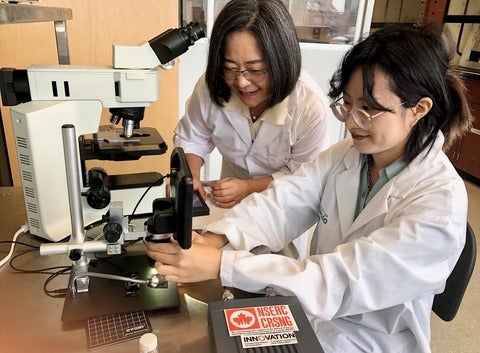
A palm-sized device developed by researchers at the University of Waterloo could help save lives and reduce illness by rapidly and inexpensively detecting toxic bacteria in water supplies.
Contamination caused by E. coli, a bacterium commonly found in the gastrointestinal tracts of mammals, causes an estimated 230 deaths and three million acute illnesses globally each year, mostly affecting babies and young children, according to a study from the National Institute of Health.

Visitors to several national and provincial parks in British Columbia

New research from the University of Waterloo shows that a single, targeted