Restoring oil wells back to nature with moss
In what could represent a milestone in ecological restoration, researchers have implemented a method capable of restoring peatlands at tens of thousands of oil and gas exploration sites in Western Canada.
Flooding is the most frequent natural disaster in Canada with 2 in 10 Canadian homes at risk.
Are economic development and environmental conservation at odds?
As cities around the world struggle to expand their public-transit systems to accommodate their growing population, one city is uniquely rising to the challenge proving that profit, sustainability and good urban planning go hand-in-hand.
For many Environment students, that little push from a mentor is a game changer. It transforms uncertainty into confidence and aspirations into reality.
Earth Day is recognized annually on April 22. This year’s theme, Our Power, Our Planet, invites everyone to unite behind renewable energy, to triple clean electricity by 2030. As people around the world celebrate the planet today and recommit to climate action, we pause to reflect on the ways the University of Waterloo is making advancements to improve energy literacy and conservation on campus.
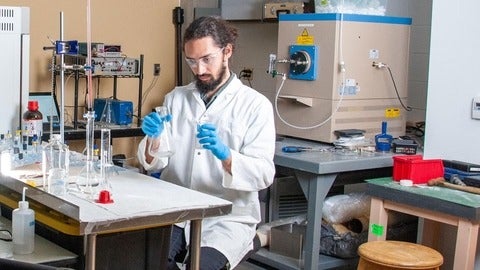
Waterloo researchers, students and alumni are leading innovations to solve the climate crisis by developing sustainable technologies today for the future, and Keith Cleland (MASc ’22) is no exception.
His passion for environmental sustainability and expertise in electrochemistry converged to launch Aqua-Cell Energy Inc. — a startup dedicated to designing affordable and safe energy storage solutions for commercial and industrial solar power.
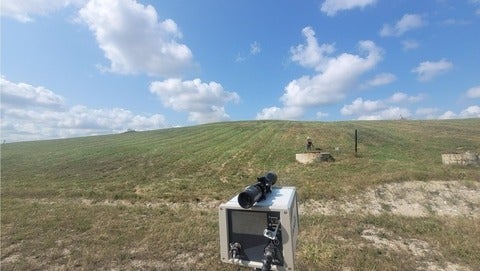
Waterloo researchers are at the forefront of responding to the climate crisis with purpose-driven research and technology, including an interdisciplinary team who are in the field measuring methane emissions to support Canada’s net-zero gas emissions goals.
In a classroom that feels more like a brainstorming lab than a lecture hall, students at the University of Waterloo are diving into the complexities of local economic systems—agriculture, waste management, housing, and small business development— to find real-world interventions that can make a difference in our local community. But they aren’t doing it alone.
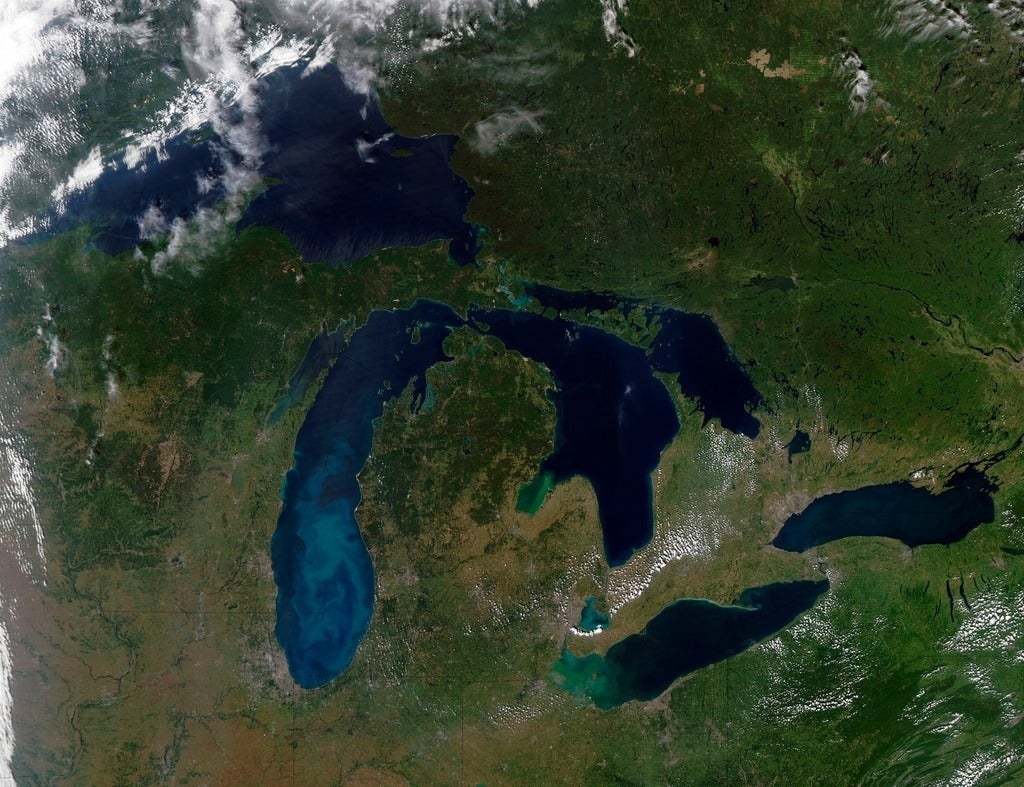
Canada and the U.S. share the Great Lakes except Lake Michigan. Half of the trade between the two countries takes place in and around the Great Lakes. Recent rhetoric from the U.S. government raises concerns about Canada’s sovereignty and resources.