Health Futures

Friday, September 13, 2024

Seizing happiness through adversity

by Jordan Flemming, Waterloo Magazine

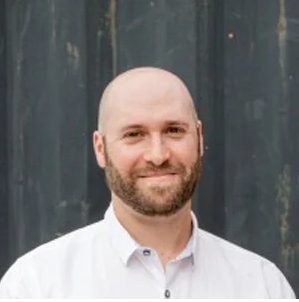
Brian Orend stands outside smiling at the camera
For Dr. Brian Orend (BA ’94), a professor of philosophy and Waterloo alum, the quest for happiness has been both a professional endeavour and a personal journey.

Orend’s experiences with illness inspired his book Seizure the Day: Living a Happy Life with Illness, which reveals how his philosophical insights have shaped his understanding of happiness, resilience and the human condition.

Friday, September 13, 2024

Six crises, countless solutions: Roadmaps to a better future

by Jordan Flemming, University Relations

The University of Waterloo is dedicated to solving complex global challenges through research excellence and deep industry and community partnerships. Waterloo focuses on transforming societies, economies, technologies, sustainability and health for a thriving future. The "Solving the crisis" series takes an in-depth look at six of some of the most pressing challenges facing humanity today, ranging from climate change to housing affordability.

Monday, September 9, 2024

Teens with disposable income most likely to vape

by Media Relations

Teens who have disposable income, live in a lower-income home or are gender diverse are more likely to use e-cigarettes, according to a new study at the University of Waterloo.

Researchers examined survey responses from more than 46,000 adolescents in 167 schools across Canada as part of the COMPASS research system at Waterloo’s School of Public Health Sciences.

Friday, September 6, 2024

At the intersection of health, society and technology

by Faculty of Arts

Developing and delivering quality healthcare requires an interdisciplinary approach, drawing on fields ranging from history to sociology to communication and design. And Waterloo’s strong emphasis on interdisciplinary scholarship is one reason, Dr Peter Warrian and his wife, Dr. Margret Hovenec, established the Lupina Foundation Postdoctoral Research Fellowships with Waterloo’s Faculty of Arts.

Thursday, September 5, 2024

Using 3D imaging to transform plastic waste recycling

by Media Relations

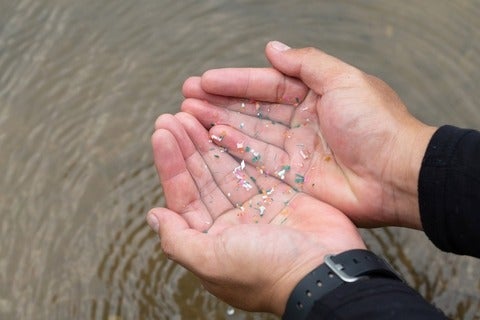
In a global first, University of Waterloo researchers have used 3D imaging technology to understand the fine details of microplastics, paving the way for more effective methods of plastic waste recycling.

Micro and nanoplastics, tiny particles of plastic that come from the breakdown of larger plastic items, have become an exponentially worsening environmental crisis. Due to their difficulties in safely decomposing, plastic pollution poses significant threats to ecosystems, wildlife and human health.

Monday, August 26, 2024

Building new bones with help from 3D printing

by Media Relations

A research team from the University of Waterloo has developed a new material that shares many of the same traits as bone tissue. Using it in 3D printers provides a new and innovative treatment option for patients undergoing major skeletal repair and reconstructive surgery.

Surgical reconstruction in these cases currently involves metal implants and donated bone. Surgeons request a specific size and type from tissue banks to best match their patient’s anatomy, but it’s rarely a perfect fit. A recipient’s body may also reject donated bone.

Thursday, August 22, 2024

Waterloo researchers advance nanoscale imaging capabilities

by Lubaba Hoque, Institute for Quantum Computing (IQC)

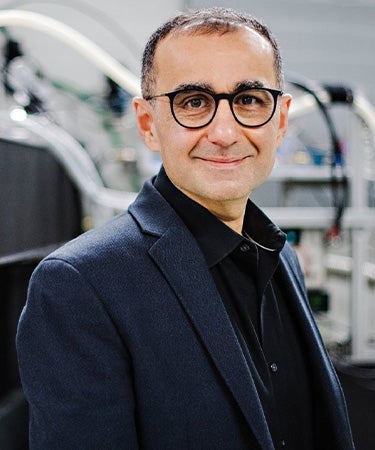
Dynamic nuclear polarization (DNP) has revolutionized the field of nanoscale nuclear magnetic resonance (NMR), making it possible to study a wider range of materials, biomolecules and complex dynamic processes such as how proteins fold and change shape inside a cell.

 raffi budakian

Dr. Raffi Budakian

Wednesday, August 21, 2024

Solving the crisis: Mental health on the edge

by Angelica Marie Sanchez, University Relations

The "Solving the crisis:" series explores the pressing challenges of our time, including climate change, access to health care, housing affordability and more. Each article highlights how Waterloo, a hub of research, innovation and creative thinking, is uniquely positioned to address these issues. Through this series, we highlight the dedication of researchers to tackling global crises and shaping a better future for all.

Tuesday, August 20, 2024

Reducing risk of blood clots after heart surgery

by Media Relations

Some patients who receive heart valve implants develop dangerous blood clots, and researchers from the University of Waterloo contributed to an international collaboration that reduces the risk.

Working with a team from the University of Groningen in the Netherlands, the researchers from Waterloo’s Faculty of Engineering proved that a heart valve implant with a textured surface is less likely to lead to the formation of blood clots — or thrombosis.