Waterloo Pharmacy professor receives $1.15 million as the newly appointed 2024 Applied Public Health Chair
University of Waterloo School of Pharmacy professor Dr.
As spine surgeons and health-care professionals gathered in the white-capped mountains of Whistler, British Columbia, for the Canadian Spine Society’s annual conference earlier this month, many of them heard from University of Waterloo student, Sarah Hardy.
Being able to understand the medications you take should be a given. However, many people struggle to understand what to expect from the medications they’re taking and how to take them effectively.
Waterloo’s clinical associate professor, Dr. Tejal Patel, has teamed up with QRxDigital to include QR codes on medication bottles that link to an instructional video that patients can view at home. This seemingly small addition makes a big impact in improving patient knowledge about their medications and ultimately increases medication adherence.
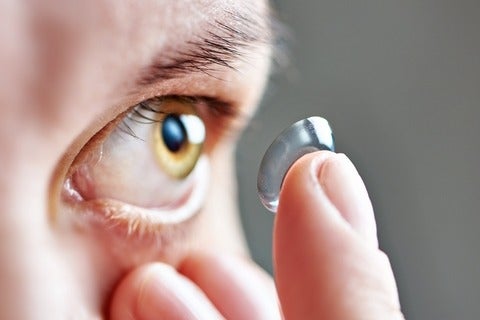
A cross-disciplinary University of Waterloo team has developed a new contact lens material that could act as a bandage for corneal wounds while releasing drugs in a controlled manner to help the eye heal faster.
Typically, corneal abrasion patients spend seven to 10 days wearing a clear, oxygen-permeable bandage contact lens, often instilled with eyedrops containing antibiotics. However, the one-time antibiotic application makes it difficult to ensure enough drugs stay on the eye for sustained treatment.
Hana Karim, a first-year Biomedical Engineering student at the University of Waterloo, is passionate about improving maternal health for low-income communities and underprivileged women. She chose her program because of the opportunities for her to develop technology to solve social problems – integrating her love for history and social causes with her love of STEM.
The Ontario government recently announced funding for five University of Waterloo faculty members to advance their research projects. The announcement was made as part of an investment into Ontario-based researchers whose projects will help to create jobs, technologies and accelerate economic growth.
The five Waterloo researchers will receive funding through the Early Researcher Awards program — a program that gives research funds to new researchers working at publicly funded Ontario research institutions to build a research team.
Though matters of climate change, biodiversity loss and Indigenous Peoples’ health and well-being are often considered separately, the three are linked in innumerable ways.
While people worldwide are experiencing the impacts of climate change and biodiversity losses, Indigenous Peoples are most disproportionately and acutely affected.
Recently reported ecosystem changes and impacts on biodiversity are described as extensive, severe and dramatically declining, including aquatic, atmospheric, terrestrial and most notably, cryospheric changes.
A new research centre at the University of Waterloo School of Optometry and Vision Science aims to use advanced eye imaging to make breakthroughs in better understanding, diagnosing and treating eye conditions and diseases. It also aims to use the eye's unique properties to find biomarkers that could aid interdisciplinary teams in the early identification of systemic disease.
In a bid to support the improvement of health care in Canada, WatSPEED, the University of Waterloo’s professional and executive education division is launching a cutting-edge program — Leveraging AI to Improve Health Care in Canada.
Starting in May 2024, this program will equip senior leaders and executives with the knowledge and tools necessary to harness the power of artificial intelligence (AI) for enhancing patient outcomes and organizational success.
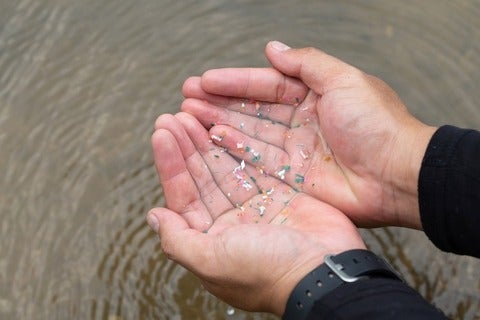
University of Waterloo researchers have created a new technology that can remove harmful microplastics from contaminated water with 94 per cent efficiency.
The amount of plastic pollution in our ecosystem has become an increasingly alarming concern globally. Concerns have frequently been flagged about the impact that plastic pollution has on the toxicity to the environment and humans.