Waterloo public health students win world case competition
Waterloo School of Public Health students won an international evaluation case competition with a plan that focused on a Clean Start Africa program called Circles of Healing
People are less likely to adopt new health policies if they don't have faith in their government, and a new tool from University of Waterloo researchers aims to fix that.
The tool – designed by a team based in Waterloo's School of Public Health Sciences – aids lawmakers in how trustworthy they may appear to the public and could help improve the uptake of public health policies by informing their design and communication.
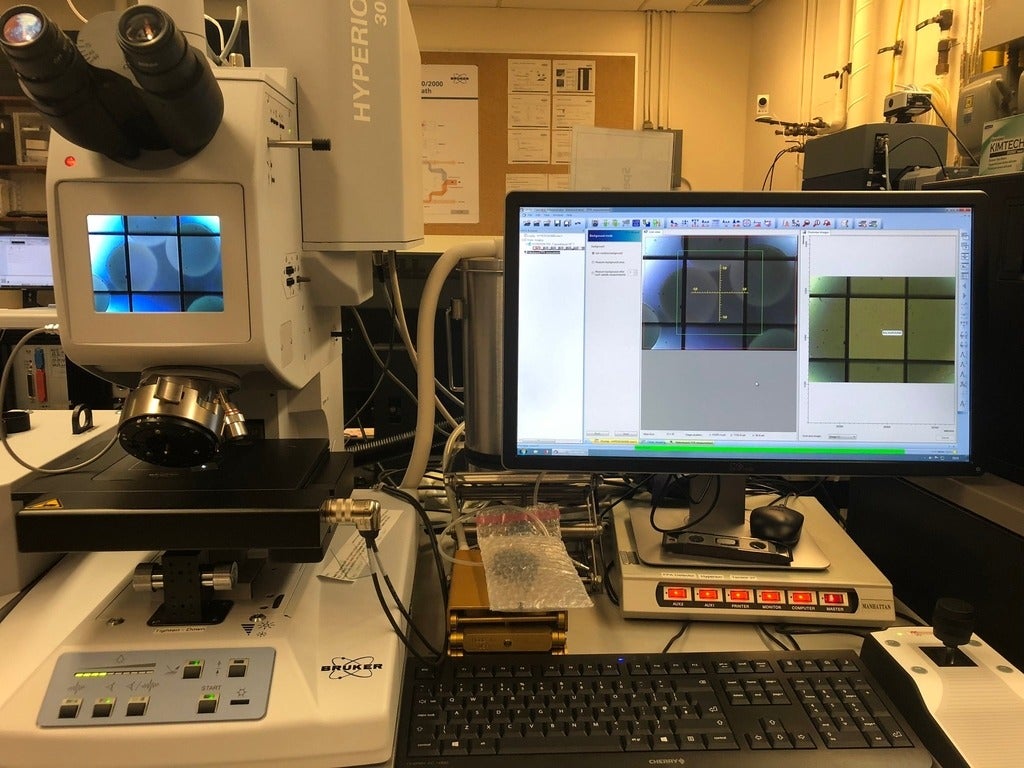
An interdisciplinary research team from the University of Waterloo is using artificial intelligence (AI) to identify microplastics faster and more accurately than ever before.
Microplastics are commonly found in food and are dangerous pollutants that cause severe environmental damage – finding them is the key to getting rid of them.
The research team’s advanced imaging identification system could help wastewater treatment plants and food production industries make informed decisions to mitigate the potential impact of microplastics on the environment and human health.
When the registration period opens for Kinesiology Lab Days, dates sell nearly as quickly as Taylor Swift concert tickets.
Within just a couple of minutes this year, all the available spots were full for Ontario high schools to sign up students to attend the Department of Kinesiology and Health Sciences’ (KHS) live labs for an interactive experience in university-level education.
The School of Public Health Sciences (SPHS) has partnered with United College’s GreenHouse and the Centre for Career Development (CDD) to offer Health Sciences students an experiential learning opportunity in HLTH 480, a new required course that will address complex health problems like climate anxiety, kidney disease prevention and management, addiction recovery and more.
On November 30th, the University of Waterloo community came together to support eight finalist teams as they pitched their business ideas for their chance at a slice of more than $20,000 in grants.
See the remarkable achievements of individuals with roots at University of Waterloo recognized on Forbes' 30 Under 30 list.
The annual list highlights young entrepreneurs who are making a difference in their fields. Waterloo-linked founders were named in health care, consumer technology, science, social impact and enterprise technology categories.
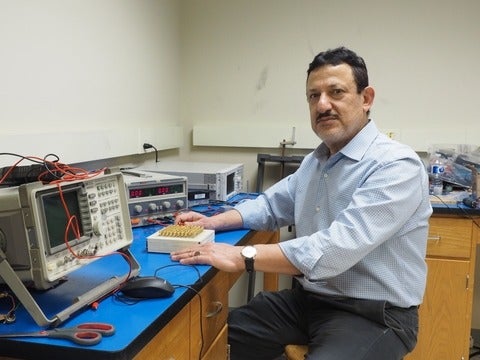
University of Waterloo researchers are pioneering a method to detect breast cancer in women early enough for them to receive life-saving treatment.
The innovative technology aims to be more accurate as well as cheaper to provide than today’s most common diagnostic tools such as X-ray mammography, ultrasound and magnetic resonance imaging (MRI). Test runs have been completed in two minutes and used less energy than a smartphone. It would also be safer than X-rays, which expose patients to high-level radiation that can damage DNA and cause cancer.
Machine learning is now helping researchers analyze the makeup of unfamiliar cells, which could lead to more personalized medicine in the treatment of cancer and other serious diseases.
Researchers at the University of Waterloo developed GraphNovo, a new program that provides a more accurate understanding of the peptide sequences in cells. Peptides are chains of amino acids within cells and are building blocks as important and unique as DNA or RNA.
Antimicrobial resistance (AMR) is a top global threat to both human health and food security — with significant negative economic impacts — yet most people are unaware of the harm it is causing to society.