Three paths, one launchpad: From Waterloo co-op to Canada’s space sector
Three Waterloo Engineering alumni transform co-op experiences into careers helping advance robotics and space exploration at MDA Space
From supporting Canadarm2 operations aboard the International Space Station (ISS) to helping advance the next generation of Canadian space robotics, three Waterloo alumni are building careers at MDA Space, one of Canada’s leading space technology companies.
While their paths into the space sector were different, Mary McPhee (BASc '23), Emily Pittman (BASc '23) and Elodie Xie (BASc '23) each drew on the problem-solving mindset, hands-on learning and work-integrated experiences that define Waterloo’s co-operative education program. Today, they are helping advance Canada’s legacy in space robotics.


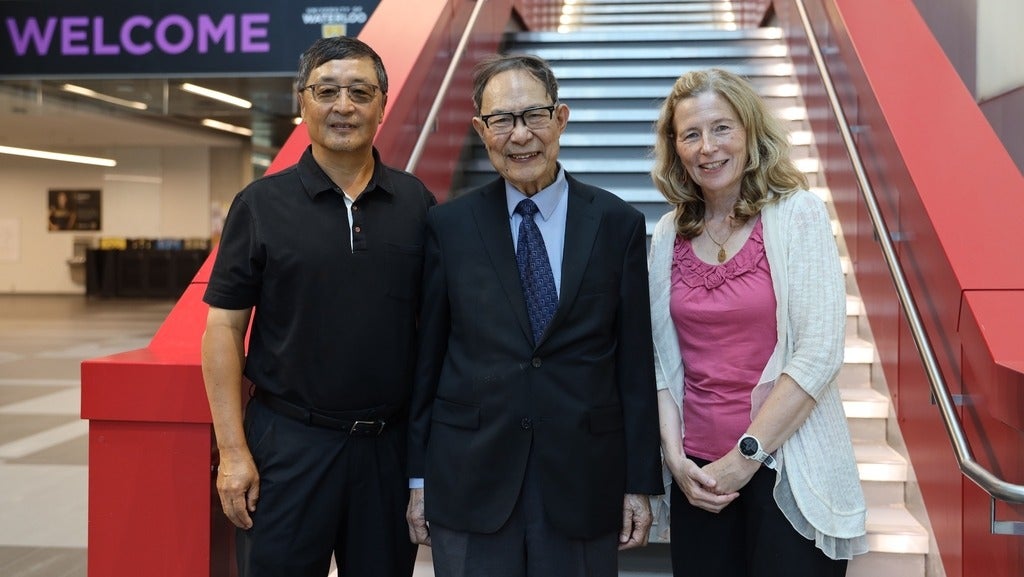
Left to right: Emily Pittman (BASc '23), Junior Member of Technical Staff, Mission Operations; Mary McPhee (BASc '23), Intermediate Member of Technical Staff, Mission Operations at MDA Space; and Elodie Xie, former Intermediate Member of Technical Staff, Mission Operations at MDA Space.
Their journeys also share a common starting point: Waterloo’s Systems Design Engineering (SYDE) program. The close-knit cohort remained connected after graduation, sharing advice, recommending opportunities and helping one another navigate career transitions. As McPhee explored opportunities at MDA Space, the company’s hiring manager was eager to see another SYDE candidate from Waterloo, building on positive experiences with Xie and the program’s reputation. Later, McPhee helped connect Pittman to opportunities at MDA Space, demonstrating the lasting value of Waterloo’s alumni network.
The Waterloo connection that reached orbit
Space wasn’t always the destination McPhee envisioned when she arrived at Waterloo. While studying systems design engineering, she became fascinated by robotics and the Canadarm2 after encountering it in upper-year dynamics and robotics courses. That curiosity would lead her to MDA Space.
“Systems design gives you that breadth of knowledge to be able to go into various applications,” McPhee says, who has spent the past two years on MDA Space’s Mission Operations Engineering team.
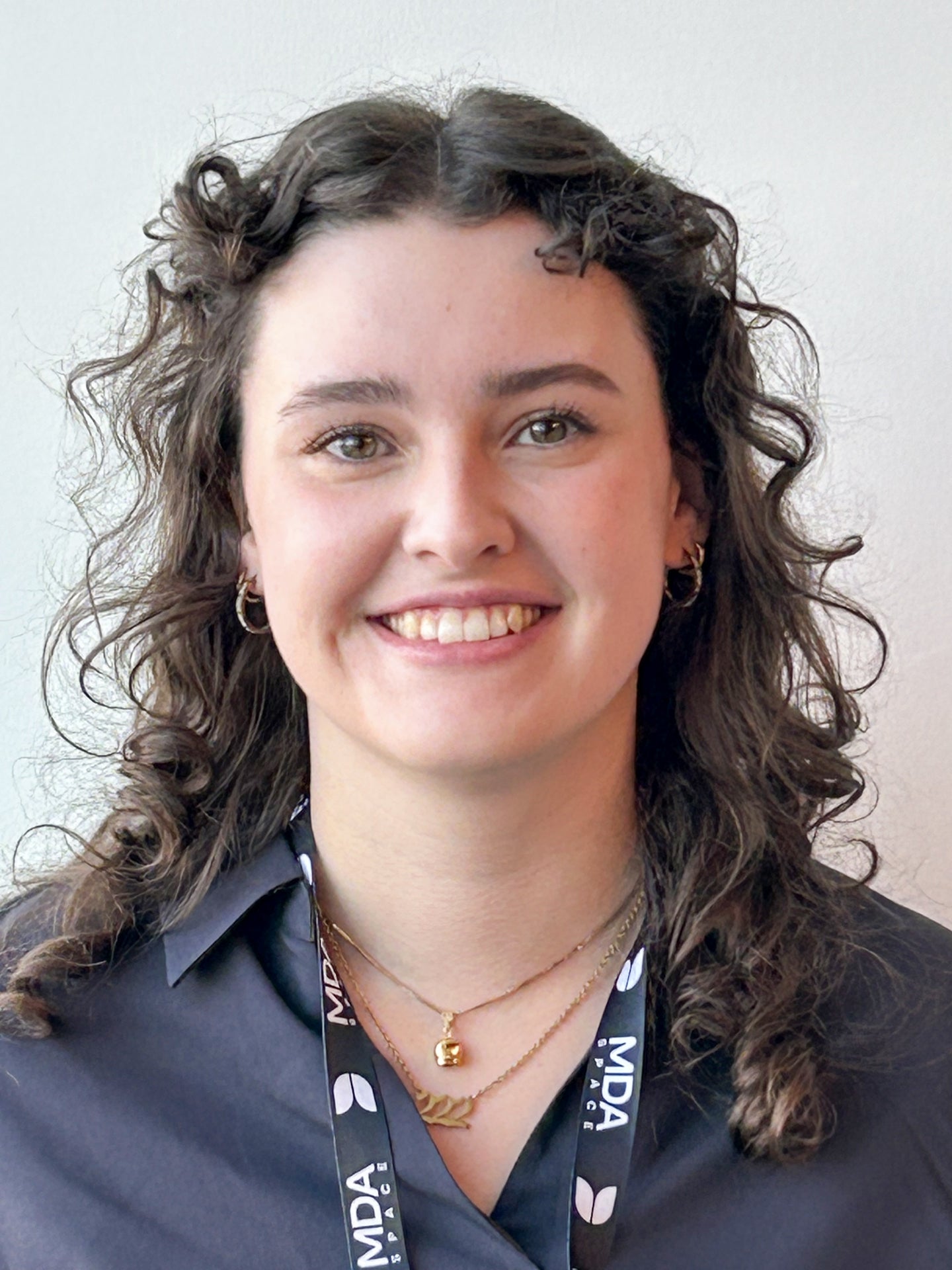
For Pittman, her pathway was shaped by exploration rather than a single career goal. Although she grew in a household fascinated by space, she chose Waterloo’s SYDE program because it could take her in many directions. Through Waterloo’s co-op program, she intentionally explored roles spanning manufacturing, software development and product design, building the broad technical foundation that ultimately led her to a career in space operations.
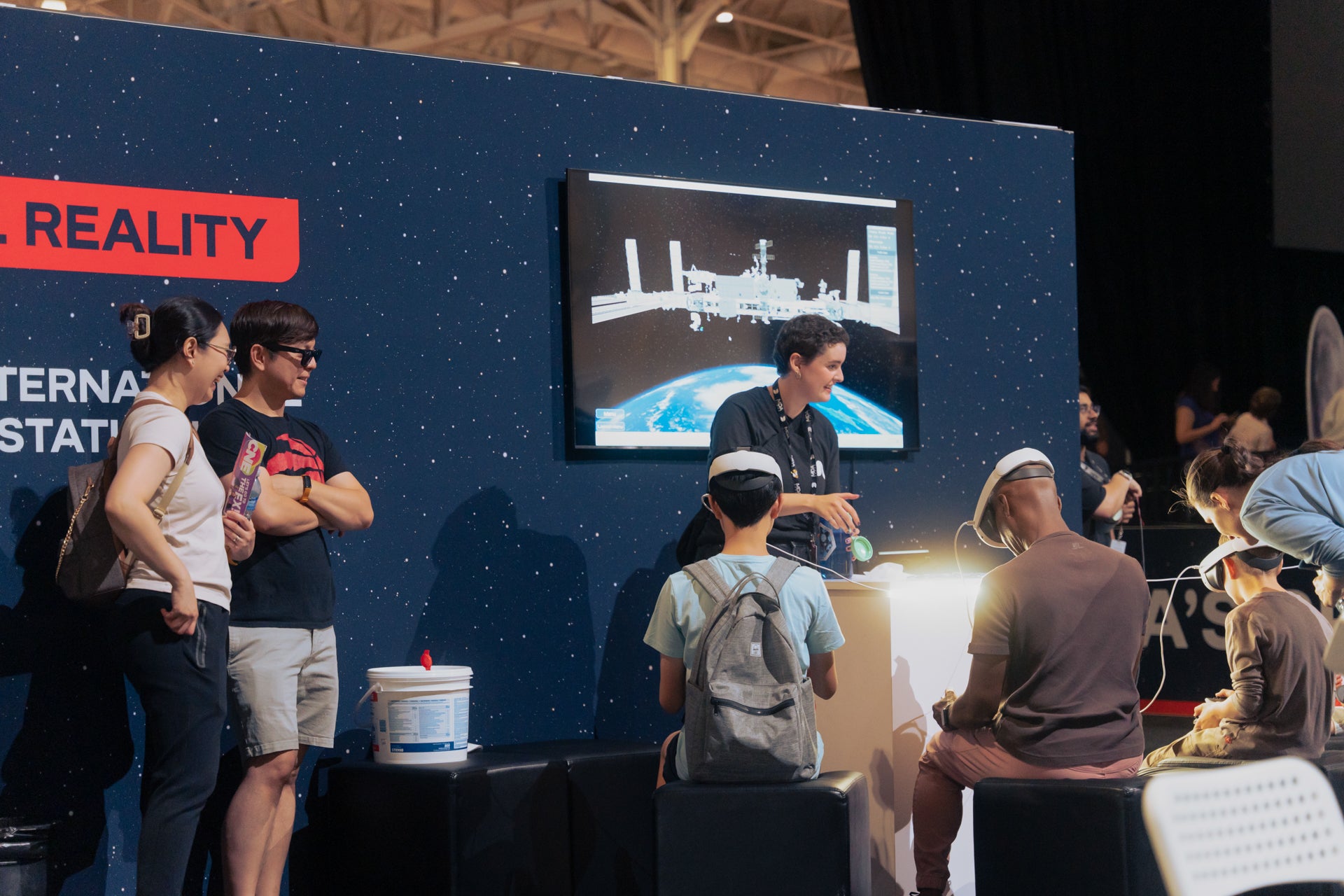
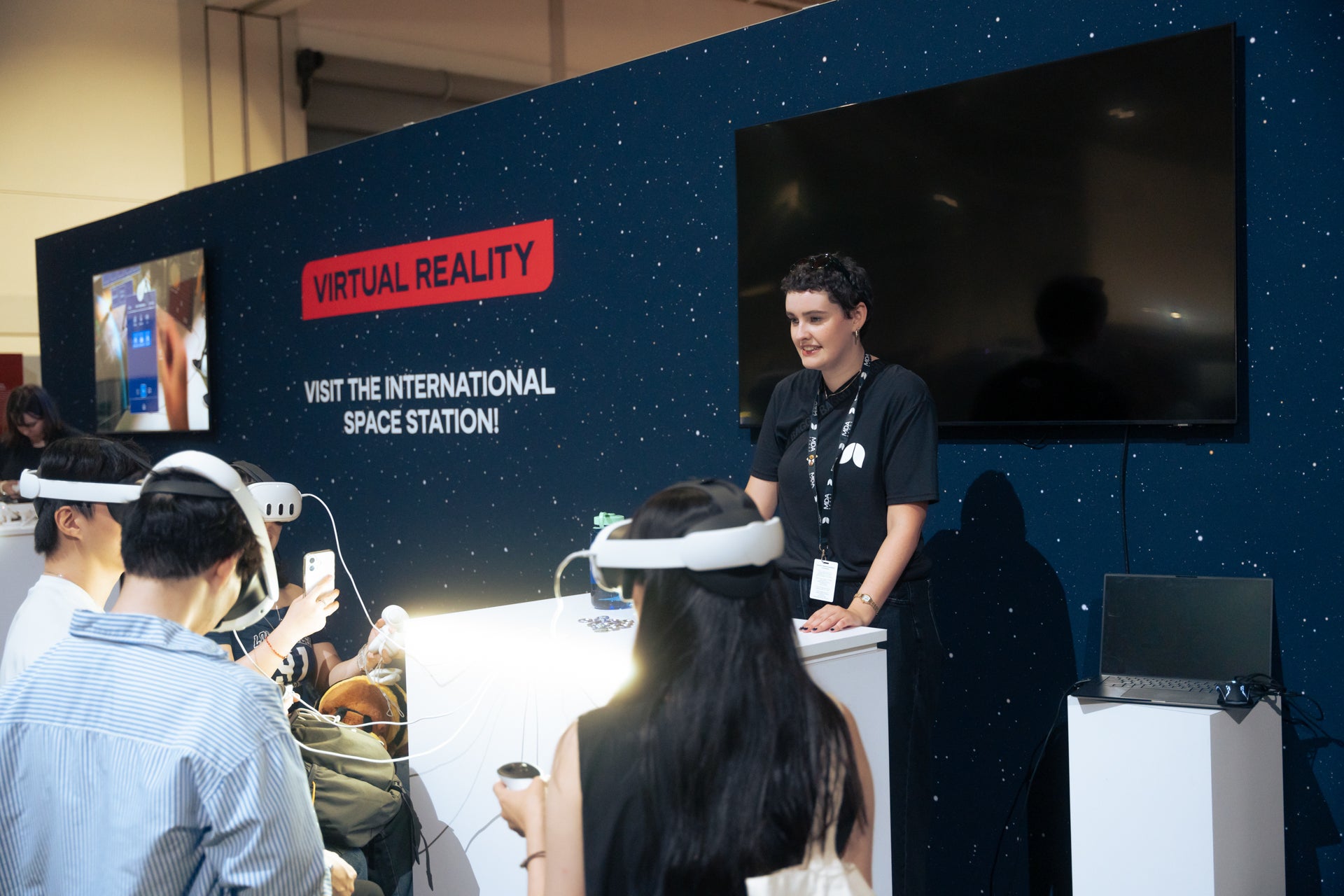
Pittman guides visitors through a virtual reality tour of the International Space Station (ISS) as part of MDA Space's exhibit at the Canadian National Exhibition. Photo credit: MDA Space.
“Even though I didn’t have aerospace experience, all of the different co-op roles I did kind of contributed,” Pittman says. The varied experiences helped her develop skills that proved valuable in an industry she hadn’t initially considered.
Xie’s experience illustrates the direct pathway Waterloo co-op can create between the classroom and industry. She first joined MDA Space as a Control Systems Engineering Intern supporting Canadarm2 before returning two years later for a second co-op term on the newly launched Canadarm3 program. At the time, the project team consisted of only Xie and a lead engineer working to define the system’s foundational requirements.
“It was a significant responsibility to be given as a co-op student,” Xie says. “But because of the success of my first work term, the team trusted me with the role and gave me the opportunity to help shape the project from its earliest stages.”
In 2023, Xie transitioned from co-op student to full-time engineer, continuing to support some of Canada’s most ambitious space robotics initiatives. Although she has since moved on to pursue new opportunities, her journey reflects the impact Waterloo co-op can have in launching careers in emerging industries.
Building Canada’s next chapter in space
Today, McPhee and Pittman are tackling present-day challenges in space, supporting Canadarm2 operations aboard the ISS. The robotic system plays a critical role in maintenance, inspections, cargo handling and imaging, helping reduce the need for astronauts to perform risky spacewalks.
“Anything that we can replace with robotics instead is super desirable,” McPhee says. “That’s kind of the point of external robotic systems such as the Canadarm2. It’s able to replace that need for a spacewalk.”
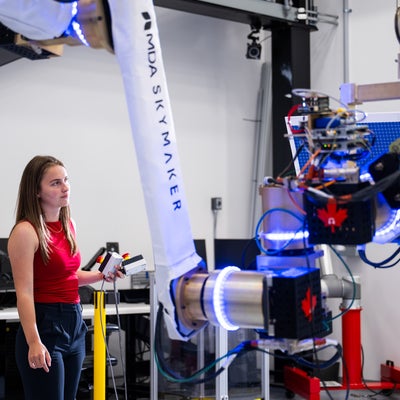
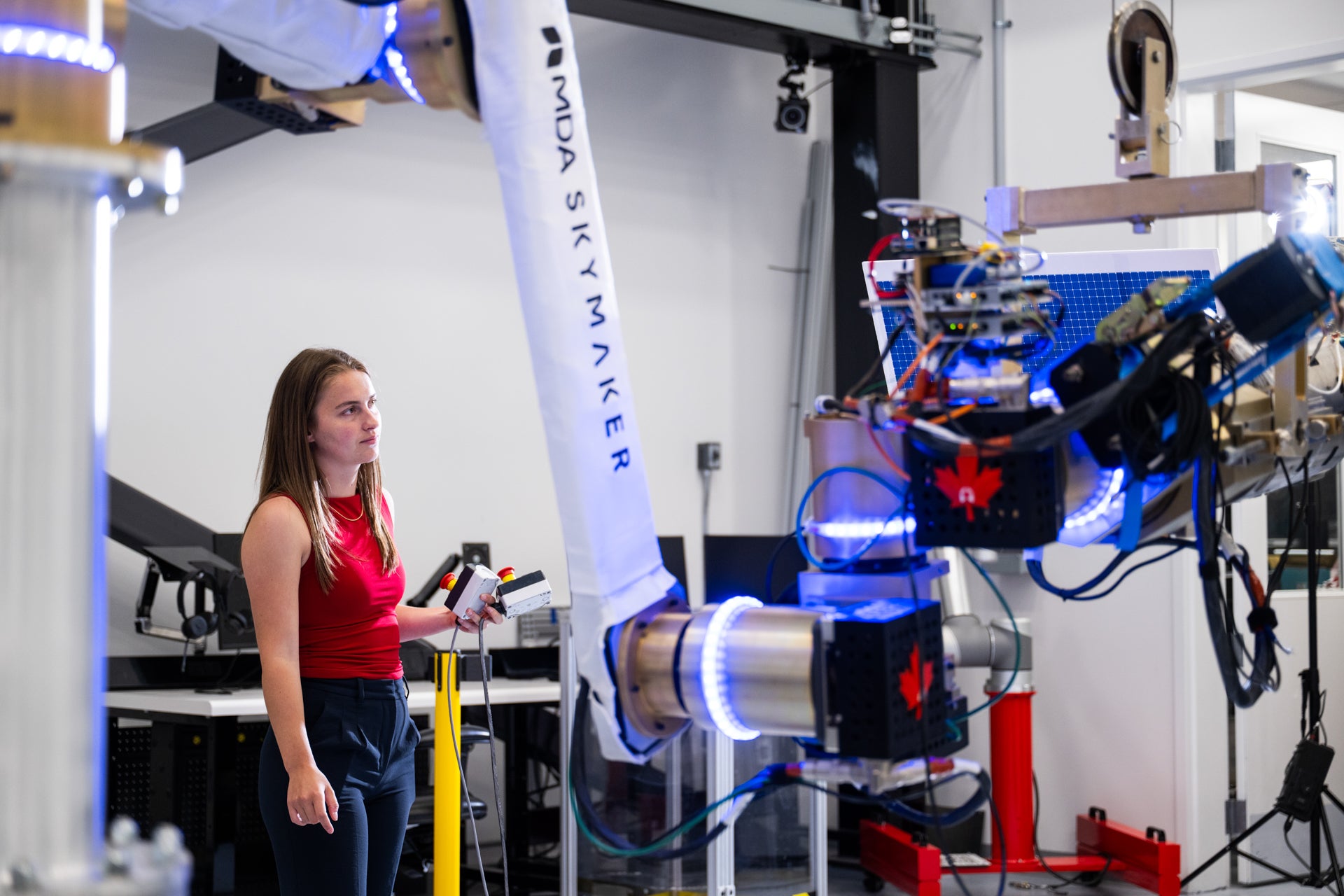
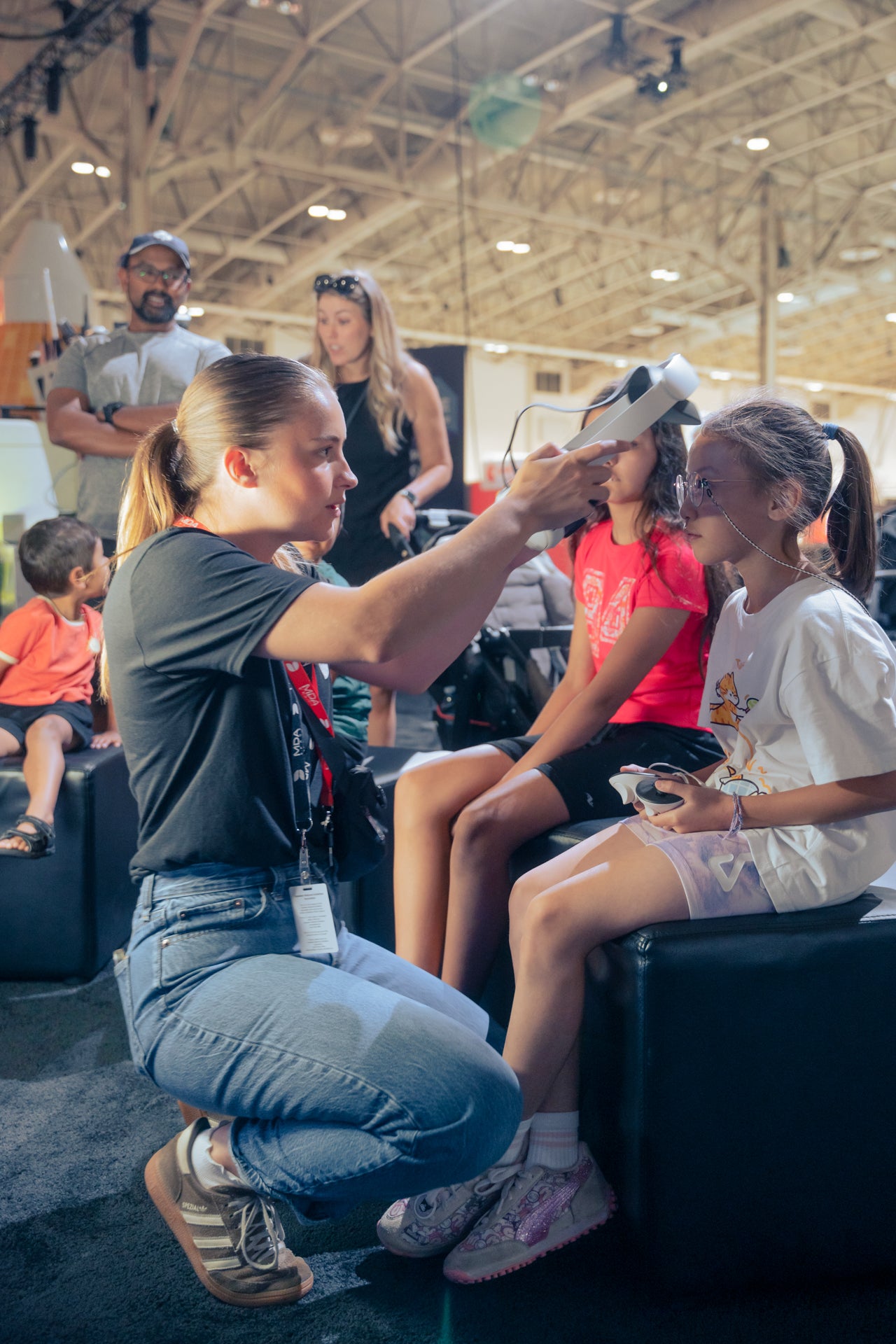
Left to right: McPhee testing part of the MDA SKYMAKER™ prototype robotic arm, inspired by Canadarm technology; McPhee helping kids through a virtual reality tour of the ISS. Photo credit: MDA Space.
As Canada prepares for the next era of lunar exploration and autonomous robotics, the alumni are helping build on decades of Canadian leadership in space. Their experiences also highlight the growing opportunities available to Waterloo students interested in emerging fields such as robotics, autonomy and aerospace.
For employers like MDA Space, these students bring more than technical skills. Through co-op, they gain real-world experience, adapt to new challenges and learn how to contribute to complex projects from day one. From co-op work terms to full-time careers supporting Canada’s space ambitions, McPhee, Pittman and Xie demonstrate how Waterloo’s talent network continues to help drive innovation in robotics, autonomy and space exploration.
Banner photo credit: MDA Space.