Entrepreneurship

Thursday, March 19, 2015

Waterloo researcher recognized as a world leader in tobacco control

by Wendy Philpott, Faculty of Arts

The American Cancer Society has given a researcher from the University of Waterloo the award considered the top in the world for tobacco control.

Geoffrey Fong, a professor in the Department of Psychology and the School of Public Health and Health Systems at Waterloo, has received one of the American Cancer Society’s Luther R. Terry Awards for Outstanding Research Contribution.


Wednesday, March 18, 2015

Waterloo engineering students exhibit innovative projects

by Media Relations

Media and the public are invited to check out what could be the next great Canadian company.  

Senior-year students in the Faculty of Engineering at the University of Waterloo will showcase projects ranging from a hockey bag that dries itself, a diabetic foot monitor to a low-cost prosthetic hand, as part of the annual Capstone Design symposia, which starts Friday.

Monday, March 9, 2015

Kickstarter king has Pebble Time on his hands

by Carol Truemner, Faculty of Engineering

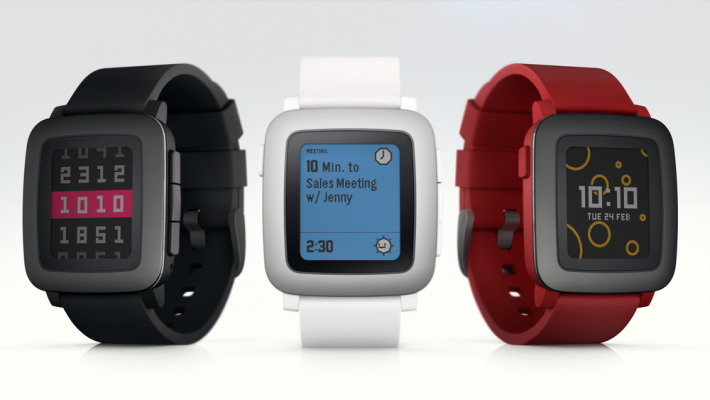
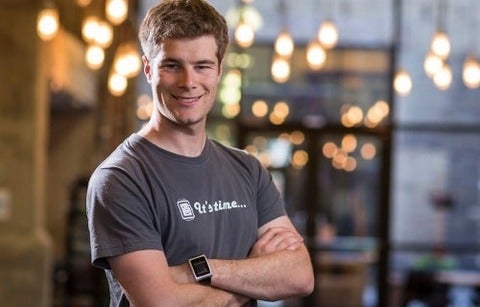
Eric Migicovsky is the king of Kickstarter. For the second time in three years his brainchild, the Pebble smartwatch, reigned supreme on Kickstarter, the crowd-funding phenomenon. In just 49 minutes, the campaign raised over $1 million. Two days later, 47,000 people had backed the Pebble campaign to the tune of $10 million.

A black, white, and red Pebble Time Smart Watch

Monday, March 2, 2015

Nobel Prize winner at Waterloo to speak about innovation

by Staff, Marketing and Strategic Communications

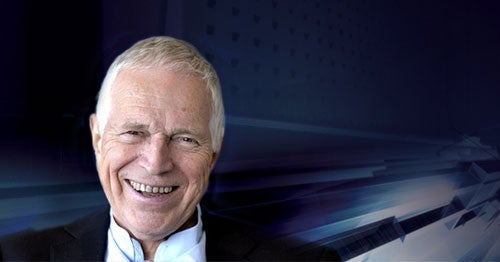
Edmund Phelps

A Nobel laureate whose most recent book is being lauded as the best business book of the year is giving a public lecture about grassroots innovation at the University of Waterloo.

Edmund S. Phelps, who was awarded the Nobel Memorial Prize in Economic Sciences in 2006, will speak on Thursday, March 5 at the Mike & Ophelia Lazaridis Quantum Nano Centre.

Thursday, February 19, 2015

Open data at Waterloo fosters student innovation

by Christian Aagaard, Marketing and Strategic Communications

Kartik Talwar wanted something more out of the University of Waterloo when he arrived as a student in 2010: information, and lots of it.

It wasn’t that it didn’t exist; it was just in scattered digital nooks and crannies. Talwar, who graduates this year in math and physics, sought a single source from which to shape his student life, a giant repository of data about programs, courses, timetables and services.

So he built one, invited others to contribute and collaborate, and thus added his weight behind the University’s advance into the world of open data.

Tuesday, February 17, 2015

The Waterloo Pump and the flood of excellence that followed

by Angela Pause, Faculty of Engineering

The Waterloo Pump was invented in 1978 by University of Waterloo professors Alan Plumtree and Alfred Rudin at the request of Canada’s International Development Research Centre (IRDC). The goal was to invent an inexpensive pump that could be manufactured in developing countries with local materials that could be easily repaired by villagers using readily available materials.

Friday, February 13, 2015

Waterloo invention advances quantum computing research

by Sabrina Hutchison, Office of Research

Creating entangled photons is part of the work quantum computing researchers perform in their labs. But for the past 30 years, scientists have been slowed down and frustrated by the large, often finicky machines they’ve had to use to generate them.

Now, a University of Waterloo researcher has invented a device - so small it fits into your hand - that can do the job. And far from being a fussy, difficult machine to operate, the Waterloo device can be tossed around the room - and still work.

Monday, February 9, 2015

Waterloo device could take the pain out of diabetics’ blood tests

by Carol Truemner, Faculty of Engineering

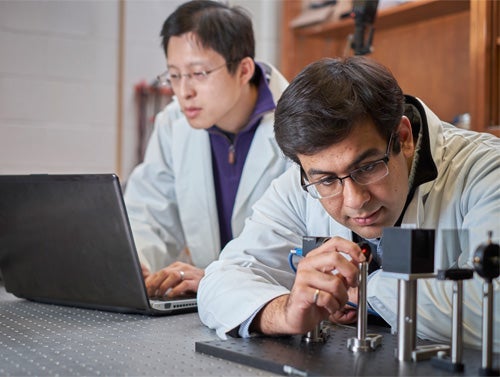
A Waterloo Engineering student is developing a device that he hopes will let people with Type 1 diabetes test their blood sugar levels without the painful prick of a needle.

Shahid Haider was inspired to create the device - which takes pictures of the eye to determine blood glucose concentrations - after watching his younger brother struggle with the daily monitoring of his levels.

Alex Wong (back) and Shahid Haider