
Wednesday, May 7, 2025
Oh, the places you’ll go!


A research team led by Waterloo Engineering has developed a faster, cheaper way to create large-scale, three-dimensional (3D) computer models of urban areas, technology that could impact fields including urban planning, architectural design and filmmaking.
The system can generate 3D models of entire cities using only 2D aerial photographs, automating a time-consuming manual process that previously required specially trained 3D artists and computer graphics programs.

A team of researchers from the University of Waterloo have created a method that makes virtual reality (VR) more accessible to people with mobility limitations.

Chemical company BASF and the University of Waterloo’s Data and Artificial Intelligence Institute (Waterloo.AI) are joining forces to advance AI applications through a collaborative research agreement that will run from 2025 to 2028. This partnership is designed to facilitate knowledge sharing and develop advanced AI systems to drive operational excellence, enhance customer value, and streamline processes.
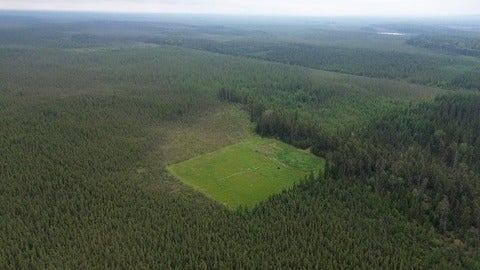
In what could represent a milestone in ecological restoration, researchers have implemented a method capable of restoring peatlands at tens of thousands of oil and gas exploration sites in Western Canada.

Flooding is the most frequent natural disaster in Canada with 2 in 10 Canadian homes at risk.

As automation and artificial intelligence (AI) continue to reshape the workforce, the University of Waterloo is at the forefront of finding solutions for this challenge. With the increasing value placed on hands-on data analytics training, the School of Accounting and Finance (SAF) at Waterloo recently hired a new faculty member to specifically lead a new project-based AI course. This means that students won’t just learn about technology, they’ll be solving real problems with it.

University of Waterloo researchers have developed new artificial intelligence (AI) technology that can accurately analyze pitcher performance and mechanics using low-resolution video of baseball games.
The system, developed for the Baltimore Orioles by the Waterloo team, plugs holes in much more elaborate and expensive technology already installed in most stadiums that host Major League Baseball (MLB), whose teams have increasingly tapped into data analytics in recent years.

Earth Day is recognized annually on April 22. This year’s theme, Our Power, Our Planet, invites everyone to unite behind renewable energy, to triple clean electricity by 2030. As people around the world celebrate the planet today and recommit to climate action, we pause to reflect on the ways the University of Waterloo is making advancements to improve energy literacy and conservation on campus.

Waterloo researchers, students and alumni are leading innovations to solve the climate crisis by developing sustainable technologies today for the future, and Keith Cleland (MASc ’22) is no exception.
His passion for environmental sustainability and expertise in electrochemistry converged to launch Aqua-Cell Energy Inc. — a startup dedicated to designing affordable and safe energy storage solutions for commercial and industrial solar power.