Research

Wednesday, November 13, 2019

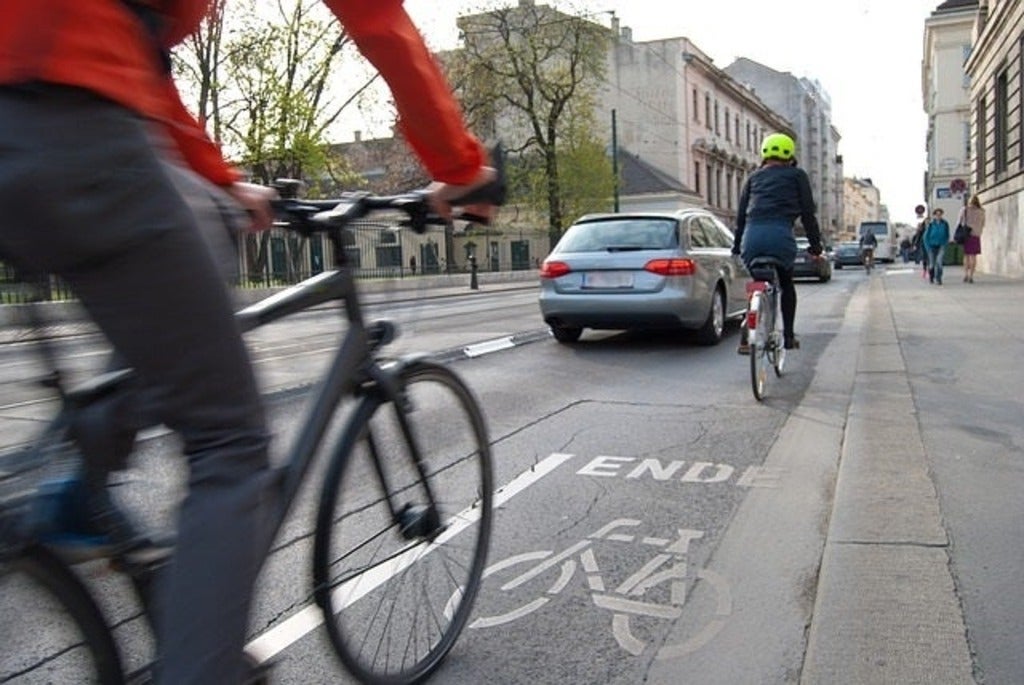
Aiming to improve cycling safety, comfort with bike lanes

by Brian Caldwell, Faculty of Engineering

Researchers at Waterloo Engineering are developing a new virtual tool that could help planners choose the best places to install bikes lanes in cities.

The data-based tool builds on a field study that validated the safety benefits of bike lanes for cyclists and motorists.

Collected using sensors and a handlebar camera as researchers cycled hundreds of kilometres in Kitchener-Waterloo, the data showed bike lanes virtually eliminate vehicles getting too close to cyclists when they pass them.


Wednesday, November 13, 2019

Nationality likely a key factor in life-and-death decisions

by Media Relations

People making decisions about life-and-death situations consider individuals’ nationalities when deciding who should be sacrificed to save others, according to a study out of the University of Waterloo.

Examining how we think and come to a decision in a moral dilemma, the study concluded that most people think of group members who share the same nationality as replaceable, making any of those members equally expendable within their research scenario.

Tuesday, November 12, 2019

Capstone teams win funding in venture creation competition

by Faculty of Engineering

Two Capstone Design teams earned a significant financial boost as winners of this year’s Palihapitiya Venture Creation Fund competition created to help transform projects into successful startups post-graduation.  

Monday, November 11, 2019

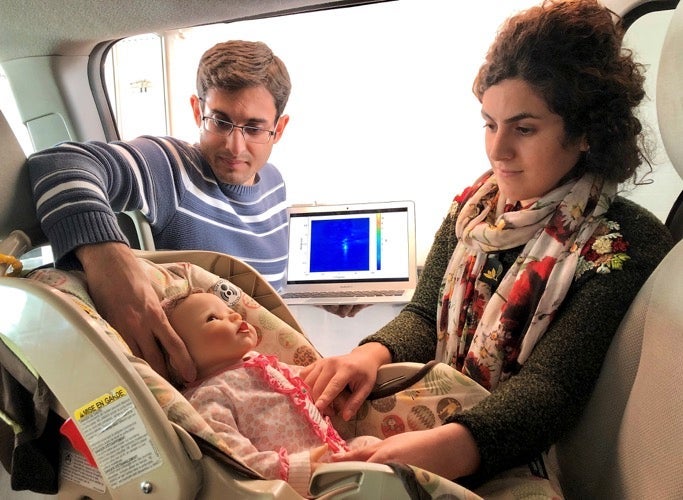
Scientists develop sensor to save children, pets left in vehicles

by Media Relations

The new device, developed by researchers at the University of Waterloo, combines radar technology with artificial intelligence (AI) to detect unattended children or animals with 100-per-cent accuracy.

Testing new sensor

Graduate students Mostafa Alizadeh, left, and Hajar Abedi position a doll, modified to simulate breathing, in a minivan during testing of a new sensor.

Scientists have created an “artificial leaf” to fight climate change by inexpensively converting harmful carbon dioxide (CO2) into a useful alternative fuel.

The new technology, outlined in a paper published today in the journal Nature Energy, was inspired by the way plants use energy from sunlight to turn carbon dioxide into food.

The Intact Centre on Climate Adaptation is aiming to give Canada’s commercial real estate a safe harbour ahead of a growing storm.

The University of Waterloo research centre has developed a comprehensive report outlining 20 measures that can be implemented by commercial real estate owners and managers to enhance flood resilience.

Tuesday, October 22, 2019

New way to wrap liquid drops could improve drug delivery

by Media Relations

The new encapsulation technology, developed by engineers at the University of Waterloo, uses gravity and other natural forces to wrap drops as they fall through a thin layer of liquid shell floating on a base liquid.

Once hardened, or cured, by exposure to ultraviolet light, the shell houses and protects the liquid core inside.

Tuesday, October 22, 2019

New way to wrap liquid drops could improve drug delivery

by Media Relations

Researchers have developed a faster, cheaper way to coat liquid medication, an invention that could improve how drugs are delivered in the body.

The new encapsulation technology, developed by engineers at the University of Waterloo, uses gravity and other natural forces to wrap drops as they fall through a thin layer of liquid shell floating on a base liquid.

Once hardened, or cured, by exposure to ultraviolet light, the shell houses and protects the liquid core inside.

The study, supported by NASA ABoVE and conducted in coordination with the Permafrost Carbon Network and more than 50 collaborating institutions, was published today in the prestigious Nature Climate Change journal. It warns that winter carbon dioxide loss from the world’s permafrost regions could increase by 41 per cent if human-caused greenhouse gas emissions continue on their current pace.

Thursday, October 17, 2019

When it comes to toy design, simpler may be better

by Elizabeth Rogers, Faculty of Arts

If there’s a youngster in your life, you’ve likely encountered the seemingly endless shelves of bright colours and bold patterns in today’s toy stores — but do the toys really live up to their claims of “educational” and “stimulating”? While you might think the toys with a busy design lead to better interactions, recent research suggests the opposite is true. Children are exposed to more diverse and informative vocabulary when playing with their parents with toys with a simple visual design compared to toys with a busy visual design.