Battery-free smart devices closer to reality
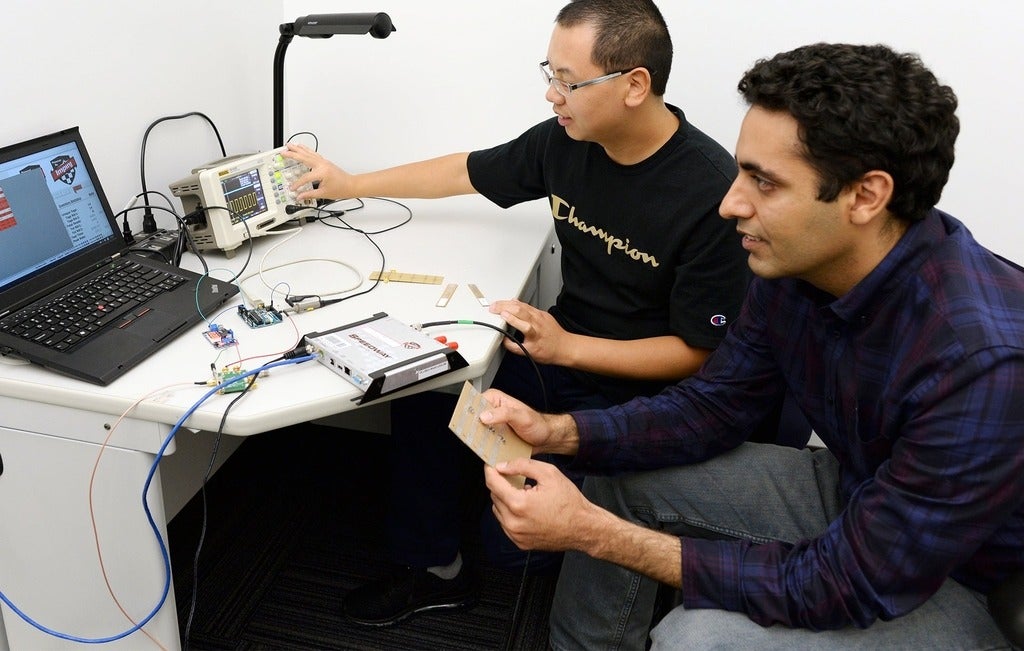
Researchers at the University of Waterloo have taken a huge step towards making smart devices that do not use batteries or require charging.

The public health study used data from 6,550 high school students in grades 9 to 12 in Ontario and British Columbia, collected from a mental-health component of a longitudinal national youth study called COMPASS. The findings suggest that marijuana prevention programs should focus on promoting mental wellbeing instead of abstinence.
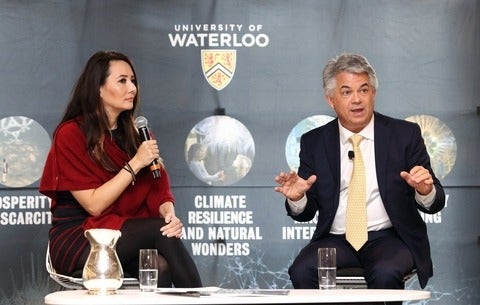
Artificial Intelligence could help the world get ahead of the risks of climate change, according to three Canadian technology giants including the University of Waterloo, Microsoft Vancouver and SAP Labs Canada.
Thought leaders from across the country gathered in Microsoft’s Vancouver headquarters to discuss climate change and technology’s role in helping Canadians adapt.

The teams – each comprised of three undergraduate students from the university’s Faculty of Mathematics – secured first through fourth place, Waterloo’s best-ever result at the annual competition. The field included 130 other teams from the East Central North America region; universities from across Ontario, Ohio, Pennsylvania and Michigan entered teams in the competition that challenges students to solve ten programming problems within a five-hour time limit.
British Columbia experienced a state of emergency this summer when wildfires burned across the province, destroying more area than in any other season on record. The fire currently raging in California has become the deadliest wildfire in the state's modern history.
With climate scientists predicting warmer, drier weather in many regions across Canada, finding solutions to combat the devastation of forest fires has never been more pressing.
Given Waterloo’s leading role in innovation in the technology sector, and the developing research and commercialization of AI, this is an important question to consider. Professor Alexander Wong believes that Waterloo has an important role to play in helping to shape and guide the ethical use of AI.
Nearly every Canadian has found themselves in a situation where they must get behind the wheel of a car during terrible weather conditions. Whether it’s a trip to the airport, a commute to work, or an early morning hockey practice, how quickly and effectively roads get cleared is an important factor in our safety.
Urban planning decisions from decades past are likely a contributing factor to the rise of right-wing populism, a study from the University of Waterloo has found.
As part of its commitment to apply innovative solutions to some of the world's most significant challenges, the University of Waterloo is partnering with Microsoft Canada and SAP Canada to host its Beyond Impact Innovation Summit in Vancouver.
Speakers at the Summit will discuss how the country’s top technology researchers and businesses can work together to help Canadians adapt to physical, financial and social damage that events such as widespread forest fires and flooding are having on Canadians.
Researchers at the University of Waterloo have taken a huge step towards making smart devices that do not use batteries or require charging.

These battery-free objects, which feature an IP address for internet connectivity, are known as Internet of Things (IoT) devices. If an IoT device can operate without a battery it lowers maintenance costs and allows the device to be placed in areas that are off the grid.