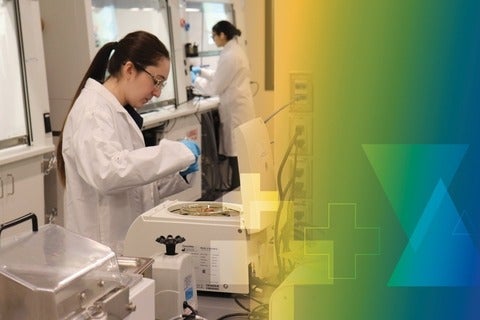
CELLECT. transforms cervical cancer diagnosis with nanotechnology
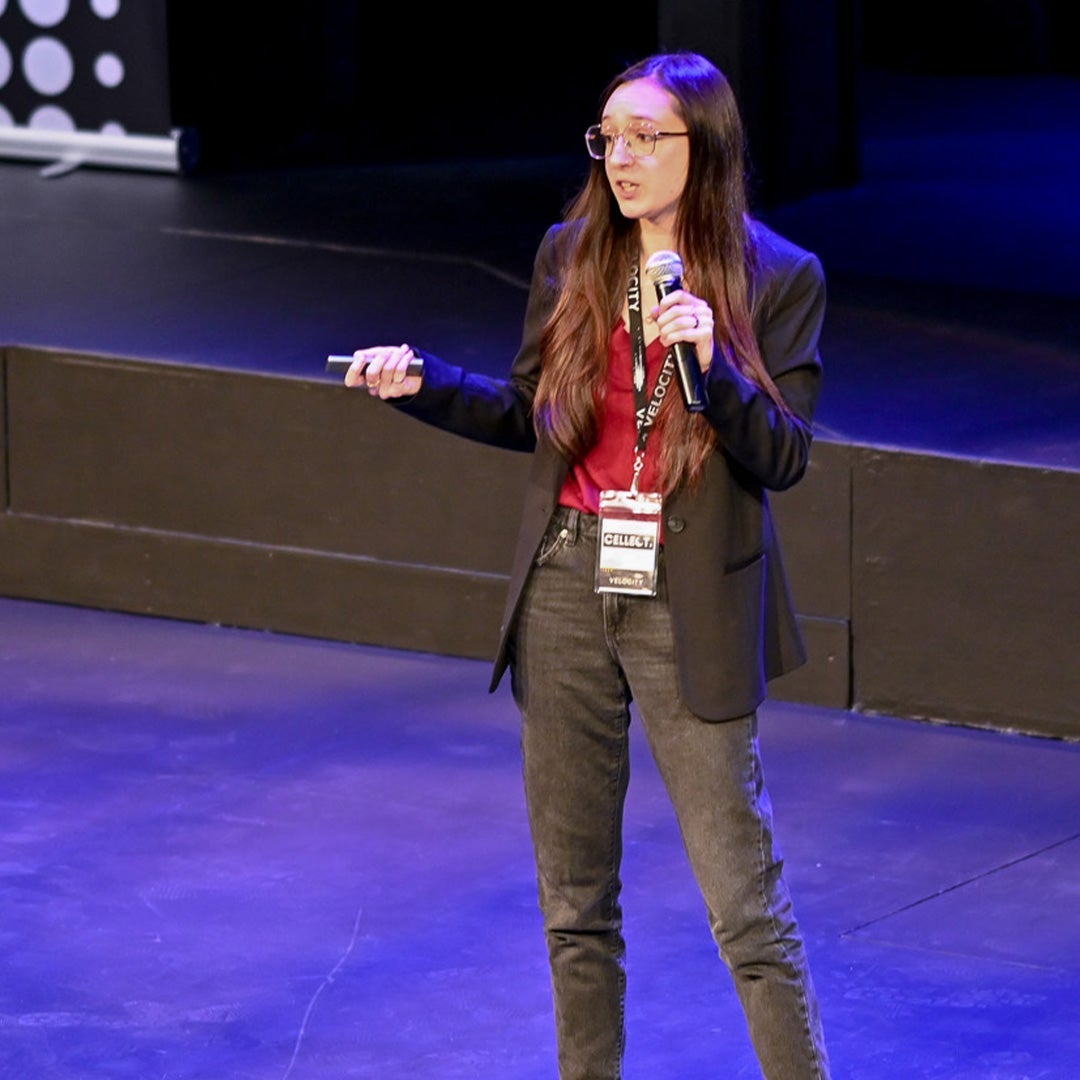
CT Murphy (BASc '23, MASc in progress)
Graduate student, Chemical Engineering (Nanotechnology)
> Founder, CELLECT.
> Velocity


CT Murphy (BASc '23, MASc in progress)
Graduate student, Chemical Engineering (Nanotechnology)
> Founder, CELLECT.
> Velocity

Dr. John Hirdes
Professor, School of Public Health Sciences
> WatSPEED
The new guide, Getting Nature into Financial Reporting, authored by the University of Waterloo's Intact Centre on Climate Adaptation, and supported by the Standards Council of Canada, KPMG LLP and Natural Assets Initiative, was developed with over 120 experts across the country. The guide outlines how local governments of all sizes can start integrating nature into their financial reports today.
Seven quantum researchers at the University of Waterloo have been awarded more than $1.3 million to advance research in quantum communications and quantum sensing and detection.
The funding is made possible through a collaboration with the Natural Sciences and Engineering Research Council of Canada (NSERC) and the United Kingdom Research and Innovation (UKRI) programs.
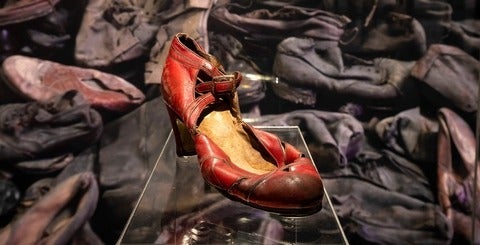
Dr. Robert Jan van Pelt, a professor in the School of Architecture, is renowned for his research into the architecture and design of the Nazi concentration camps and gas chambers.
His research became public when he took the stand as the key expert witness in a notorious British libel trial that pitted British Holocaust denier David Irving against American historian Deborah Lipstadt. His testimony, portrayed in the 2016 film Denial, was a key factor in the verdict clearing Lipstadt of the claim of libel.
A new type of cloth developed by researchers at the University of Waterloo can heat up when exposed to the sun thanks to innovative nanoparticles embedded in the fabric’s fibre. This advance represents an innovative and environmentally friendly option for staying warm in the winter.
Wearable heated clothing typically relies on metals or ceramic heating elements to heat up and an external power source, which could pose safety risks for users.
The University of Waterloo’s Climate Institute has secured $1.2 million in grant funding from the Natural Resources Canada’s Climate Change Adaptation Program to strengthen climate change adaptation capacity in Canada and abroad. This funding will support two transformative projects integrating climate change adaptation into professional degree programs and developing tools to build resilient supply chains.
Thirteen University of Waterloo researchers have received $16.2 million for 16 projects advancing quantum science and technology.
Sherry Romanado, on behalf of the Honourable François-Philippe Champagne, Minister of Innovation, Science and Industry, along with Professor Alejandro Adem, president of the Natural Sciences and Engineering Research Council of Canada (NSERC), announced the funding at the INRS Énergie Matériaux Télécommunications Research Centre in Varennes, Québec.
Contrary to the widespread belief that teams with diverse expertise are automatically more creative, a new study by a joint team of researchers from the University of Waterloo, Xiamen University and Texas Tech University reveals this isn't always the case.
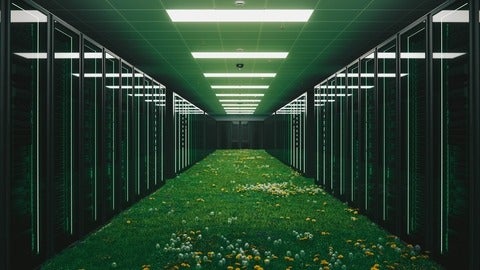
Researchers from the University of Waterloo have found a way to reduce the energy use of some data centres by as much as 30 per cent.
Computing accounts for as much as 5 per cent of the world’s total energy use every day, and that type of energy consumption is expected to significantly increase as computing power is needed to meet the exponential growth of artificial intelligence. Nearly all web traffic is routed through data centres, the majority of which use the open-source operating system Linux.