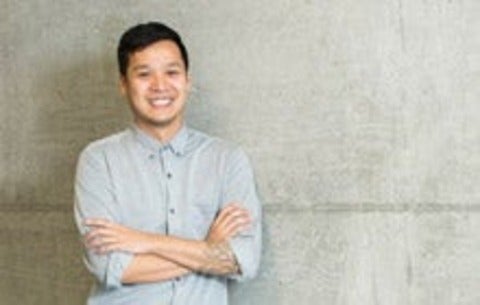
Literature prof is honoured with prestigious Polanyi Prize
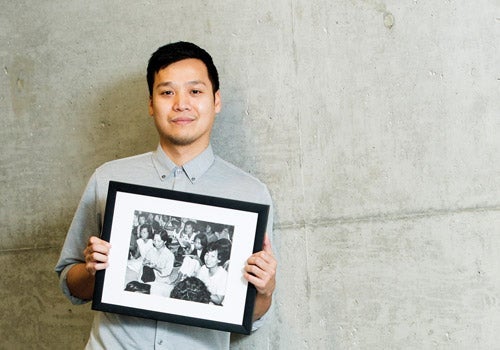
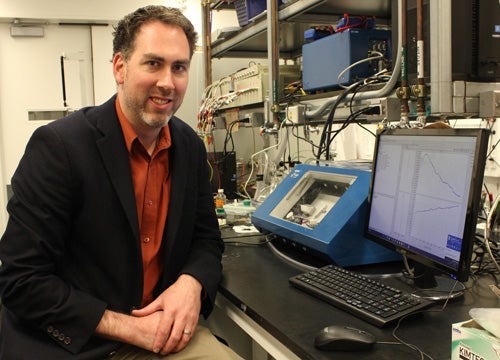
Nguyen holding a picture of his mother in a Thai refugee camp that he found while researching Southeast Asian refugees
Nguyen holding a picture of his mother in a Thai refugee camp that he found while researching Southeast Asian refugees

The following expert is available to speak about the content and implications of the recently announced National Housing Strategy.
Brian Doucet - Faculty of Environment
Brian Doucet is an associate professor at the University of Waterloo’s School of Planning. He researches gentrification, neighborhood change, urban inequalities and flagship developments. He also looks at grassroots movements and urban resistance in North America and Europe.
As more and more advanced features are added to the highly automated vehicles of the near future, it won’t be good enough for their computer brains to know what is going on in the world around them.
They will also have to be aware of what is happening inside their own passenger compartments, especially whether their human drivers are paying attention or not.

Experts from the University of Waterloo are available to speak about COP23, the United Nations climate change conference, where leaders from around the world are meeting to discuss ways to implement the Paris Agreement. The summit is taking place this week in Bonn.
Sarah Burch — Department of Geography and Environmental Management
New deep-learning AI software produced with that technology is compact enough to fit on mobile computer chips for use in everything from smartphones to industrial robots.
That would allow devices to operate independent of the internet while using AI that performs almost as well as tethered neural networks.
Brian Doucet — School of Planning
Brian Doucet is a professor in the School of Planning specializing in gentrification, neighbourhood change, and urban inequalities.
The study, which appears in the Journal of Environmental Quality, describes how the researchers tested private, rural groundwater wells in the Nottawasaga River Watershed for four artificial sweeteners as a way to detect groundwater impacted by human wastewater being released by septic systems in the area.
Artificial sweeteners are ideal human wastewater tracers as they exit the human body essentially unchanged and are not completely removed by most wastewater treatment processes. Human wastewater contains relatively high concentrations of artificial sweeteners.
As a startup in the operational artificial intelligence (AI) sector, EMAGIN Clean Technologies Inc., is finding a receptive audience for a new system that uses AI for environmental protection as a means to help municipal utilities proactively improve their water and wastewater operations.

The University of Waterloo is the top research university among Canadian comprehensive universities for the tenth year in a row, according to Research Infosource.