Tuesday, March 31, 2015

Graduate students at the University of Waterloo who are researching everything from micro-scale 3D-printing of Graphene to the geometry of our universe will present their work at the annual Three Minute Thesis (3MT) competition on Thursday, April 2.
Each of the students will have just one slide and three minutes to share their research.
Last year, Matthew Vonk, a graduate student in the kinesiology department of the Faculty of Applied Health Sciences, won for his presentation on the effects of a single session of weight training on mental health.
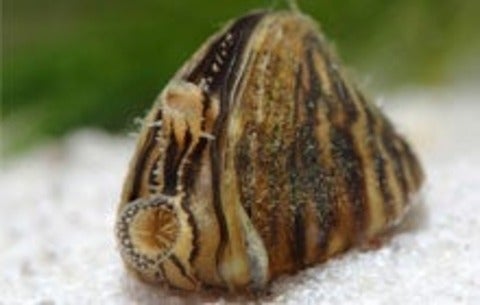
The zebra mussel has a bad reputation as being an invasive species but a Waterloo researcher is using the maligned mussel as inspiration for developing sticky synthetic adhesives that he hopes will be used in the human body some day.
“We do not copy nature. We’re just inspired by it,” says Boxin Zhao, a professor in Waterloo’s Department of Chemical Engineering. “We ask, ‘What’s the chemistry and how do we use it?' ”

Many of Canada’s top climate researchers are meeting at the University of Waterloo and the Balsillie School of International Affairs to help craft strategies that Canada can take to the upcoming round of United Nations climate negotiations. More than 60 experts are part of this collaboration, called Sustainable Canada Dialogues (SCD).

Badge Day is part of an initiative of Ontario Network of Women in Engineering (ONWiE) to raise awareness about the engineering profession among girls. High school physics is an entrance requirement for most engineering programs.
As part of the Badge Day event, the girls will meet engineering students and staff and visit five activity stations to learn about the different areas of physics, including energy, friction, light and projectile motion.
The Waterloo Aboriginal Education Centre at St. Paul's University College at the University of Waterloo is hosting its Aboriginal Entrepreneurship workshop Saturday and media are invited to attend. Students will work in teams and receive guidance from university and business instructors.
Published Monday in Cancer Causes and Control, the study found that almost one in four high school seniors try smoking hookah.

Photo credit: bert_phantana/iStock/Thinkstock
The study estimates that more than 78,200 youth are current water pipe users.

More than 40 competitors from grades 9 through 12 are expected on campus as the University’s Department of Kinesiology hosts its 7th annual Brain Bee competition on Saturday. Regional competitions take place across Canada each year.
Students will compete for prizes by answering multiple-choice questions using clicker technology. The first-place winner will take home $400 and will qualify for the national Canadian Institutes of Health Research Brain Bee, held in the spring.
The scholarship funding, awarded by Rideau Hall Foundation, Community Foundations of Canada and Association of Universities and Colleges of Canada, allows Canadian students at the undergraduate and graduate levels to participate in internships or academic study for periods of three months to one year in another Commonwealth country.