Research

Professor Geoffrey Fong received one of the American Cancer Society’s Luther R. Terry Awards for Outstanding Research Contribution.

Professor Fong, of the Department of Psychology and the School of Public Health and Health Systems at Waterloo, founded the International Tobacco Control Policy Evaluation (ITC) Project in 2002. It has been at the forefront of research that combats tobacco use, the number one cause of preventable death in the world.

Tiny populations of invasive species such as Asian carp start their domination of new ecosystems by hanging out at local landmarks, according to a new study published in the journal Theoretical Ecology this week.

Understanding how species use these local hotspots can play a key role in how officials approach population control for conserving endangered species and controlling invasive ones.

Thursday, March 12, 2015

When invasive Asian carp look for love in all the right places

by Victoria Van Cappellen, Faculty of Science

If you’re looking for love and there are ten bars in town, your chance of meeting someone is 10 per cent.  In a town with only one bar, your odds are 100 per cent.

The same thing happens in nature and is called landmarking. Butterflies and other species find mates by gathering at easily identifiable locations such as the tallest tree or mountain.

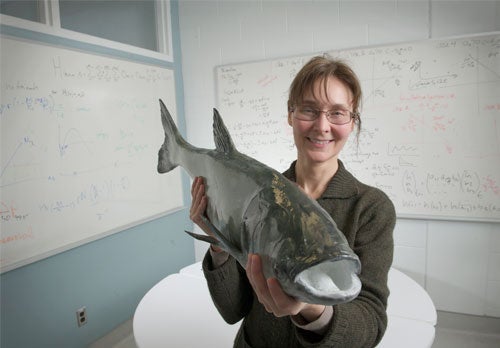
Kim Cuddington holds an Asian carp

Tuesday, March 10, 2015

Tiny technology to prevent the risk of skipping a beat or worse

by Kira Vermond, Faculty of Engineering

A small blood monitor, about the size of a typical cell phone, could someday be all that stands between life and death for a cardiac patient.

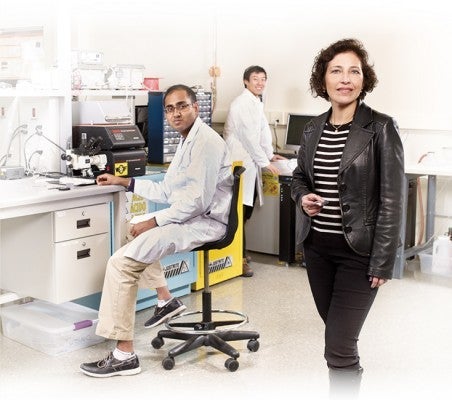
Patricia Nieva in lab

Sunday, March 8, 2015

How to be cyber-safe in a quantum world

by Media Relations

Professor Michele Mosca, quantum-safe cryptography expert and co-founder of the Institute for Quantum Computing at the University of Waterloo, will give a free public lecture at 7 p.m. tomorrow evening at the Mike and Ophelia Lazaridis Quantum-Nano Centre. He will discuss the new security challenges of evolving quantum technologies, and ways to protect ourselves from security threats such as viruses, fraud and identity theft.

Seating is limited. Members of the media wishing to attend must reserve with the media contact below.

Thursday, March 5, 2015

Mompreneurs: Children are the greatest risk factor for women entrepreneurs

by Heather Bean, Marketing and Strategic Communications

Mompreneurship is a buzzword these days for mothers looking to re-enter the workforce—or those looking for a better way to balance work and family. But in Canada, children increase the likelihood that a woman will exit the entrepreneurial market by nearly 20 percent, while children help self-employed men stay the course.

Give women greater access to startup funds, however, and that difference starts to disappear.

Thursday, March 5, 2015

Heavy smartphone use linked to lower intelligence

by Wendy Philpott, Faculty of Arts

What’s the name for the largest part of the human brain?

Are you pulling out your smartphone to get the answer from a search engine?

If you are - odds are you could be a lazy thinker and new research from the University of Waterloo indicates there’s an association between heavy smartphone use and lower intelligence.

Wednesday, March 4, 2015

Reliance on smartphones linked to lazy thinking

by Media Relations

The study, from researchers at the University of Waterloo and published in the journal Computers in Human Behavior, suggests that smartphone users who are intuitive thinkers — more prone to relying on gut feelings and instincts when making decisions — frequently use their device’s search engine rather than their own brainpower. Smartphones allow them to be even lazier than they would otherwise be.