Research

Saturday, February 14, 2015

Revealing the long-lost secrets of HMS Erebus shipwreck

by Julie Stauffer, Faculty of Engineering

For more than 160 years, the HMS Erebus has been quietly lying on the Arctic Ocean floor roughly 1,500 kilometres northwest of Iqaluit. The wreck marks the end of Sir John Franklin’s tragic attempt to find a passageway linking the Atlantic and Pacific oceans — an attempt that saw all 128 crew members perish when the Erebus and her sister ship the HMS Terror became trapped in Arctic ice.


Friday, February 13, 2015

Quantum research past, present and future for discussion at AAAS

by Media Relations

Professor Raymond Laflamme, executive director of the Institute for Quantum Computing at the University of Waterloo will appear with Artur Ekert, director of the Centre for Quantum Technologies at the University of Singapore, and Andrew Briggs, director of the Quantum Information Processing Interdisciplinary Research Collaboration (QIP IRC) at the University of Oxford. Kate Lunau, a health and science journalist with Maclean’s Magazine, will moderate the discussion.

Friday, February 13, 2015

Waterloo invention advances quantum computing research

by Sabrina Hutchison, Office of Research

Creating entangled photons is part of the work quantum computing researchers perform in their labs. But for the past 30 years, scientists have been slowed down and frustrated by the large, often finicky machines they’ve had to use to generate them.

Now, a University of Waterloo researcher has invented a device - so small it fits into your hand - that can do the job. And far from being a fussy, difficult machine to operate, the Waterloo device can be tossed around the room - and still work.

Thursday, February 12, 2015

Type 2 diabetes linked to worse performance on cognitive testing

by Media Relations

The paper appears in Psychosomatic Medicine, and is the first comprehensive statistical summary of available studies that examine the link between type 2 diabetes and a reduction of certain cognitive abilities, known as executive functions. The executive functions inhibit habitual thinking patterns, knee-jerk emotional reactions and reflexive behaviours such as making impulse purchases or automatically following social cues.

A little more than half of family health teams in Ontario offer physical activity services such as classes or counselling to encourage exercise among patients, and new research finds that standardizing access could help reduce the $6.8-billion cost associated with a sedentary lifestyle.  

There is a link between a lack of physical activity and chronic conditions such as heart disease, diabetes and obesity.

Wednesday, February 11, 2015

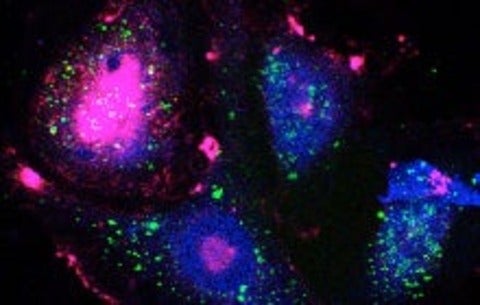
Study finds new lethal combination of cancer drugs shrinks tumors

by Staff, Marketing and Strategic Communications

Controlling the time and sequence of cancer therapies may hold the key to unlocking better outcomes for patients with aggressive cancers, according to research published today.

In a collaborative effort between cancer biologists at Harvard Medical School and applied mathematicians at the University of Waterloo, researchers are now showing that improved cancer therapy can be achieved by targeting drug-resistant cancer cells in a new way.