Research

Wednesday, September 11, 2024

Co-op + entrepreneurship = Waterloo innovation

by Jordan Flemming, University Relations

The University of Waterloo has long been renowned for entrepreneurship and innovation and for providing co-operative education (co-op) and work-integrated learning at scale with impact.

Margaret Dalziel and Nada Basir

Margaret Dalziel, professor emerita and Nada Basir, professor of strategic management at Conrad School of Business and Entrepreneurship

Monday, September 9, 2024

Teens with disposable income most likely to vape

by Media Relations

Teens who have disposable income, live in a lower-income home or are gender diverse are more likely to use e-cigarettes, according to a new study at the University of Waterloo.

Researchers examined survey responses from more than 46,000 adolescents in 167 schools across Canada as part of the COMPASS research system at Waterloo’s School of Public Health Sciences.

Friday, September 6, 2024

At the intersection of health, society and technology

by Faculty of Arts

Developing and delivering quality healthcare requires an interdisciplinary approach, drawing on fields ranging from history to sociology to communication and design. And Waterloo’s strong emphasis on interdisciplinary scholarship is one reason, Dr Peter Warrian and his wife, Dr. Margret Hovenec, established the Lupina Foundation Postdoctoral Research Fellowships with Waterloo’s Faculty of Arts.

Thursday, September 5, 2024

Using 3D imaging to transform plastic waste recycling

by Media Relations

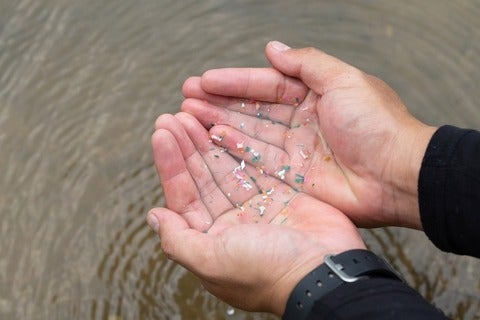
In a global first, University of Waterloo researchers have used 3D imaging technology to understand the fine details of microplastics, paving the way for more effective methods of plastic waste recycling.

Micro and nanoplastics, tiny particles of plastic that come from the breakdown of larger plastic items, have become an exponentially worsening environmental crisis. Due to their difficulties in safely decomposing, plastic pollution poses significant threats to ecosystems, wildlife and human health.

Tuesday, September 3, 2024

New material aims to transform oil spill cleanup

by Media Relations

University of Waterloo researchers have developed a new material that can absorb more than eight times its weight in oil, offering a new solution in preventing groundwater contamination from spills or accidents.

“The current technology for oil capture is lagging,” said Tizazu Mekonnen, a professor at Waterloo’s Department of Chemical Engineering. “Preserving our environment is crucial, which is why developing advanced technologies like this polymer is essential for remediating future groundwater contaminants that involve oil.”

Wednesday, August 28, 2024

Royal Society U.K. bestows Hughes Medal on Dr. Linda Nazar

by Katie McQuaid, Faculty of Science

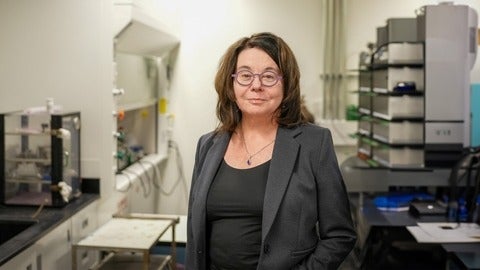
For an energy scientist, few things are more prestigious than receiving a Royal Society U.K. Hughes Medal. Named after Welsh-American scientist and musician David E. Hughes, who invented the first working radio communication system and the first microphone, the Hughes Medal is awarded yearly for outstanding contributions in the field of energy. Although the medal is rarely given to someone outside of the U.K., this year, Dr.

Wednesday, August 28, 2024

Improving access to more affordable flood insurance

by Media Relations

The increasing cost of flood damage has seen property insurance become less affordable for many Canadians. New research from the University of Waterloo shows that if insurers and local governments pooled information on investment in flood-risk management, that data could result in more affordable insurance coverage and premiums.  

A team of climate researchers from Waterloo’s Faculties of Environment and Arts developed a research platform that demonstrates the benefits of sharing risk data based on feedback from insurers and local governments.  

Tuesday, August 27, 2024

Solving the crisis: Crumbling invisible infrastructure

by Jordan Flemming, University Relations

The "Solving the crisis:" series explores the pressing challenges of our time, including climate change, biodiversity collapse, housing affordability and more. Each article highlights how Waterloo, a hub of research, innovation and creative thinking, is uniquely positioned to address these issues. Through this series, we highlight the dedication of researchers to tackling global crises and shaping a better future for all.

Monday, August 26, 2024

Building new bones with help from 3D printing

by Media Relations

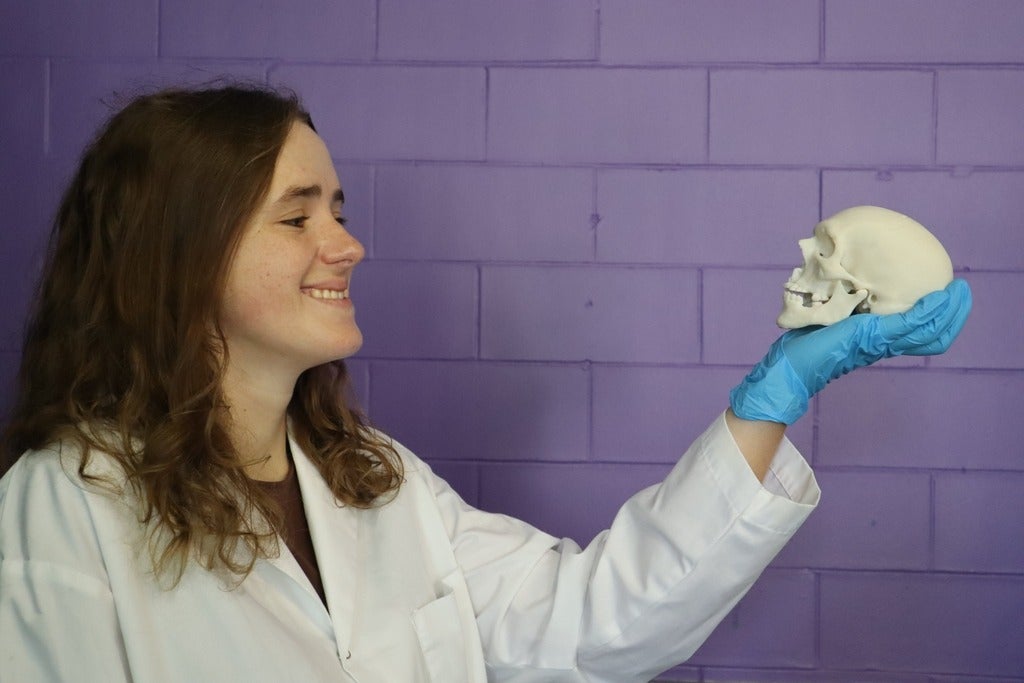
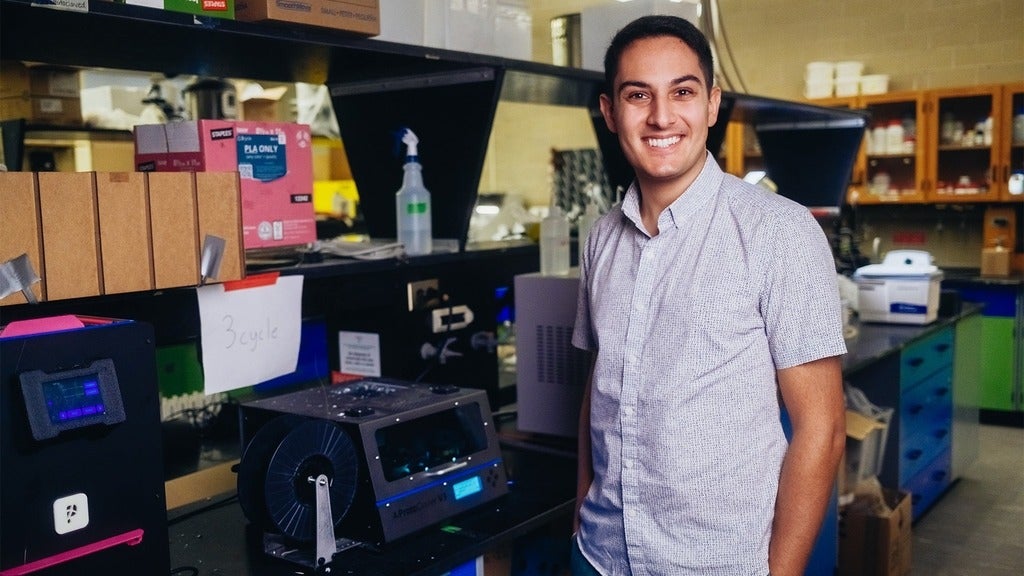
A research team from the University of Waterloo has developed a new material that shares many of the same traits as bone tissue. Using it in 3D printers provides a new and innovative treatment option for patients undergoing major skeletal repair and reconstructive surgery.

Surgical reconstruction in these cases currently involves metal implants and donated bone. Surgeons request a specific size and type from tissue banks to best match their patient’s anatomy, but it’s rarely a perfect fit. A recipient’s body may also reject donated bone.