Research

Tuesday, July 2, 2013

Music to a gambler's ears

by Media Relations

Gamblers like noisy slot machines -- it reinforces the rewarding feeling after a win

Winning sounds on slot machines make gambling more exciting, according to a new study by Mike Dixon and colleagues from the University of Waterloo in Canada. Moreover, their work shows that sounds also cause players to overestimate the number of times they won while playing on slot machines. The study is published online in Springer's Journal of Gambling Studies.
Monday, June 24, 2013

Snapping pictures for science

by Christian Aagaard, Communications and Public Affairs

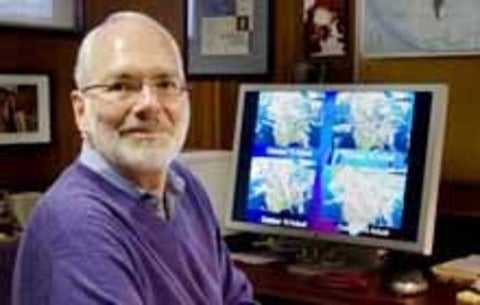
Ellsworth LeDrew has a scene on his mind.

A party of Inuit hunters sets out from a settlement. One of them stops, pulls out a smart phone and snaps a picture of a crack in the shore ice that affects his route.

The hunter instantly uploads the photo to a public database, which shares the image with anybody who has an interest in ice conditions in the area.

"It’s like a traffic alert on your Magellan,’’ LeDrew says, referring to a popular digital navigator.

Monday, June 24, 2013

Ancient climate changes

by Christian Aagaard, Communications and Public Affairs

As a young geologist more than 30 years ago, Thomas Edwards planned to muck about Canada's wilderness, looking for possible pipeline routes and resource opportunities.

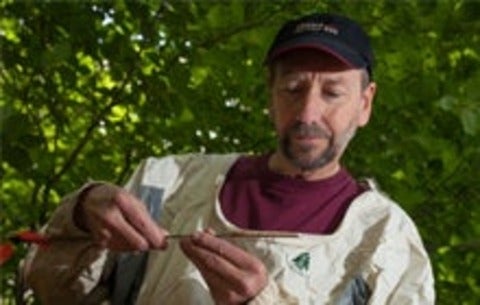
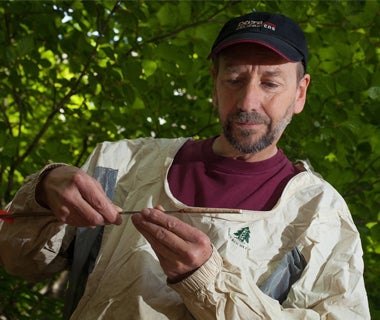
Then he met Peter Fritz, founder of the Environmental Isotope Laboratory at the University of Waterloo. It was a pivotal encounter. Edwards changed course to examine what isotopes -- close kin of elements on the periodic table -- tell us about natural history.

Tom Edwards

Monday, June 24, 2013

Book from Waterloo professor teaches how to build a brain

by Media Relations

WATERLOO, Ont., (Tuesday, June 25, 2013) – It sounds like science fiction, but a new book by a University of Waterloo professor is actually a step-by-step guide, teaching readers how they can build their own computer model of the human brain.

How To Build a Brain by Professor Chris Eliasmith details how and he and his team built Spaun, the world’s largest functional brain model. The book gives hands-on tutorials that even newcomers to the field can undertake, quickly allowing them to construct a wide range of biologically realistic brain models.

Friday, June 21, 2013

Expert: Alberta flood ends Canada's lucky trend

by Media Relations

Jason Thistlethwaite, PhD is available to speak about the flooding situation in Alberta.

Less than 24 hours of extreme rainfall in the Bow River Basin has led to an unprecedented and historic flooding event in southern Alberta. This flood is much worse than a similar flood event that occurred in 2005, which at the time was considered a 1-in-100-years flood event.

Wednesday, June 19, 2013

Canadian youth get failing grade in their health

by Media Relations

WATERLOO, Ont. (Wednesday, June 19, 2013) — Canadian students in Grade 12 are in worse health than their younger high school peers, according to a new study from the University of Waterloo.

By the time students reach Grade 12, they are at significantly increased risk for chronic diseases such as diabetes and lung cancer, according to the research published in the latest issue of BMC Public Health. Smoking, marijuana use, binge drinking, and physical inactivity, which are all risk factors for chronic disease, skyrocket between Grades 9 and 12.

WATERLOO, Ont. (Monday, June 17, 2013) – A million electric cars could be on roads across North America before the end of the decade with the help of research by the United States Department of Energy, Los Alamos National Laboratory and the University of Waterloo.

Professor Zhongwei Chen is part of a team led by the Los Alamos National Laboratory looking to develop non-precious materials to replace the expensive platinum catalysts in fuel cells.

Friday, June 14, 2013

Snow-covered tweets

by Mark Witten, Communications and Public Affairs

Anyone with a smart phone and a ruler can help Richard Kelly gather data about all things snow – from the severity of a storm system to the shrinking of the snow season.