Research

Wednesday, July 10, 2024

Uncovering the truth behind the Alderney death count

by University Relations

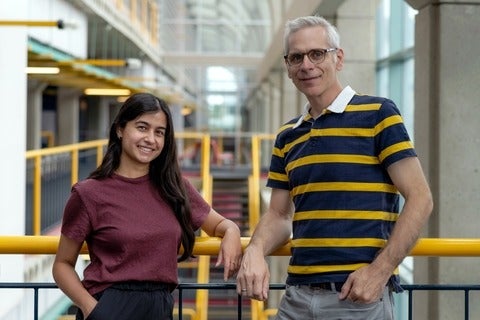
Waterloo researchers are known globally for tackling complex problems and Dr. Robert Jan van Pelt, of Waterloo’s School of Architecture in Cambridge, is one of them. He is a highly regarded expert and truth-seeker on all things related to the Holocaust. 

A quarter of a decade ago, van Pelt acquired fame as an expert witness in a notorious British libel trial that pitted British Holocaust denier David Irving against American historian Deborah Lipstadt. 

Wednesday, July 10, 2024

Loneliness increases risk of age-related memory loss

by Media Relations

About a third of Canadians feel lonely, and a study from the University of Waterloo shows it has a greater negative impact on memory than even social isolation, though both present a significant risk to the aging population.

Loneliness is a subjective emotion that people might feel even while engaging in social activities. It is often associated with depression and an increase in stress hormones that may contribute to impaired memory.

Tuesday, July 9, 2024

AI-powered antenna revolutionizes bone fracture diagnosis

by Media Relations

A University of Waterloo engineer has paired inexpensive wireless communication antennas with artificial intelligence (AI) to improve how doctors can detect bone fractures.

Determining bone fractures using traditional diagnostic methods such as x-rays, computed tomography (CT) scans, and magnetic resonance imaging (MRI) takes time — such equipment is not readily available in ambulances or primary care facilities and, with health care services in high demand, many people have to wait for an x-ray or scan once they arrive at the hospital.

Monday, July 8, 2024

RECOVER project to support island nations fighting climate change

by Waterloo Climate Institute

Small island communities contribute less than one per cent to global greenhouse gas emissions but suffer disproportionally from climate change effects and are struggling to adapt to the crisis. Their experiences underscore a critical need for solutions that cut across sectors to help address social inequities and enable a more climate-resilient future for everyone.  

Friday, July 5, 2024

Less highlighting may mean more learning

by Mayuri Punithan, Cheriton School of Computer Science

If you scroll through the average student’s digital textbook or reading, you will probably see multi-coloured streaks scattered everywhere. However, new research reveals that excessive highlighting may do more harm than good.

Researchers at Waterloo excel at creating new technologies, investigating human-technology interactions, and exploring how to mitigate harm. That’s why it’s no surprise that two computer scientists from Waterloo investigated whether technology controlling the number of words a user can highlight could affect their reading comprehension.

Wednesday, July 3, 2024

New open-source software is greater than the sum of its parts

by Elizabeth Kleisath, Institute for Quantum Computing

Accurate models of real-world scenarios are important for bringing theoretical and experimental research together in meaningful ways. Creating these realistic computer models, however, is a very large undertaking. Significant amounts of data, code, and expertise across a wide range of intricate areas are needed to create useful and comprehensive software. 

Tuesday, July 2, 2024

Overcoming fear for social justice

by University Relations

Waterloo researchers are renowned for challenging perspectives in their pursuit of truth and to produce knowledge that leads to transformative solutions for humanity to thrive in a complex future.   

Although universities are environments where new ideas and discoveries are cultivated, and a space for curiosity to flourish, researchers in many fields also experience hostile responses to their work.  

Tuesday, July 2, 2024

Regulations grounded in research are saving lives by adding restrictions to tobacco

by Jordan Flemming, University Relations

According to Health Canada, about 48,000 people in Canada die from tobacco use each year. Research has shown that tobacco use is a leading cause of preventable diseases and deaths worldwide and efforts to reduce tobacco consumption through regulation and policy measures have significantly contributed to public health improvements.

Strategies supported by science, like the work carried out by Dr. David Hammond and Dr. Geoffrey Fong here at the University of Waterloo, aim to save lives by reducing tobacco-related diseases and promoting public health.

Tuesday, July 2, 2024

Is AI conscious? Most people say yes

by Media Relations

Two-thirds of people surveyed think that artificial intelligence (AI) tools like ChatGPT have some degree of consciousness and can have subjective experiences such as feelings and memories, according to a new study from the University of Waterloo.

Large language models (LLMs) like ChatGPT often display a conversational style when outputting content. These human-like abilities have spurred debates on whether AI has consciousness. 

Wednesday, June 26, 2024

A robot friend for vision treatment

by Karen Kawawada

It’s a potentially life-altering medical condition typically diagnosed in childhood. The good news is treatment works well if followed properly. The bad news is the treatment is hard to stick to.

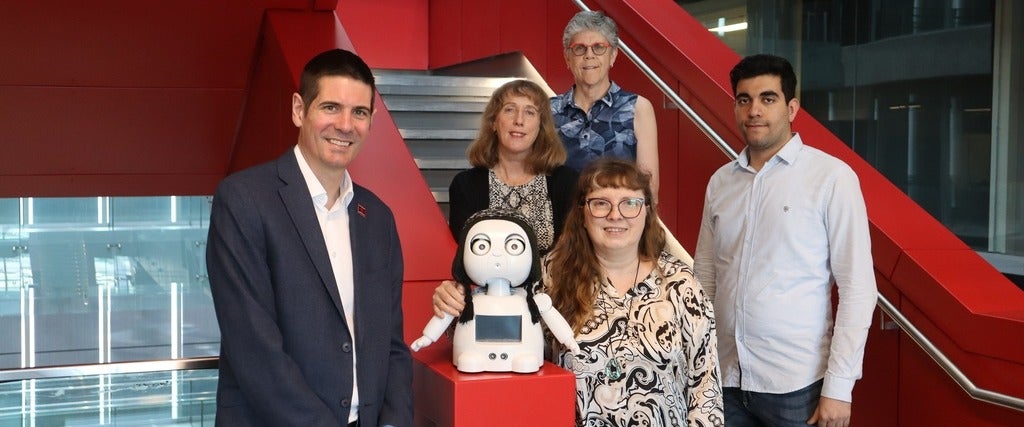
An interdisciplinary team of University of Waterloo researchers is trying to improve treatment adherence through use of a social robot that can educate and motivate children and their caregivers.