Research

Friday, March 15, 2024

Just hold on

by Wendy Philpott, Faculty of Arts

When the organizers of a violence prevention program for children and youth invited Dr. Adam Ellis to contribute a recorded lecture to their array of teaching resources, he wasn’t all that keen. Instead, he pitched a hip hop song.

“From a communication standpoint, it was really important for me to get the message out this way,” says Ellis, an assistant professor in the Department of Sociology and Legal Studies.

Thursday, March 14, 2024

Sustainable farming practices vital for Ontario's environmental health

by Jordan Flemming, University Relations

Ontario's agricultural sector plays a significant role in the province's economy. In 2021, agriculture contributed nearly $10 billion to Ontario's GDP, employing 67,000 people directly and over 740,000 in related agri-food industries. However, the environmental impact of modern farming practices cannot be overlooked. Especially, large-scale industrial farming practices can contribute to soil erosion, water and air pollution and biodiversity loss.

And as climate change impacts continue to escalate, the imperative for sustainable farming practices becomes ever more pressing.

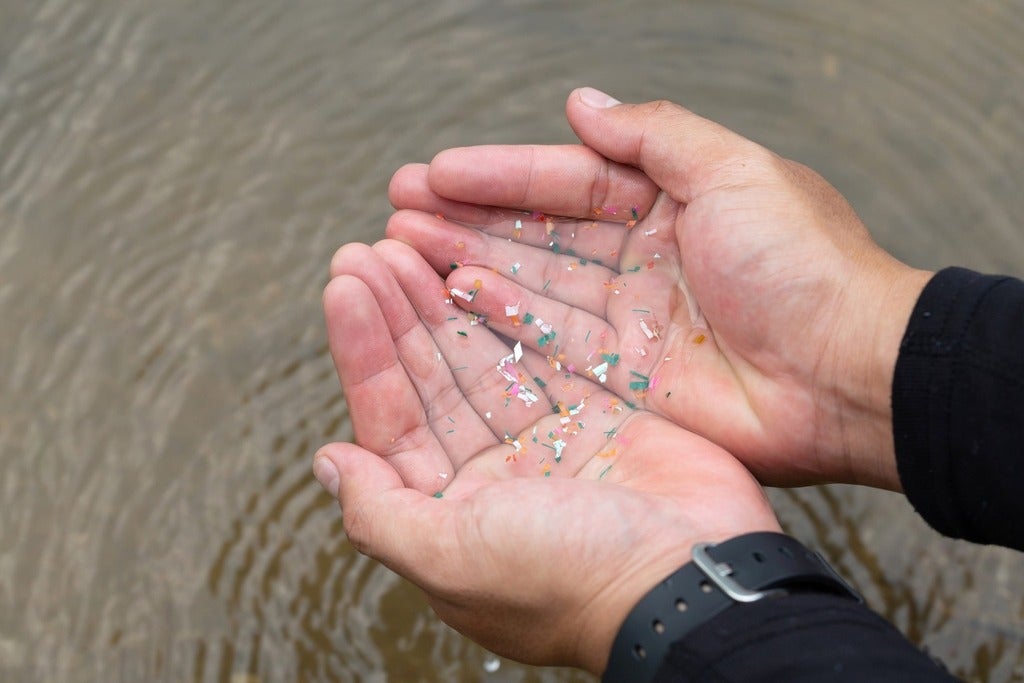
University of Waterloo researchers have created a new technology that can remove harmful microplastics from contaminated water with 94 per cent efficiency.

The amount of plastic pollution in our ecosystem has become an increasingly alarming concern globally. Concerns have frequently been flagged about the impact that plastic pollution has on the toxicity to the environment and humans.

Wednesday, March 13, 2024

Surprising bacterium from Canadian lake shines new light on ancient photosynthesis

by Katie McQuaid, Faculty of Science

Sometimes an experiment doesn’t go as planned. That’s science. But a “failed” experiment or unexpected results can be the avenue to a discovery you could never anticipate. University of Waterloo PhD student, Jackson Tsuji (BSc ’15, PhD ’20), had a poorly growing bacterial sample he wasn’t ready to give up on, which ultimately led to a once-in-a-lifetime finding that could change how scientists view photosynthesis and its origins. 

Monday, March 11, 2024

Going top shelf with AI to better track hockey data

by Media Relations

Researchers from the University of Waterloo got a valuable assist from artificial intelligence (AI) tools to help capture and analyze data from professional hockey games faster and more accurately than ever before, with big implications for the business of sports.

The growing field of hockey analytics currently relies on the manual analysis of video footage from games. Professional hockey teams across the sport, notably in the National Hockey League (NHL), make important decisions regarding players’ careers based on that information.

Monday, March 11, 2024

Snow study takes flight

by Jordan Flemming, University Relations

A research team led by Dr. Richard Kelly, a professor in Geography and Environmental Management at Waterloo, uses a novel radar-based technology to provide more insight into snowpacks and their implications for climate change, water resource management and hazard prediction.

Snowpacks form in cold regions and high elevations, accumulating due to layers upon layers of snow. As they melt, snowpacks serve as vital water resources — feeding streams, rivers and reservoirs.

Thursday, March 7, 2024

Helping women take charge of their health

by Nicola Kelly, Faculty of Engineering

Cervical cancer is the fourth most common cancer among women worldwide. It’s almost always caused by the human papillomavirus (HPV) which can be passed from one person to another during sex. The Pap test (or Pap smear) screens women for cervical cancer but regular testing can be difficult to access — in Ontario, women are only eligible for the test every three years. This is cause for concern as early detection is key to treating cervical cancer successfully.

Tuesday, March 5, 2024

Four takeaways from Digital Health 2024

by Jordan Flemming, University Relations

Digital Health 2024 at Stanford University showcased successful collaborations among tech and life science companies, government organizations and academia in advancing digital health solutions. As health technologies evolve, they present unprecedented challenges and opportunities to improve patient care and individual health outcomes. From remote monitoring to artificial intelligence (AI) diagnostics, these technologies facilitate data collection, analysis and innovative life-changing therapies.