Making empowering choices in environmental education
For Celine Isimbi, an undergrad student, studying in the Faculty of Environment offered her the perfect opportunity to balance her studies and work in environmental liberation.
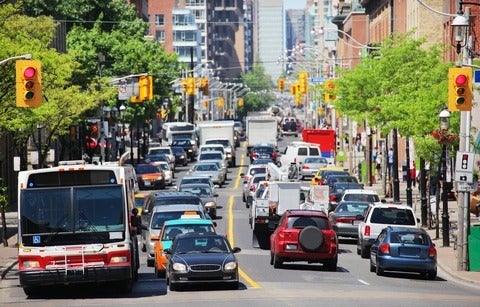
People who rely on public transit in Toronto will eventually have to choose different means of transportation if they can afford it or risk isolation unless the current system improves, a new study found.
The research from the University of Waterloo indicates that a lack of attention to core riders— meaning those dependent on public transportation—further marginalizes and creates mobility barriers that impede participation in public life.
The new 2022 Fellows elected to the Canadian Academy of Health Sciences (CAHS) were announced last week and include David Edwards, professor in the University of Waterloo School of Pharmacy and Ronald Schlegel, professor emeritus in the Faculty of Health and founder of the Schlegel-UW Research Institute for Aging.
This story was originally published in the Fall 2022 Waterloo Magazine.
If you ask Anita Layton what it’s like to be a scientist leading the world in a discipline that promises to revolutionize medicine, she can, like a true mathematician, bring her extraordinary career down to a fundamental principle: “I want to solve challenging and important problems. What is most important in life? Our health,” said Layton, the Canada 150 Research Chair in Mathematical Biology and Medicine.
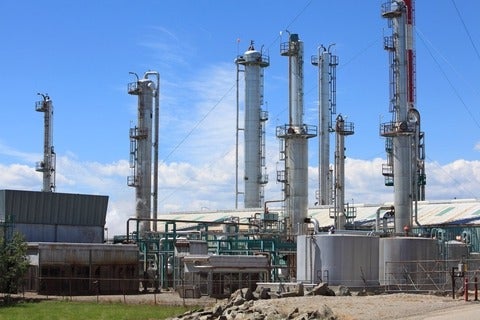
University of Waterloo is leading an interdisciplinary team to identify and treat per- and polyfluoroalkyl substances (PFAS) – better known as forever chemicals – in water systems affecting more than 2.5 million Canadians.
PFAS, are a new class of more than 4,000 environmental contaminants whose impact on human health is unknown. PFAS are used in a wide range of products such as cosmetics, textiles, fire-fighting foams and food packaging materials.
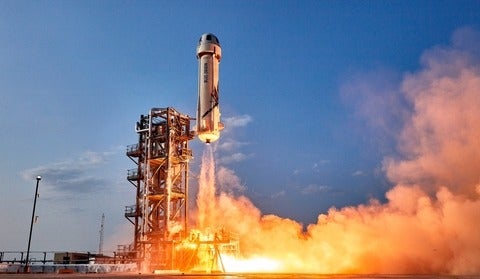
An experiment inspired by Silly String and built by a first-year engineering student at the University of Waterloo is scheduled to travel into space today aboard a Blue Origin rocket.
Olivia Ye, who is studying mechatronics engineering, was still in high school in her hometown of Newmarket when she participated in an online Shad Canada program two years ago that will culminate with a launch in Texas.
“Knowing that something you made is being sent to space is truly an awesome feeling,” she said.
Canadians think they know a lot about snow. It is practically a national pastime to discuss winter weather.
But a PhD student in the Department of Geography and Environmental Management at the University of Waterloo is taking the Canadian obsession with weather to a whole new level.
Fraser King is studying the ways machine learning can be applied to predicting patterns of precipitation, and especially annual snowfall and snowmelt in the context of climate change.
Experts expect energy costs to keep rising in several countries. For example, Britain’s cap on domestic energy prices will likely increase by 70 per cent in October and remain high until at least 2024. Xianguo Li, professor in the Department of Mechanical and Mechatronics Engineering at the University of Waterloo, answers questions about the state of Canada’s energy security.
What has prevented Canada from experiencing a massive spike in energy bills, as seen in countries such as England?
Caregivers who consume digital media for relaxation are more likely to engage in negative parenting practices, according to a new multinational study.
The new study led by the University of Waterloo aimed to investigate the relationship between caregivers’ use of digital media, mental health, and parenting practices at the start of the COVID-19 pandemic. On average, caregivers spend three to four hours a day consuming digital media.
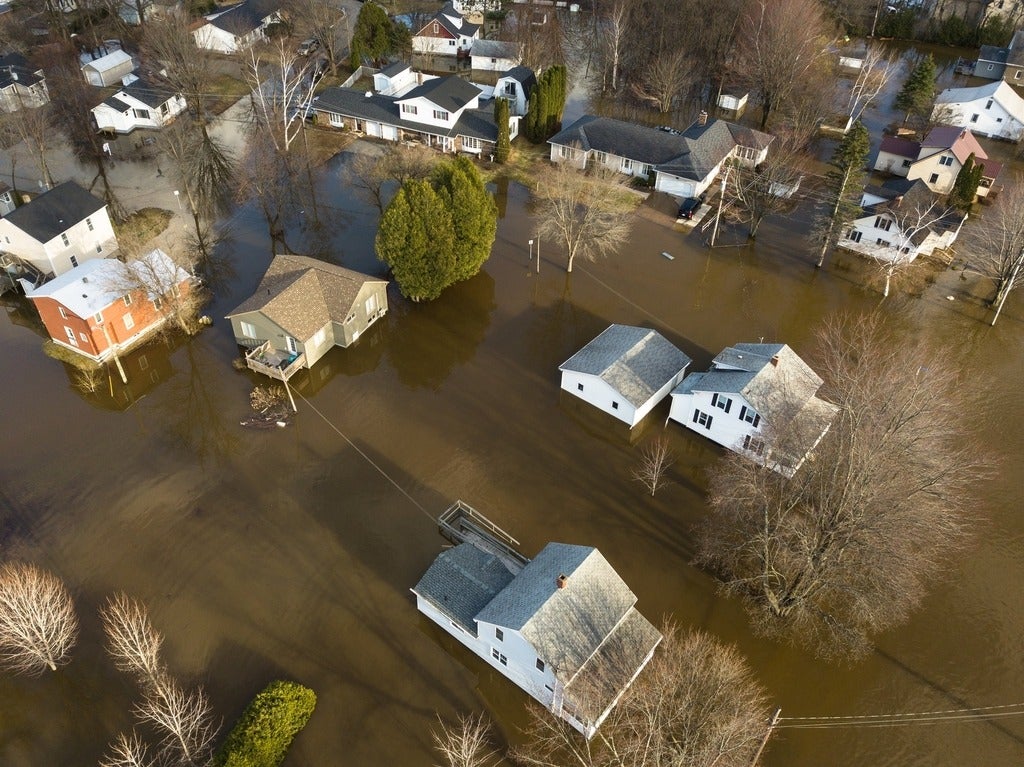
Socially vulnerable groups are at greater risk from climate-change-caused flooding because of systemic disadvantages, according to a new study.
The study also reveals that neighbourhood-level racial or ethnic, economic, social, and demographic factors play a significant explanatory role in the distribution of flood risk across Canadian neighbourhoods.