Research

Often, when a person is diagnosed with dementia, available supports are not enough. Most people feel overwhelmed, and they don't get the support, resources and help they need. A new five-country collaboration has developed Forward with Dementia to fill in those gaps and provide the individuals and their families the tools they need to move forward with their lives.


Researchers have developed an AI model to help computers work more efficiently with a wider variety of languages.

African languages have received little attention from computer scientists, so few natural language processing capabilities have been available to large swaths of the continent. The new language model, developed by researchers at the University of Waterloo’s David R. Cheriton School of Computer Science, begins to fill that gap by enabling computers to analyze text in African languages for many useful tasks.

Mindful awareness is about both accepting and engaging with life’s challenges, and that’s what popularized concepts of mindfulness tend to miss, new research has found.

Studying popular concepts of mindfulness, the researchers found most laypeople are confusing the practice with passive acceptance of problems—a misconception scientists say ignores the important work of engaging with them.

Restrictive interventions like acute control medications and restraints are more likely to be used in non-emergency situations among older psychiatric inpatients than younger ones, a study shows.

Researchers found a clear pattern of higher rates of these controls being used in older adults in Ontario psychiatric hospitals between 2005 and 2018.

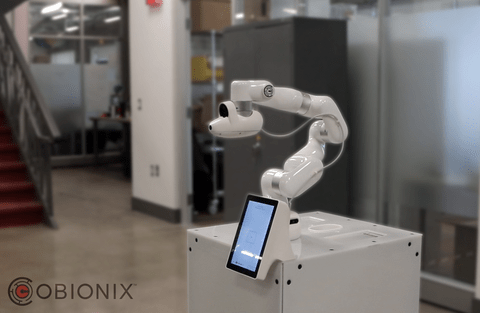
A company founded at the University of Waterloo’s flagship incubator has performed the first autonomous robotic intramuscular injection, paving the way to improved patient care in an industry faced with labour shortages.

Cobionix, an autonomous robotics company located in Kitchener-Waterloo, performed the injection—without needles—using their Cobi platform.

Ontarians with chronic hepatitis C can lose up to 20 per cent of their overall income managing their condition, a new study has found.

Using survey results from 275 patients, the study analyzed the financial burden of chronic hepatitis C (CHC) on patients treated in hospital and community clinics.

The research team determined that patients treated in hospital hepatitis clinics spent up to five times more out-of-pocket on supporting their CHC needs than those treated in community hepatitis clinics.

Researchers are developing a deep learning network capable of detecting disease biomarkers with a much higher degree of accuracy.

Experts at the University of Waterloo’s Cheriton School of Computer Science have created a deep neural network that achieves 98 per cent detection of peptide features in a dataset. That means scientists and medical practitioners have a greater chance of discovering possible diseases through tissue sample analysis.

Tuesday, October 26, 2021

Q and A with Maura Grossman: The ethics of artificial intelligence

by Joe Petrik, Cheriton School of Computer Science

Maura R. Grossman, JD, PhD, is a Research Professor in the Cheriton School of Computer Science, an Adjunct Professor at Osgoode Hall Law School, and an affiliate faculty member of the Vector Institute for Artificial Intelligence. She is also Principal at Maura Grossman Law, an eDiscovery law and consulting firm in Buffalo, New York.

The benefits of consuming traditional foods tend to outweigh the risks of possible mercury contamination, according to a recent study.

The research, which was part of a larger biomonitoring project to address community concerns about environmental contaminants in traditional foods, such as fish, also found that mercury exposure in people may be low even when it is sometimes present in elevated levels. Additionally, the researchers discovered that mercury levels in people in northern regions vary by season and region.