A closer look at what is new at the School!
By Peter Stirling
- New Director of the School
- School's Strategic Planning Initiative
- Retirements
- The First Canadian Interdisciplinary Vision Rehabilitation Conference
Dr. Stanley Woo returns home to be our next Director of the School!
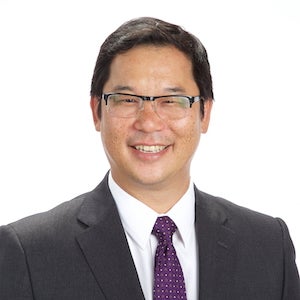
The University of Waterloo School of Optometry & Vision Science is pleased to announce that Stanley Woo, OD, MS, MBA, FAAO will join the School on July 1st, 2017 as its next Director.
As a Canadian who grew up in the City of Waterloo, his return to the community could be considered a bit of a homecoming. Dr. Woo’s leadership experience, passion for the profession, and enthusiasm to affect change ideally positions him to guide the School through the completion and implementation of a new curriculum and strategic plan that will inspire institutional transformation in optometric education and vision science for generations to come.
Dr. Woo received his Doctorate of Optometry from the University of California at Berkeley. He then went on to the University of Houston, College of Optometry (UHCO) where he completed a Master’s degree in Vision Science and a residency in Low Vision Rehabilitation. Upon graduation, he stayed on at UHCO as a faculty member and held the positions of Chief of the Vision Rehabilitation Service, Founding Director of the UEI Center for Sight Enhancement, and Director of the Residency in Low Vision Rehabilitation. His research interests include vision rehabilitation and systems for optimizing patient care outcomes.
Dr. Woo also practiced part-time in the Texas Medical Center with the Retina Consultants of Houston for 18 years. In 2013, he completed an MBA with a concentration in medical and health care management at Rice University Jones Graduate School of Business.
In 2013 he joined the Southern California College of Optometry (SCCO) at Marshall B. Ketchum University as Dean and Professor. Dr. Woo’s leadership team initiated an ambitious project to incorporate interprofessional education and collaborative practice at Marshall B. Ketchum University (MBKU) with optometry, physician assistant, and pharmacy students.
Dr. Woo is a Diplomate in Low Vision, American Academy of Optometry (AAO) and a Diplomate with the American Board of Optometry (ABO). He served as President of the Texas Optometric Association, and is a Director of the American Board of Optometry.
He has also been an active volunteer serving the Department of Veterans Administration, the American Schools and Colleges of Optometry, AAO, American Optometric Association, National Board of Examiners in Optometry, and the professional OD committee for the Accreditation Council on Optometric Education. Dr. Woo has lectured nationally and internationally on topics including vision rehabilitation, retinal disease and pharmacology.
Stanley is married to Dr. Lisa Woo who has been a successful solo, private practice optometrist for over 14 years. She will also join the School as a clinical lecturer on September 1st, 2017. Together, they have 3 wonderful children, Kate, George, and Victor.
And for those of you who are wondering…..yes, he is the son of Dr. George Woo, OD’64 and Professor Emeritus of the Waterloo School of Optometry & Vision Science!
School launches strategic planning exercise to coincide with 50th Anniversary
In February, 2017, Debbie Jones, Interim Director of the University of Waterloo School of Optometry & Vision Science (WOVS), launched a strategic planning exercise that will generate an inspirational and dynamic vision, and related goals and objectives to guide future development of the School to 2022.
With support from the Faculty of Science, which developed its own strategic plan in 2013, and complementing the recent updates to the strategic priorities for the University of Waterloo as a whole, the WOVS strategic planning exercise is being led by a Strategic Planning Steering Committee (SPSC). The SPSC provides leadership to identify strategic directions, contributes to goals and objective setting; and helps ascertain strengths that the School can build upon over the next five years. The SPSC is also charged with developing an implementation process and framework for measuring the School’s performance over the next five years–to 2022.
A Strategic Planning Executive Committee (SPEC), consisting of a subset of SPSC members, facilitates the work of the SPSC between meetings, and provides feedback and guidance to the secretariat and the planning consultant supporting the planning process.
There will be numerous opportunities for engagement, the first of which was a web-based survey of Undergraduate students, Graduate students, WOVS alumni, WOVS staff, Faculty (including cross-appointed Faculty and Emeritus Faculty), and senior administrators within the Faculty of Science.
The SPSC is in the process of analyzing the results of this inaugural survey, as well as benchmarking WOVS against top Optometry and Vision Science programs worldwide. In addition, one-on-one interviews will be undertaken with key individuals who hold expert insight into WOVS’ performance to date, and the opportunities and challenges facing WOVSin the years ahead.
Following an interactive workshop in July, a draft plan will be developed and shared widely within the School for feedback and finalization in the fall of this year.
Debbie Jones, Interim Director of the School of Optometry and Vision Science, says “I look forward to broadly based WOVS-wide participation in, and contributions to, this important process, which will shape the future of our School.”
If you have ideas, suggestions, or simply wish to participate in deliberations about the future of WOVS and the development of Vision2022: A Strategic Plan for the University of Waterloo School of Optometry and Vision Science, you are invited to contact the SPSC directly at: optometry.spsc@uwaterloo.ca
Retirements this year
We have celebrated two retirements this year of faculty who have contributed to the School for a combined total of 68 years!
Bill Bobier
Written by Drs. Jake Sivak and Elizabeth Irving
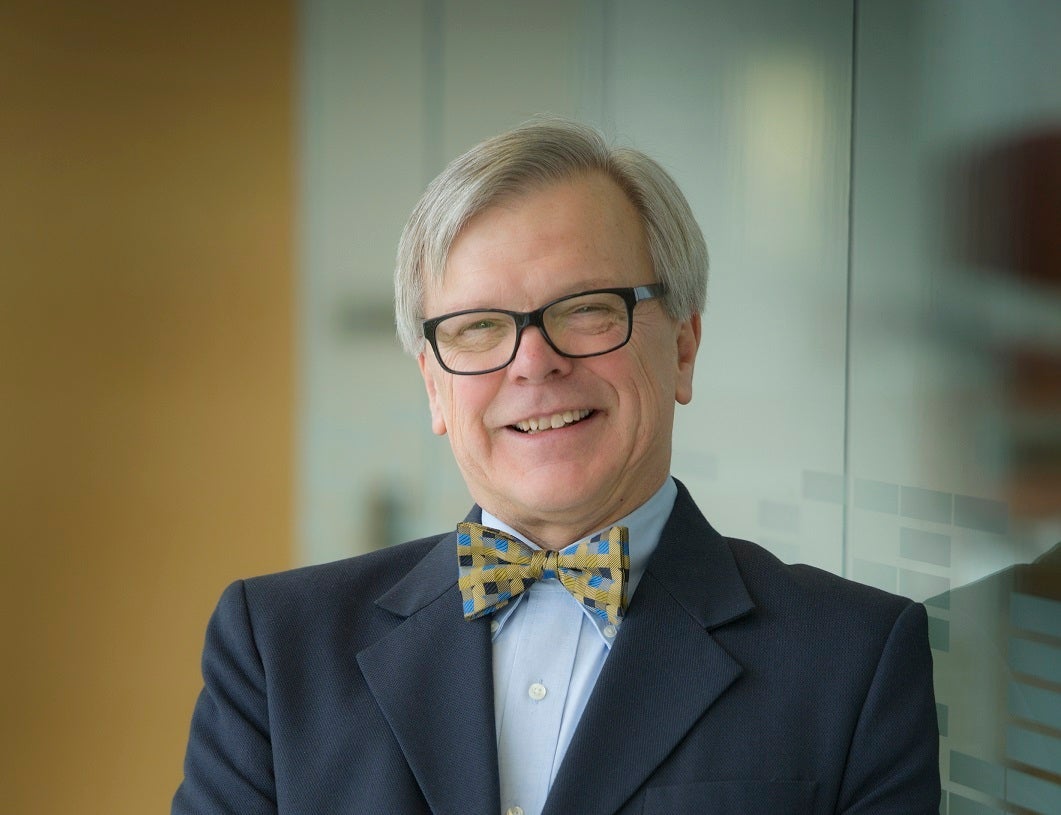
When I (Jake) was asked to write a piece to mark Bill Bobier’s retirement from the School of Optometry and Vision Science, I had a look at Bill’s profile on the University of Waterloo’s web page. It reads as follows:
“Bill entered private optometric practice following graduation and then returned to university life where he completed a M.Sc. (Physiological Optics, University of Waterloo) then a Ph.D. (Experimental Psychology, University of Cambridge). A common thread throughout was to gain a better understanding of the developing binocular motor system in infants and children. Bill joined the faculty at the School of Optometry in 1987. He served as Associate Director (1999–2002) and then Director of the School (2002–2005). His interest in developing binocular motor systems remained central to his research activity and teaching.”
This description tells you all you need to know about Bill. It tells you that he is a modest man who has accomplished a great deal; as a teacher, as a scientist and as an administrator.
Both Beth and I spoke about Bill at his retirement event. My own remarks were largely reminiscences about Bill’s early years in research, particularly his MSc research which dealt with the effects of alcohol on accommodative function. This involved using a photorefractive technique he learned from Howie Howland at Cornell University. The subjects were asked to drink a concoction consisting of lemon juice mixed with various concentrations of ethanol after which their accommodative function was assessed objectively. Bill went on to receive an award for this work from an American organization that recognizes ergonomically-related research. After his master’s degree, Bill went on to complete a PhD at Cambridge University. His work involved the study of visual development in children, again making use of the technique of photorefraction.
Beth’s remarks were particularly eloquent and heartfelt and with her permission they are reproduced below:
I am honoured to say a few words about Bill Bobier.
The first thing I want to say is that Bill is: a good man, a good scientist, a good clinician and a good educator
Bill has made a significant contribution to the profession. In particular I would like to thank him for his work on the Eye Health Council of Ontario. It is time the “eye” professions learned to work together and Bill has been part of making that happen.
Bill and I have many things in common. Perhaps it’s that Saskatchewan thing. I grew up there. Bill visited there once when he was a kid. Bill has become known for his colourful and interesting bow ties. While we all love the look, if Bill was really a “Western kinda guy” he would wear a bolo tie. He just wasn’t there long enough.
I am one of relatively few people taught by both Bill and his father. Bill was the TA for my ocular motility class. I learned many years later that he was impressed by the fact that I had read Ogle. Of course the only way Bill would know this is that he also had read Ogle.
My next encounter with Bill was on my PhD committee. I particularly remember my comprehensive exam. It was going along quite well (or at least that is what I thought) until Bill asked some question about the small eye artifact – I don’t even remember the question anymore only that it was about the small eye artifact and that I didn’t know the answer. I had no choice but to say I don’t know. At this point the exam ended. Now I’m starting to sweat. Bill says “I got yah on the small eye artifact” and starts to laugh as only Bill can do. I’m glad he found it so amusing!
Somewhere in there I went from being a student to a colleague. We jointly supervised students and post docs. We co-taught courses and we commiserated over difficult BV clinic patients. I thank him for the support he provided.
Probably the most important thing Bill and I share is a strong belief in the importance of understanding things from first principles, the value of basic science and the need for evidence based practice. Everything else is based upon this and Bill retired or not still is a grand champion for this. Perhaps we need to get him elected.
I would likely be a lot more upset about Bill retiring if I thought he was actually leaving but I expect he will be like the late Ian Howard. For those of you who don’t know him, Ian Howard was a great Canadian scientist in the area of binocular vision. I was at a festschrift for him and the speaker was showing a graph of his publications as a function of time. For a long time his publication rate was pretty stable and then all of a sudden there was a huge jump. The speaker then added his retirement date. You guessed it, it coincided exactly with the jump in publications. I’m thinkin (that’s Western Speak) Bill could be on the same trajectory. He modestly says no but I don’t believe him.
Finally Bill I would like to wish you all the very best in your retirement. May you never, ever, EVER have another student put up their hand and ask, "...um, Dr. Bobier, which eye is the phoria in"?
Dr. Barbara Robinson
Written by Dr. Ralph Chou
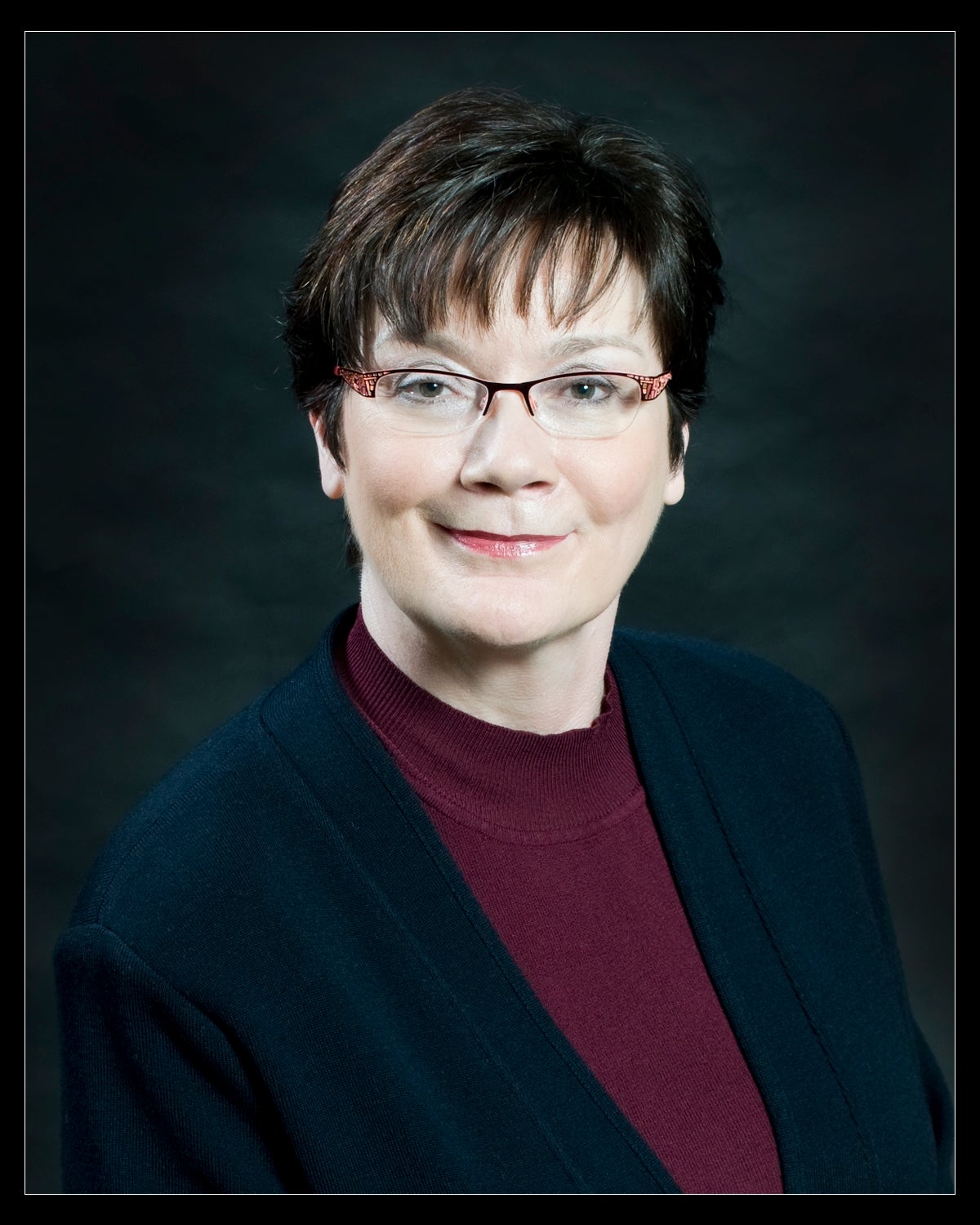
Barbara Robinson, OD, MPH, PhD, FAAO, retired as Associate Professor on January 1, 2017, after nearly 38 years as a member of the faculty of the School of Optometry and Vision Science.
Raised in Essex County, Barb was a member of the UWaterloo Optometry class of 1976. After practising in Kitchener and working as a Clinical Supervisor at the School of Optometry, she attended the University of Washington in Seattle, where she received the MPH for her thesis “The Epidemiology of Congenital Eye Malformations”. She returned to UW Optometry in 1979 as a Lecturer and also worked in New Brunswick as a consultant to the Ministry of Health and Director of the Mobile Vision Clinic.
Barb taught Public Health Optometry in the OD program in addition to supervising in the Contact Lens Clinic and teaching the third year Contact Lens Laboratory. She added History and Orientation and Case Analysis to her teaching portfolio as well.
In 1993, Barb earned her PhD in Epidemiology from the University of Washington for her dissertation on “The Epidemiology of Refractive Errors in six-year-olds in the Province of New Brunswick” and became Assistant Professor of Optometry. Tenure and promotion to Associate Professor followed in 2000.
Barb served as the School’s Undergraduate Affairs Officer for many years, and was also involved in admissions, curriculum review, graduate studies and computer services. She was Science Faculty representative to the Applied Health Sciences Faculty Council and served a term as Chair of the University’s Human Research Ethics Committee. Since 2012 she served as Awards Officer of the School.
Barb’s research has been mainly in the epidemiology of vision problems, public health aspects of vision care, decision analysis, evidence-based health care, and validity of vision screening. More recent publications have addressed the importance of comprehensive eye examinations for children, evidence-based guidelines for frequency of eye examinations, and prevalence of impaired vision and uncorrected refractive error. Her work was supported by grants from the Canadian Institutes for Health Research, COETF, the CNIB, and Essilor Canada.
She has also supported the CAO and the provincial associations and colleges with technical reports on vision screening, frequency of eye examinations, sight testing and stand-alone refraction. In retirement, she is continuing her work on a joint working group of CAO and the Canadian Ophthalmological Society on recommended frequency of pediatric eye examinations.
Although she will be keeping a desk at the School, Barb is taking advantage of free time to visit her great-nephews and great-nieces in British Columbia and other members of her family. We wish her all the best in her retirement.
The First Canadian Interdisciplinary Vision Rehabilitation Conference (CIVRC)
The first Canadian interdisciplinary weekend vision rehabilitation conference was held at the School of Optometry and Vision Science in March 2017. By all accounts it was very successful and truly did live up to the name of being interdisciplinary. There were a total of 149 registrants including attendees who identified themselves as optometrists, ophthalmologists, opticians, orientation and mobility instructors, occupational therapists, independent living specialists (from CNIB), high tech assessors, itinerant vision resources teachers/special education consultants, CNIB national and provincial managers, counsellors, students, and University faculty members/researchers. Attendees came from almost every province across Canada and even internationally, including optometrists from the US and Hong Kong.
The wide range of presentation formats was appreciated and ranged from lectures, workshops, collaborative workshops and grand rounds.
Thanks to generous sponsorship from Chadwick Optical, Optelec Canada Inc. and Brook and Braddock Opticians, we were able to present nine Conference Awards to students and residents to enable them to attend the conference. The first Canadian Low Vision Achievement Award was awarded to Dr. Graham Strong with acknowledgment of his extensive advocacy work in the 1980’s to obtain coverage of visual aids for people with low vision of all ages through the Assistive Devices Program. This helped change the landscape of low vision service provision in Ontario and continues to serve as a model across Canada.
The inaugural George Woo lecture was given by Dr. Joan Stelmack of the Illinois Eye and Ear Infirmary, where she is Director of the Low Vision Service. Dr. Woo has served (and led) numerous national and international optometry organisations. Closer to home, he was responsible for initiating our own Low Vision Clinic and was founding Director of the Centre for Sight Enhancement from its opening in 1985 to 1987. Dr. Stelmack spoke about the effectiveness of the Lovit studies, which demonstrate the effectiveness of a two tiered approach to low vision rehabilitation. The two keynote speakers were Dr. Walter Wittach, School of Optometry, University of Montreal and Anne Riddering, Director of Rehabilitation Services for Henry Ford Health System’s Visual Rehabilitation and Research Centerof Michigan. Dr. Wittach spoke about dual sensory loss (hearing and vision), emphasising the unrecognised high prevalence of this condition, while Dr Riddering spoke of the importance of recognising the contribution of all the professions who provide vision rehabilitation, particularly with the projected increasing prevalence of visual impairment.