This article originally appeared on the Department of Biology website on Friday, March 21, 2014.
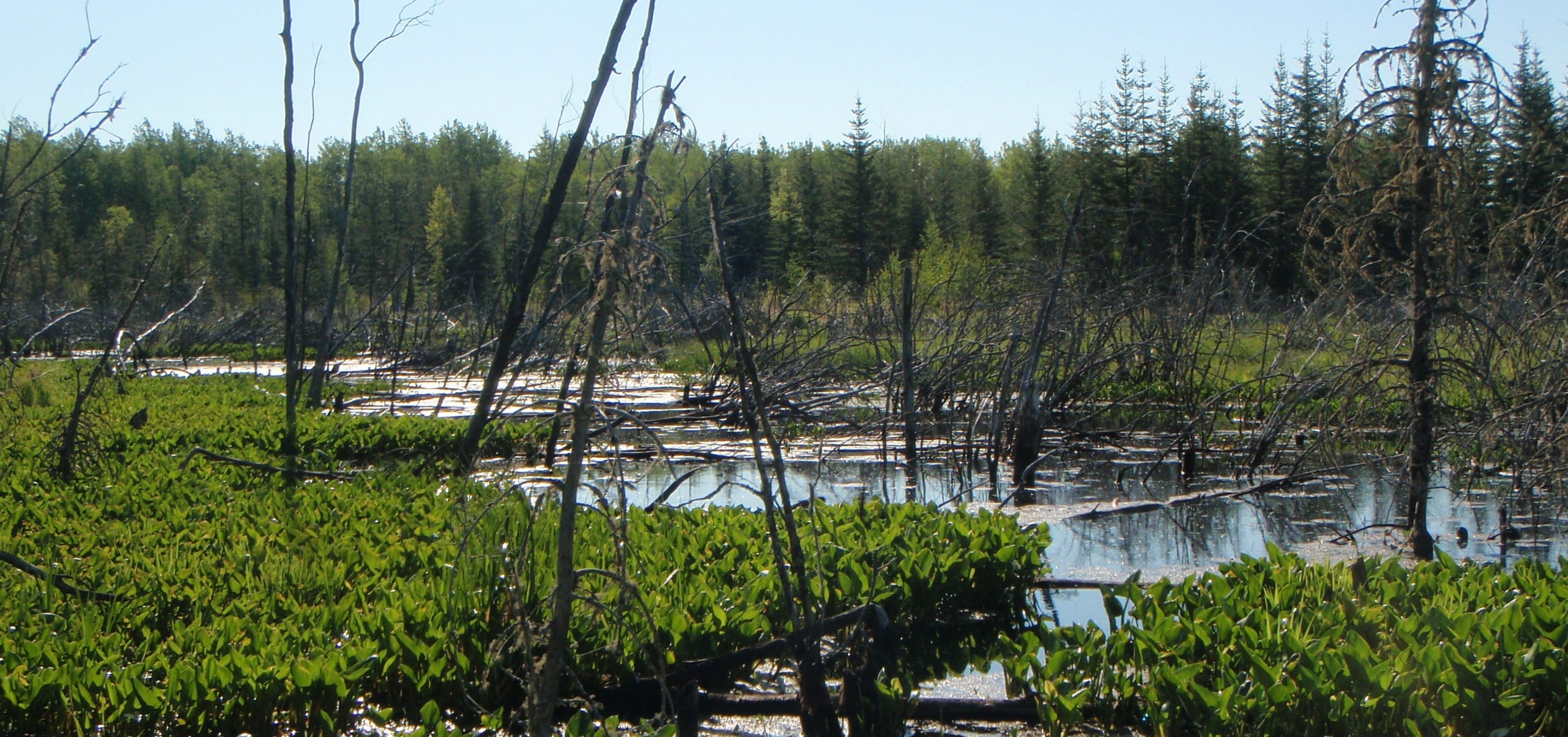
University of Waterloo Assistant Professor Rebecca Rooney, from the Department of Biology, is co-leading a project to develop a critical wetlands assessment tool in support of Alberta’s New Wetland Policy, which comes into force later this year. She is also a member of the Water Institute at the University of Waterloo.
Alberta’s New Wetlands Policy manages wetlands with an innovative approach based on their function, or ecosystem services. Assessment tools are an integral part of this management plan.
Rooney’s tool aims to reliably assess the health of small, non-permanent marshes. Both small and large wetlands are needed for a healthy, self-sustaining system. Small, non-permanent marshes provide flexible services, such as habitat for shore birds and groundwater recharge even though they do not always appear to be “wet”.
The idea is to create a comprehensive range of indicators that describe pristine wetlands at one extreme and highly impacted wetlands on the other. Indicators span biological, chemical and physical measurements such as biodiversity, nutrient and pollutant concentrations, and evaporation.
“In order to use this tool, we need to be able to nail down both end members,” said Rooney.
The relationship between wetland health and function has also never been established. Rooney questions if at some threshold a wetland’s function fails with declining wetland health or does the function decline gradually.
In addition to developing the assessment tool for individual wetlands, Rooney and project collaborator Derek Robinson of Waterloo’s Department of Geography and Environmental Management are also investigating these small wetlands as landscape systems.
“On a larger spatial scale, these wetlands form a network that is hydrologically and ecologically connected,” said Rooney. “But we don’t know what a healthy network actually looks like. In restoring wetlands, we want to mimic this natural pattern at a landscape level.”
Meanwhile, northern Alberta has lost 50% of its wetlands through oil sands development and Calgary has lost 70-90% of its wetlands through urban expansion.
“We don’t want to lose even more wetlands at such a critical time,” said Rooney. “This could be a tipping point for wetland sustainability in many areas.”
The tool should improve the success rate of wetland reclamation by the oil sands industry and across the rest of the province.
Rooney and colleagues at the University of Alberta have already developed a successful wetlands assessment tool for shallow open water habitat in the oil sands.
The current project on non-permanent marshes, which includes Rooney, Robinson, and a researcher from the University of Alberta, will receive $715,000 in funding over the next three years from Alberta Innovates Energy and Environment Solutions.
Rooney and her team begin fieldwork this April.
Photo credit: Rebecca Rooney