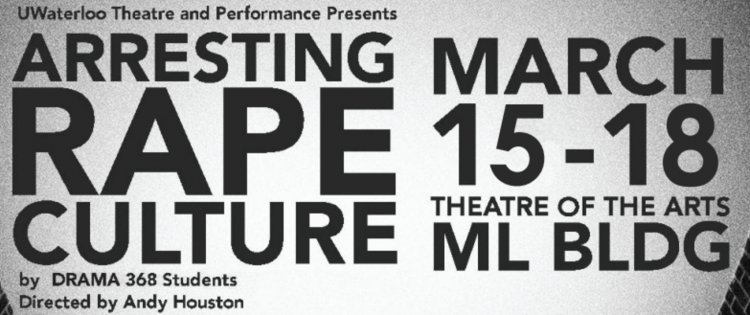
Visual Culture
The Gutenberg Press
Johannes Gutenberg invented the printing press around 1440. The first book published from the press was the Bible.
15th Century
Basel: Johann Bergmann de Olpe, 1494. Christopher Columbus, De insulis nuper in mari Indico repertis. Bound with Carlo Veradi, In laudem … Ferdinandi Hispaniarum.
https://libcom.org/history/columbus-indians-discovery-america
https://www.loc.gov/exhibits/exploring-the-early-americas/columbus-and-the-taino.html
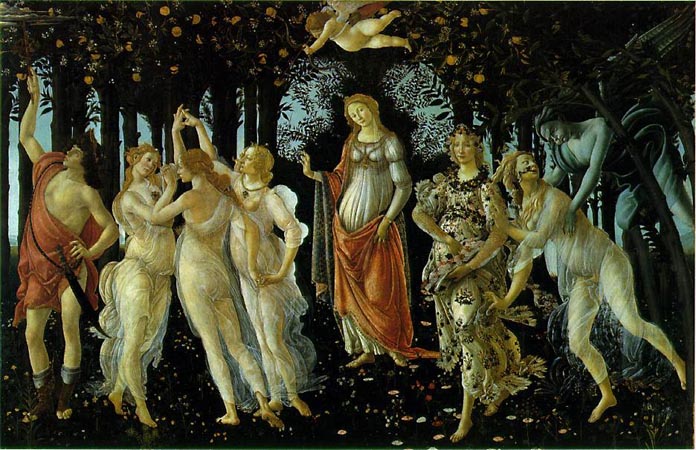
Botticelli's Primavera, 1482
16th Century
Caravaggio, Medusa, 1597

"Medusa in Myth and Literary History.” Modern American Poetry. University of Illinois. Web.
Jan van Hemessen, Tarquin and Lucretia (mid-16th century)
Paolo Veronese
The Adulteress
Saint Agatha of Sicily
The Rape of Europa, 1570
V. de Beauvais: Sainte Agathe en prison. Martyre de sainte Agathe.
Caravaggio: Judith Beheading Holofernes, 1599
Pieter Bruegel, Dulle Griet (Mad Meg), 1562
Titian. Rape of Europa, 1562.

17th Century
"Rape is the carnal abusing of a woman against her will. But if the woman conceive upon any carnal abusing of her, that is no rape, for she cannot conceive unless she consent."
Sir Henry Finch, Law or Discourse Thereof (1627)
Wolfthal, Diane. Images of Rape: The “Heroic” Tradition and its Alternatives.
1620. Execution by fire and torture of five homosexual Franciscan monks, Bruges, 26 July 1578 on two scaffolds - three are burned and two are scourged. Two youngsters are marched out of town (foreground left). "99". Latin text: Sic paedicones Monachi, gens foeda, procellis Ignitis poenas sceleris dedit exitialis, Quid si Roma pari tollat ratione Gomorrhae Foedos concubitus superaret laude Bruguenses

Artemisia Gentileschi
Judith Beheading Holofernes, 1612
Judith and her Maidservant, 1620
Poussin, Rape of Sabines, (1637)
Salem Witch Trials: Documentary Archive and Transcription Project (1692-1693).

18th Century
Oneill, Therese (2015). “Why Rape Was Impossible: A Look at the Terrifying Medical Logic of 18th Century."
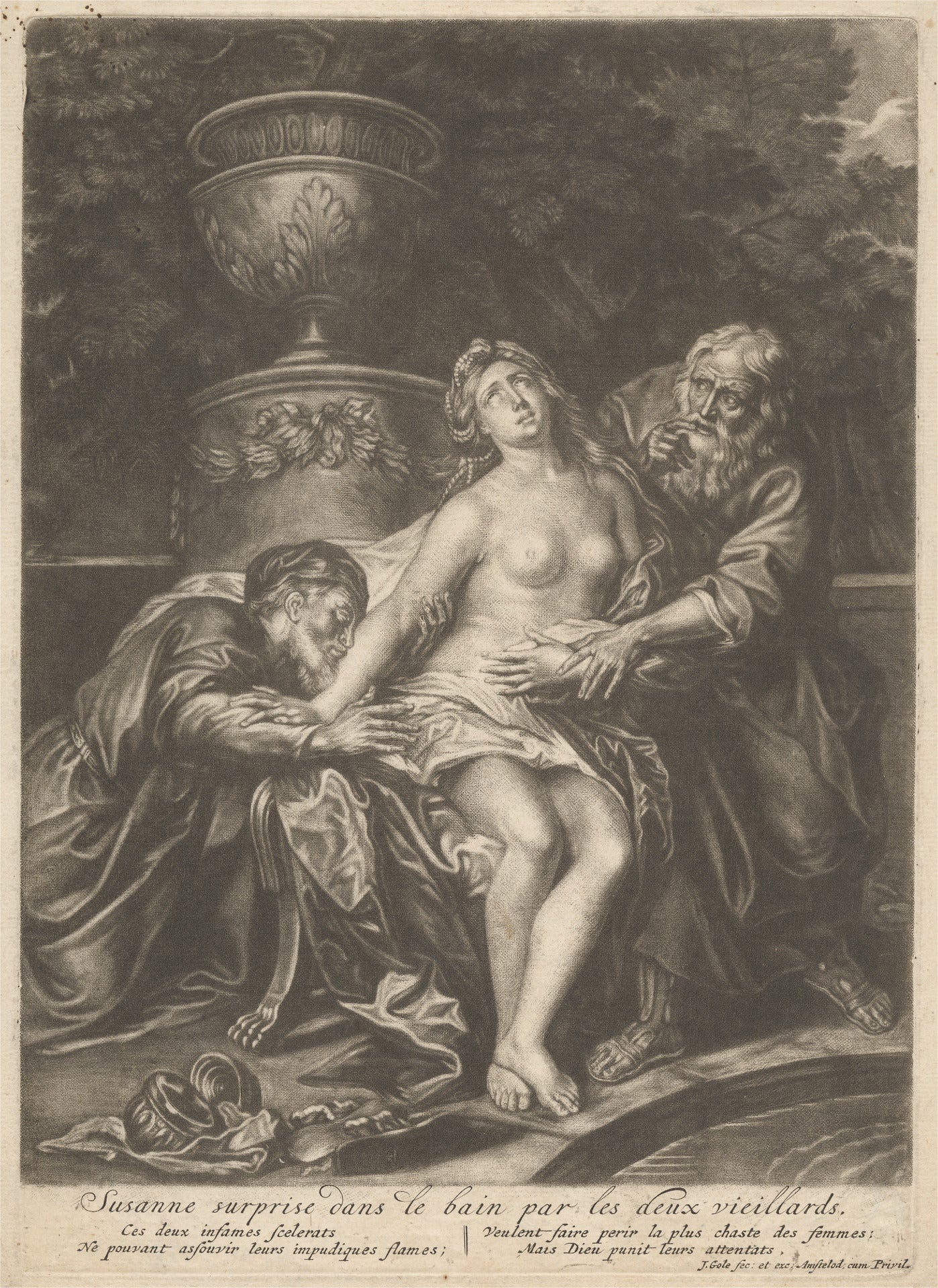
Jacob Gole (1660-1737). Susanne, surprise dans le bain par les deux vieillards. Mezzotint on medium, slightly textured, cream laid paper
19th Century
Didi-Huberman, Georges. (2003). Invention of Hysteria: Charcot and the Photographic Iconography of the Salpêtrière. Trans. Alisa Hartz. Cambridge: MIT Press.

Moll, Sorouja. (2010). “I won’t uncross my legs”: The fluctuating centre of hysteria.” Web.
Surkis, Judith. “Alice Winocour’s Augustine". Web.
Showalter, Elaine. (1997). Hystories: Hysterical Epidemics and Modern Media. New York: Columbia
Marie-Guillemine Benoist (1800). Portrait of a Negress. Web.

Nelson, Charmaine. “Slavery, Portraiture and the Colonial Limits of Canadian Art History.” Canadian Women Studies. 23.2. Web.
Smalls, James. "Slavery is a Woman: "Race," Gender, and Visuality in Marie Benoist's Portrait d'une négresse (1800)."
Nelson, Charmaine. (2014). “Portrait of a Negro Slave.” Historica Canada.
William Blake
Flagellation of a Female Samboe Slave, 1796. Colour engraving.
Abolitionist media had a strong influence on pornography in the 19th century.
http://www.blackcanadianstudies.com
http://www.vam.ac.uk/content/articles/i/images-of-slavery-and-abolitionism/
https://www.theguardian.com/artanddesign/2007/apr/15/art.williamblake

20th / 21st Century
Denson, Rodger G. (2013). “From Victim to Victor: Women Turn the Representation of Rape Inside Out.” (Part 4). The Huffington Post.
See also Part One, Part Two, and Part Three from the Series.
Widewalls: 10 Women in Contemporary Art
See Emilie Buchwald, Pamela Fletcher, and Martha Roth, ed(s), Transforming a Rape Culture (Minneapolis: Milkweed, 1994).
Nedelsky, Jennifer. “Embodied Diversity and the Challenges to Law.” McGill Law Journal, Vol. 42, No.1, 1997.
“Ghomeshi Acquitted.” The Globe and Mail, March 28, 2016.
Meyer, Doug (2012). An Intersectional Analysis of Lesbian, Gay, Bisexual, and Transgender (LGBT) People’s Evaluations of Anti-Queer Violence.” Gender & Society. 26.6: (2012).
“The author uses an intersectionality framework to examine how lesbian, gay, bisexual, and transgender (LGBT) people evaluate the severity of their violent experiences. Previous research focusing on the severity of anti-LGBT violence has given relatively little attention to race, class, and gender as systems of power. In contrast, results from this study, based on 47 semi-structured, in-depth interviews, reveal that Black and Latino/Latina respondents often perceived anti-queer violence as implying that they had negatively represented their racial communities, whereas white respondents typically overlooked the racialized implications of their violent experiences. Furthermore, while lesbians of color emphasized their autonomy and self-sufficiency to challenge this discourse, Black and Latino gay men underscored their emotional and physical strength to undermine perceptions that they were weak for identifying as gay. Results also indicate that LGBT people experience forms of anti-queer violence in different ways depending on their social position, as Black lesbians faced discourse that neither white lesbians nor Black gay men were likely to confront. Thus, these findings suggest that topics primarily associated with homophobia should be examined through an intersectional lens.”
Alison, Miranda, Debra Bergoffen, Pascale Bos, Louise du Tolt, Regina Mühlhäuser, and Gaby Zipfel. (2009). “My plight is not unique”: Sexual violence in conflict zones – a roundtable discussion. Eurozine. Mittelweg 36.
What conceptions of gender underlie military policy towards sexual violence? Is the specific form the violence takes determined by the type of warfare? To what extent is sexual violence in wartime different to that in peacetime? And what does a closer examination of homosexual violence add to our understanding? A roundtable discussion organized by the Hamburg Institute of Social Research.
Apperley, Henry (2015). “Hidden victims: a call to action on sexual violence against men.” Medicine, Conflict and Survival. 31.2.(2015):92-99. Web.
Jacobs, Ben and Sabrina Siddiqui. (2016). “I can do what I want: Donald Trump … “ The Guardian. Web.