DRAMA 317, 410, 417 - Arresting Rape Culture
Introductory Comments
Andy Houston, Director
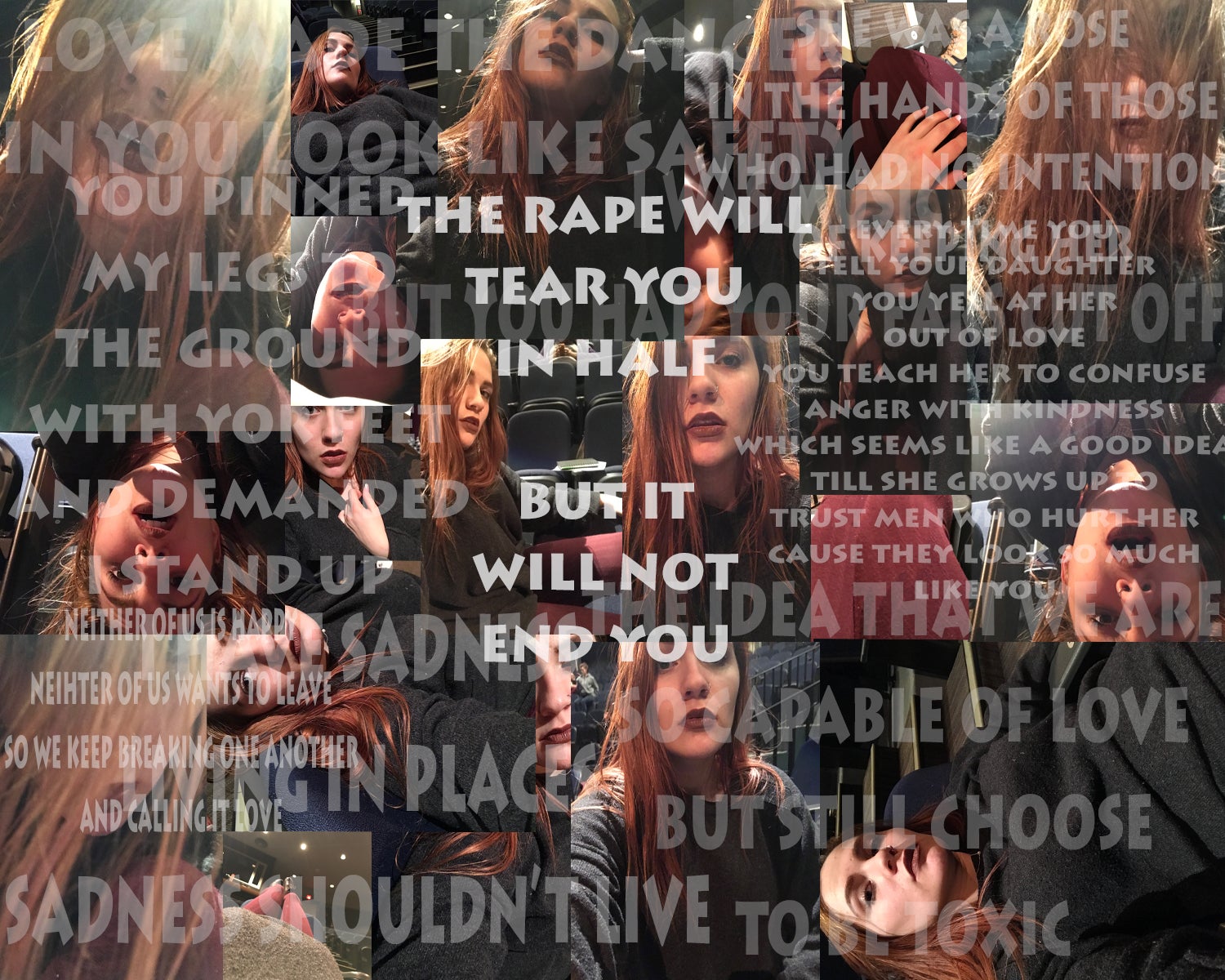
What follows are a series of statements and collages of visual imagery that I asked the performer-devisors of Unconscious Curriculum: Rape Culture on Campus to create for presentation in rehearsal on January 7, 2017. Many of the students working on this project have been examining this subject matter in courses that took place in the fall term, so near the beginning of our process of creating Unconscious Curriculum, I wanted them to clearly articulate and visualize their current relationship to the subject of rape culture.
This assignment began with an examination of how good dramaturgy in performance creation can be inspired by the process of collage making. Then I asked each performer-devisor to do the following:
• Create a statement of your personal relationship to rape culture (approximately 150 words).
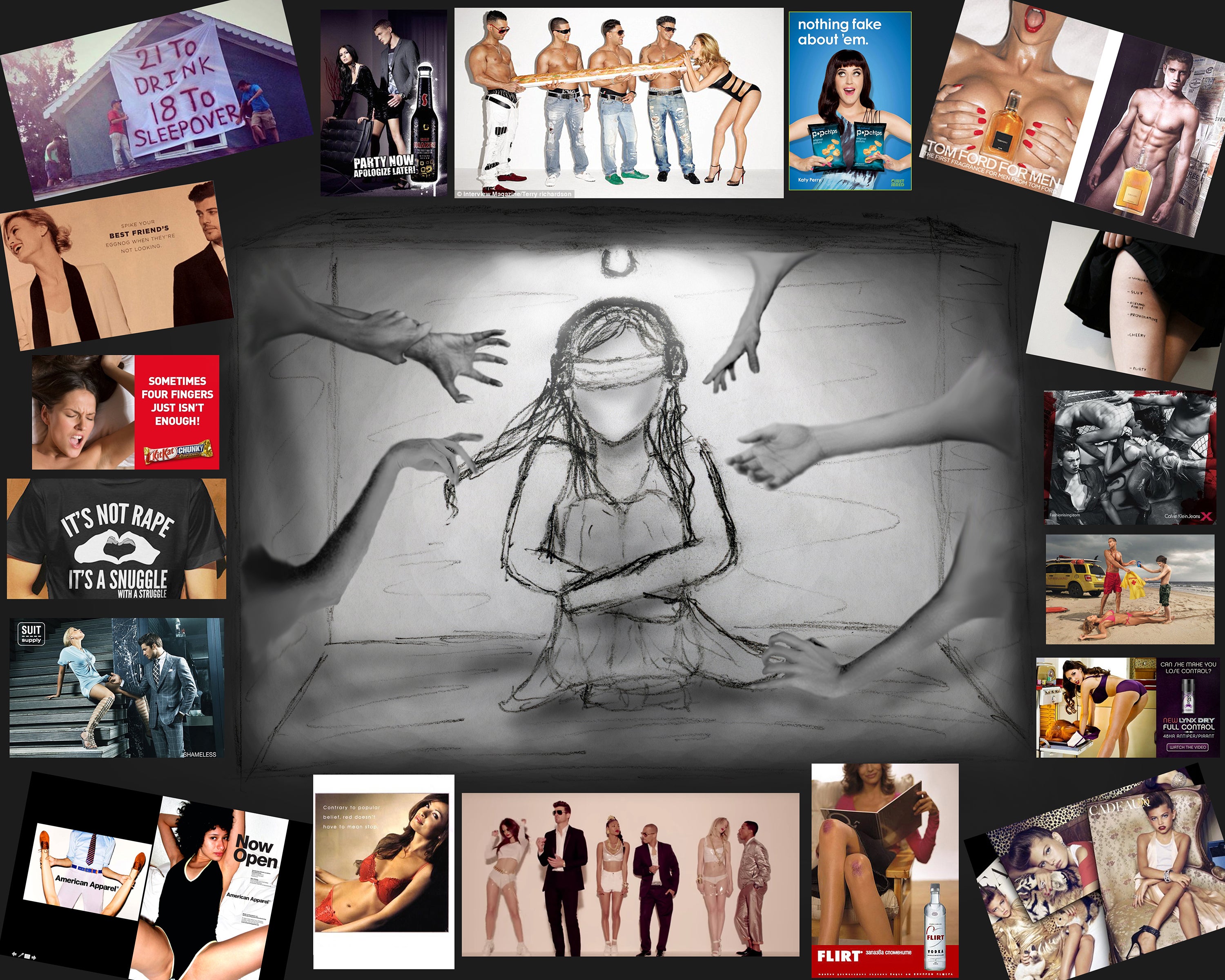
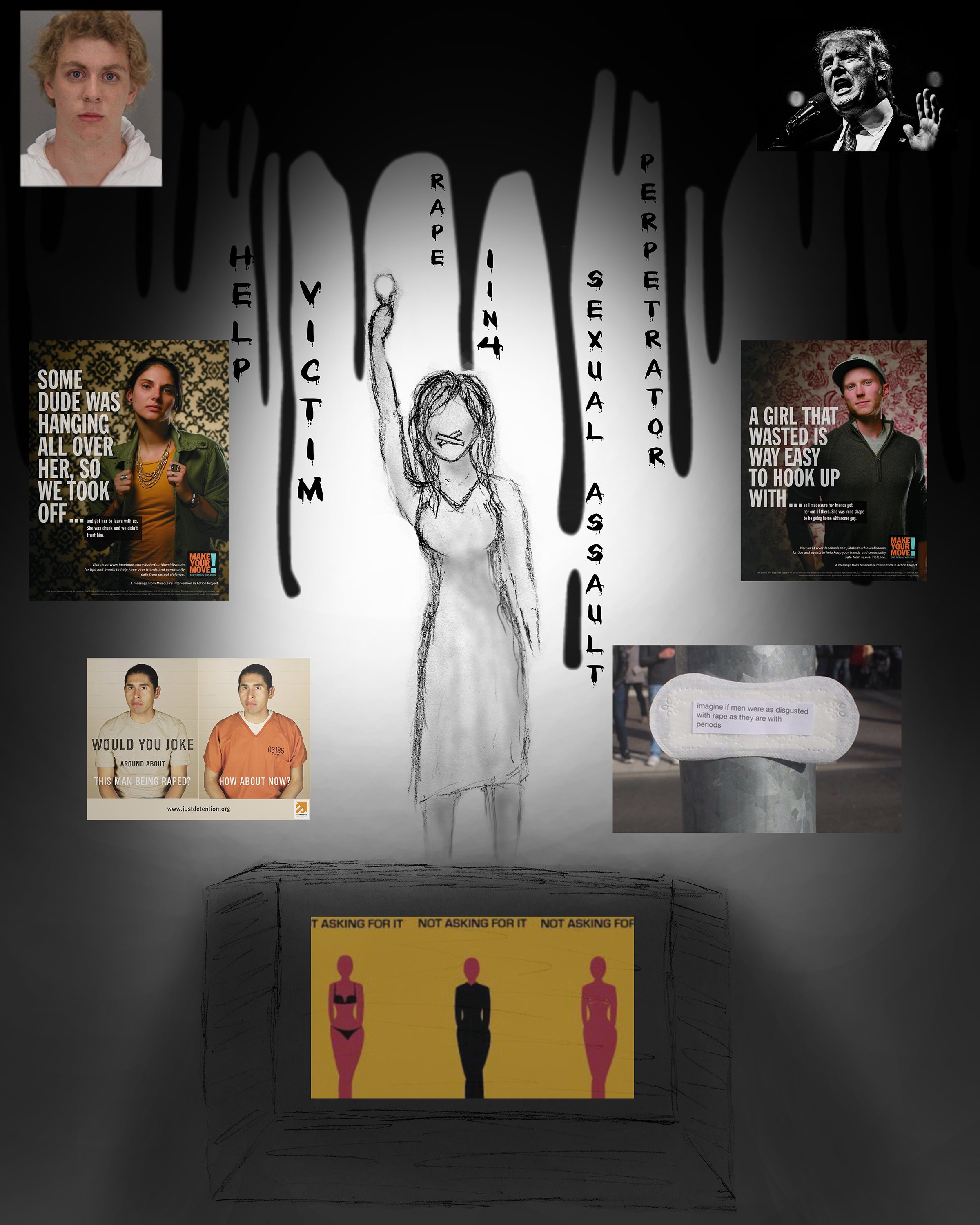
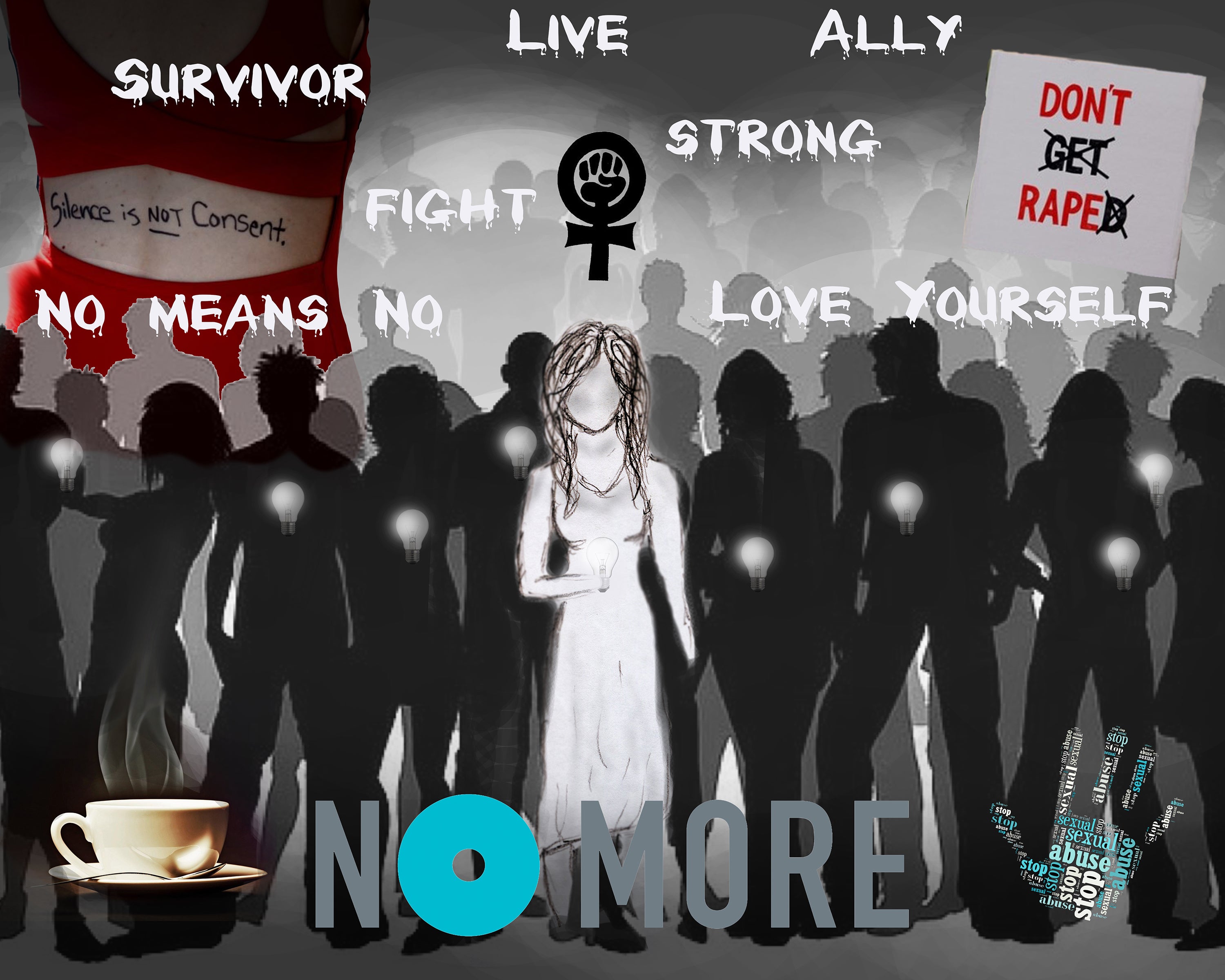
• Create three image collages of your relationship to rape culture: one of your relationship to rape culture in the past, one of your relationship to rape culture in the present, and one your relationship to rape culture in the future. When choosing pictures for your collage, try to be a specific as possible to details of your understanding of the issue.
The performer-devisors working on this project are:
- Jenn Addesso
- Brooke Barnes
- Holly Bouillon
- Carly Ann Derderian
- Zac Gungl
- Andrew Labre
- Abbi Longmire
- Sam Mercury
- Alex Porter
- Katrina Romanowich
- Cameron Smith
- Erik Van Dijk
Personal Statements and Collages
Sam Mercury
Rape culture is the insidious and damaging act of normalizing sexual assault within a culture. This is done through micro aggressions (small acts of aggression towards a victim like jokes, problematic language and objectification. So your favourite sexist stand-up comedian is, in fact, doing more than just making jokes), the enforcement of gender roles, verbal abuse and many more actions that quietly tell people that it is ok to interact intimately with a person without their consent. Rape culture affects everyone, regardless of race, gender identity, social status, or sexual orientation. It is taught to us in school, on television, and by those we elect to lead us.
Erik Van Dijk
Brooke Barnes
Zac Gungl
Our bodies are not one of our own. Rape Culture has embedded a gender code for my body to follow and disobedience will result in physical, emotional, and psychological consequences. I meet Rape Culture everyday with the comments on what I wear and how I hold myself to my labels as a (gender)queer person, the difficulties of trying to strip labels off when we live in a world that desires them to comprehend who you are. They forget that the sentient being has a fluid approach to learning, to grasping its true desire. Rape Culture has saturated this notion with modes of possession and the rape element communicates the possession of sex with others as inherently yours. Rape Culture is a topic with a multiplicity that I cannot fully comprehend or embody and I recognize that there is a limitation to my own perspective. This awareness, however, is what is necessary for a collaborative performance to come to fruition with others who come with their own perspective. I am a survivor but I am not the only one, nor does this take away from those who are aren’t survivors but have been affected by Rape Culture. We require the need to pivot the centre so that we can make sure we are not fully immersed in a singular perspective but can try to walk within another’s shoes (taking the limits of that into account) and create work that fosters to connecting with a society that is suffering.
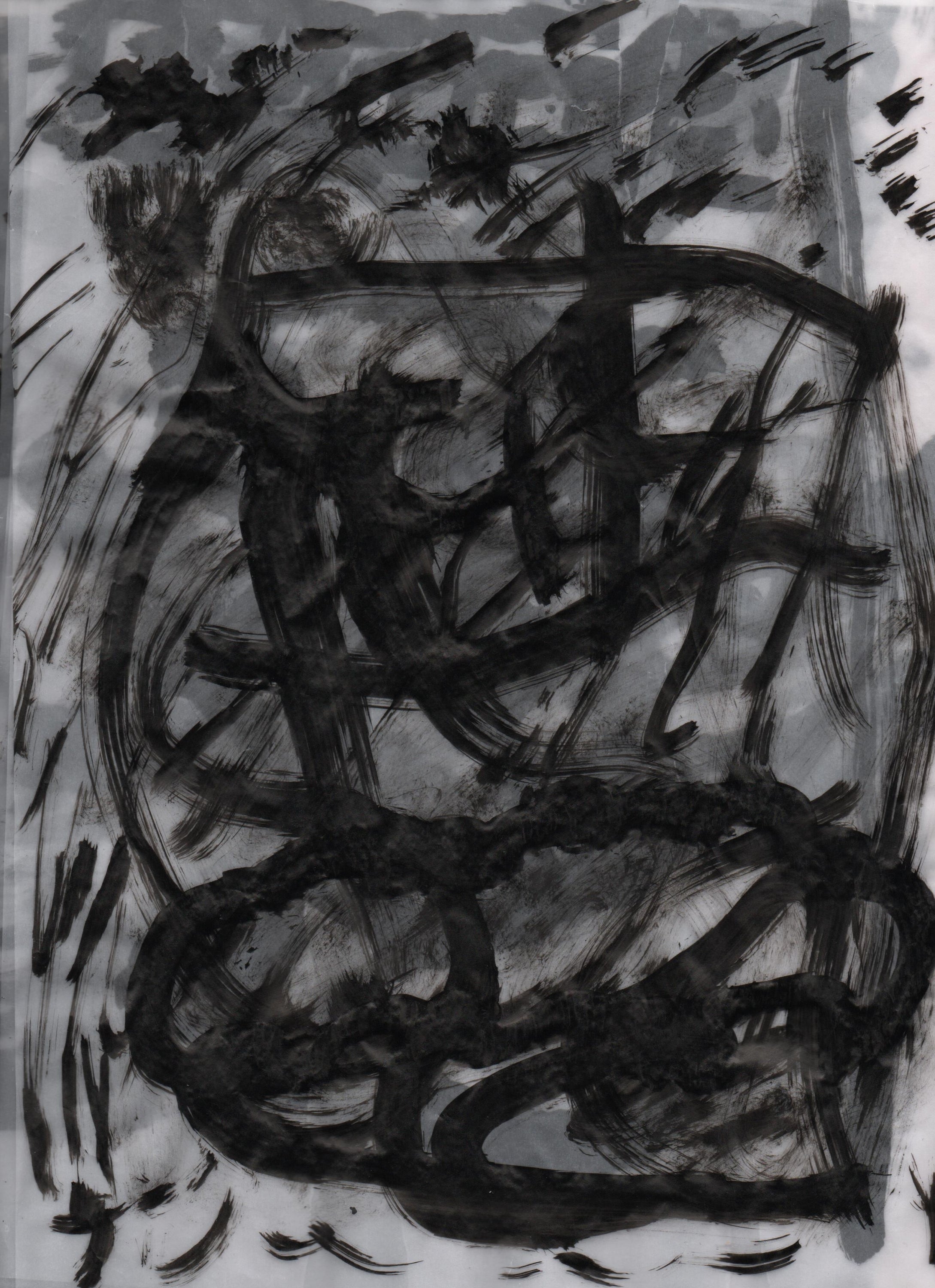
Chaos (Present)
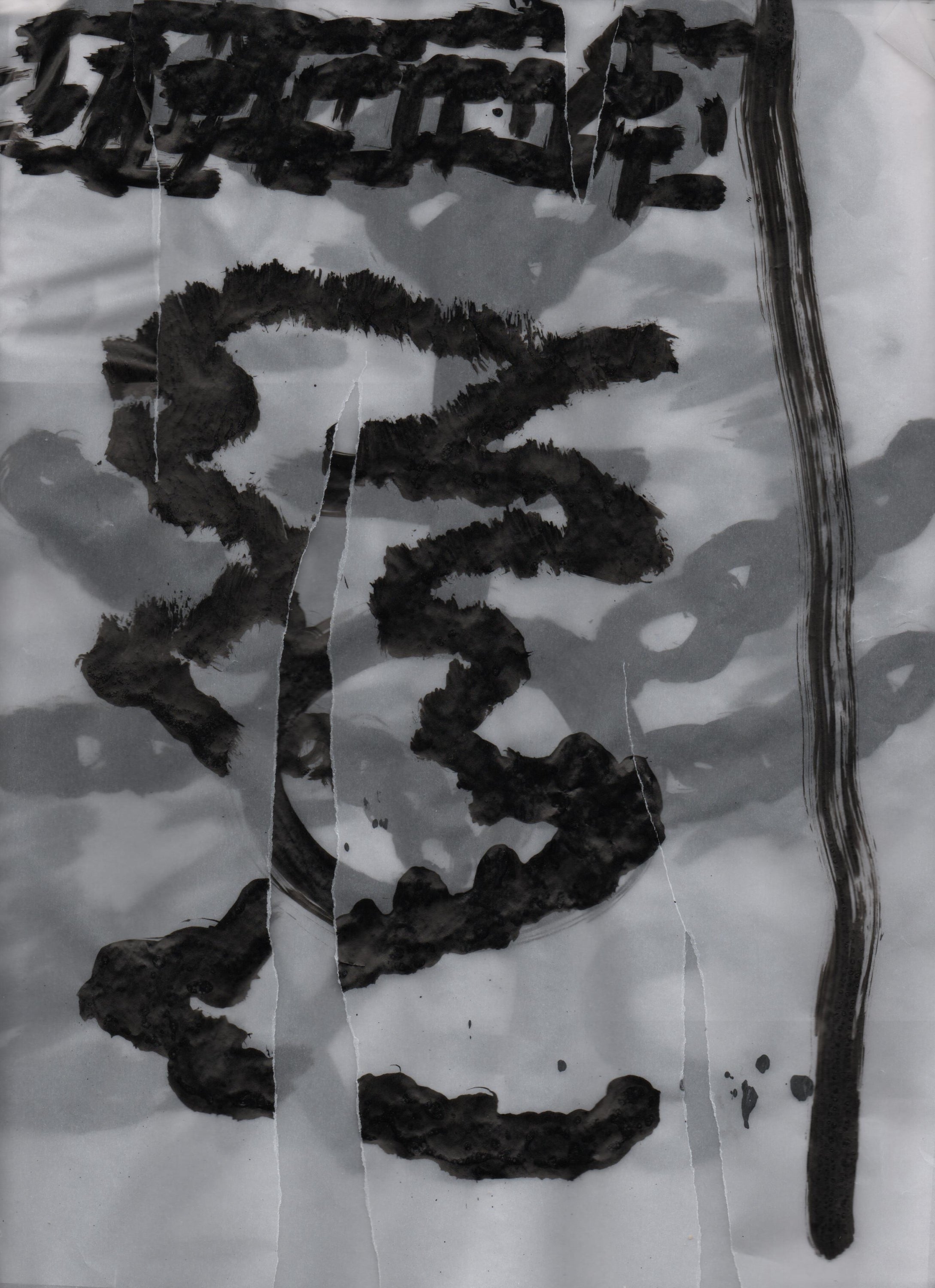
Torn (Present)
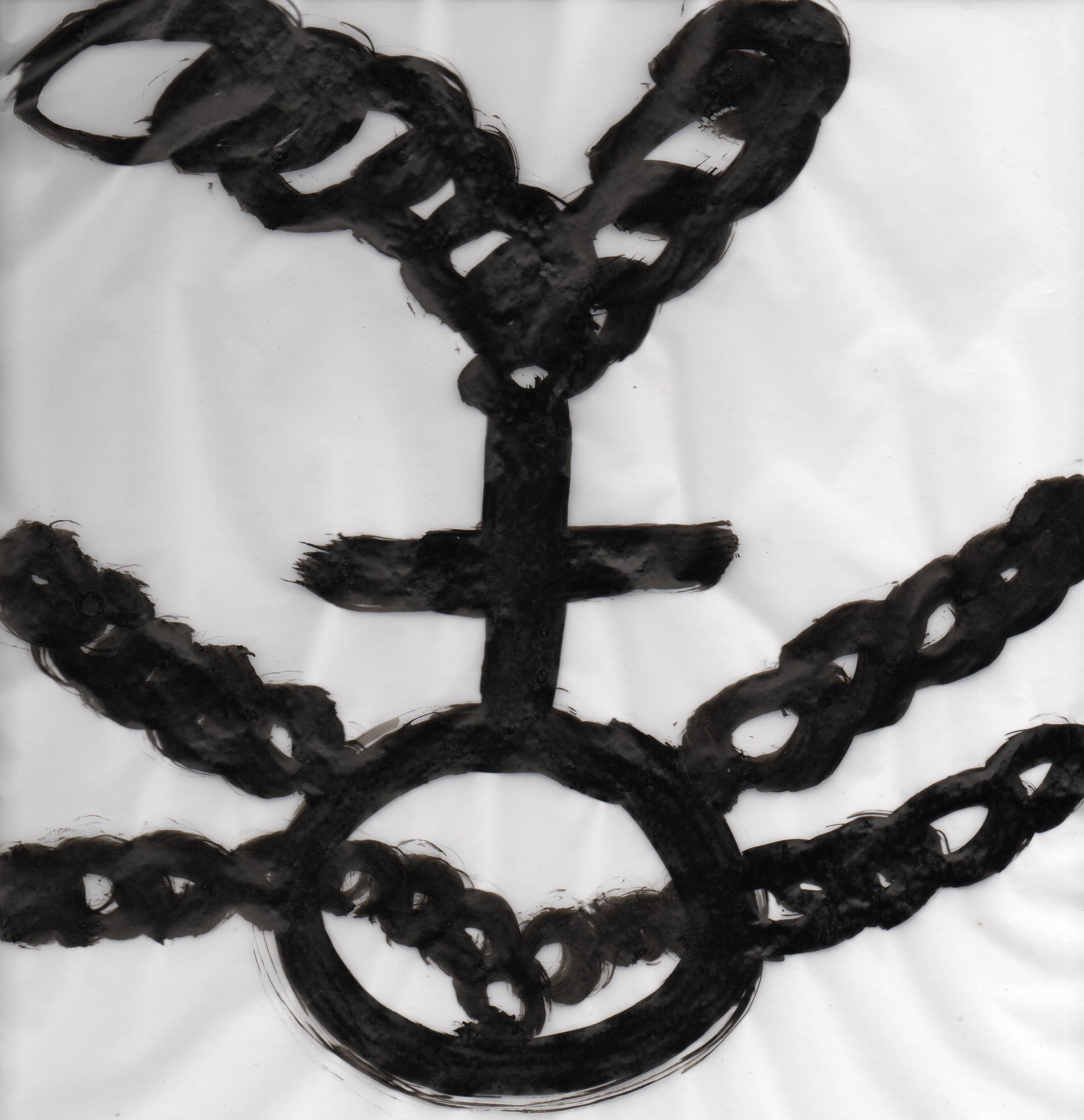
Chained Femininity (Present)
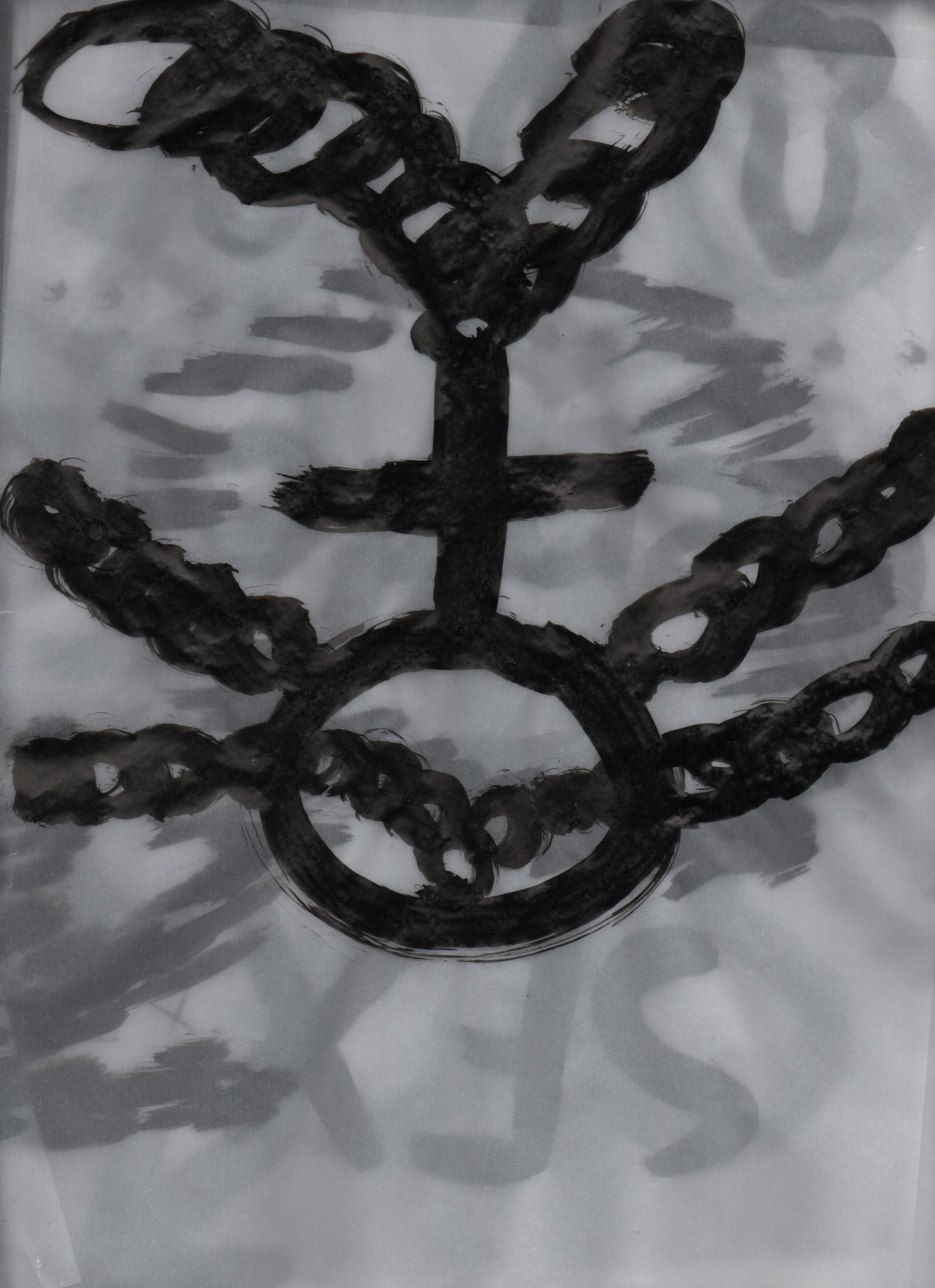
Chained Femininity (Future)
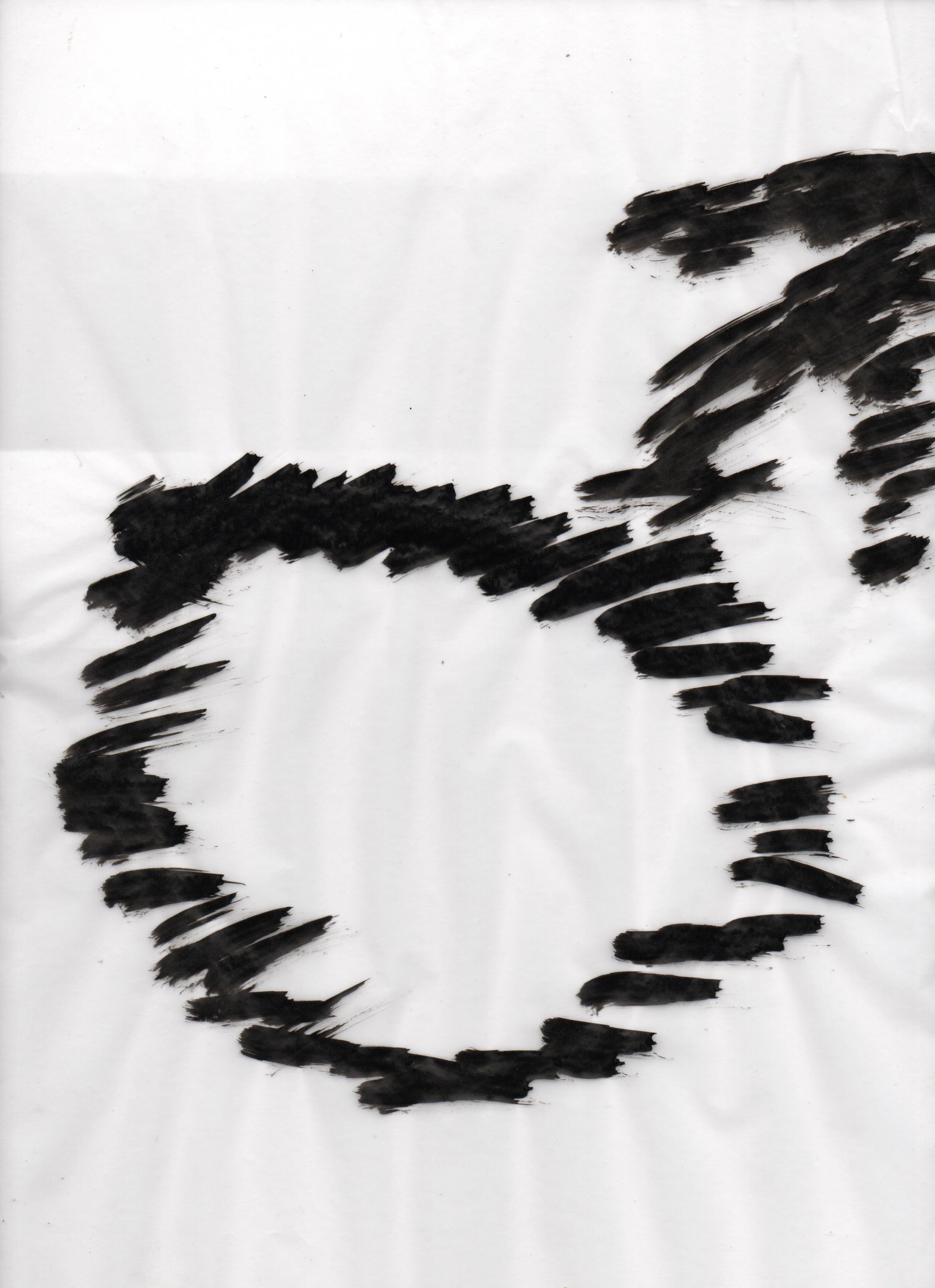
Cut (Present)
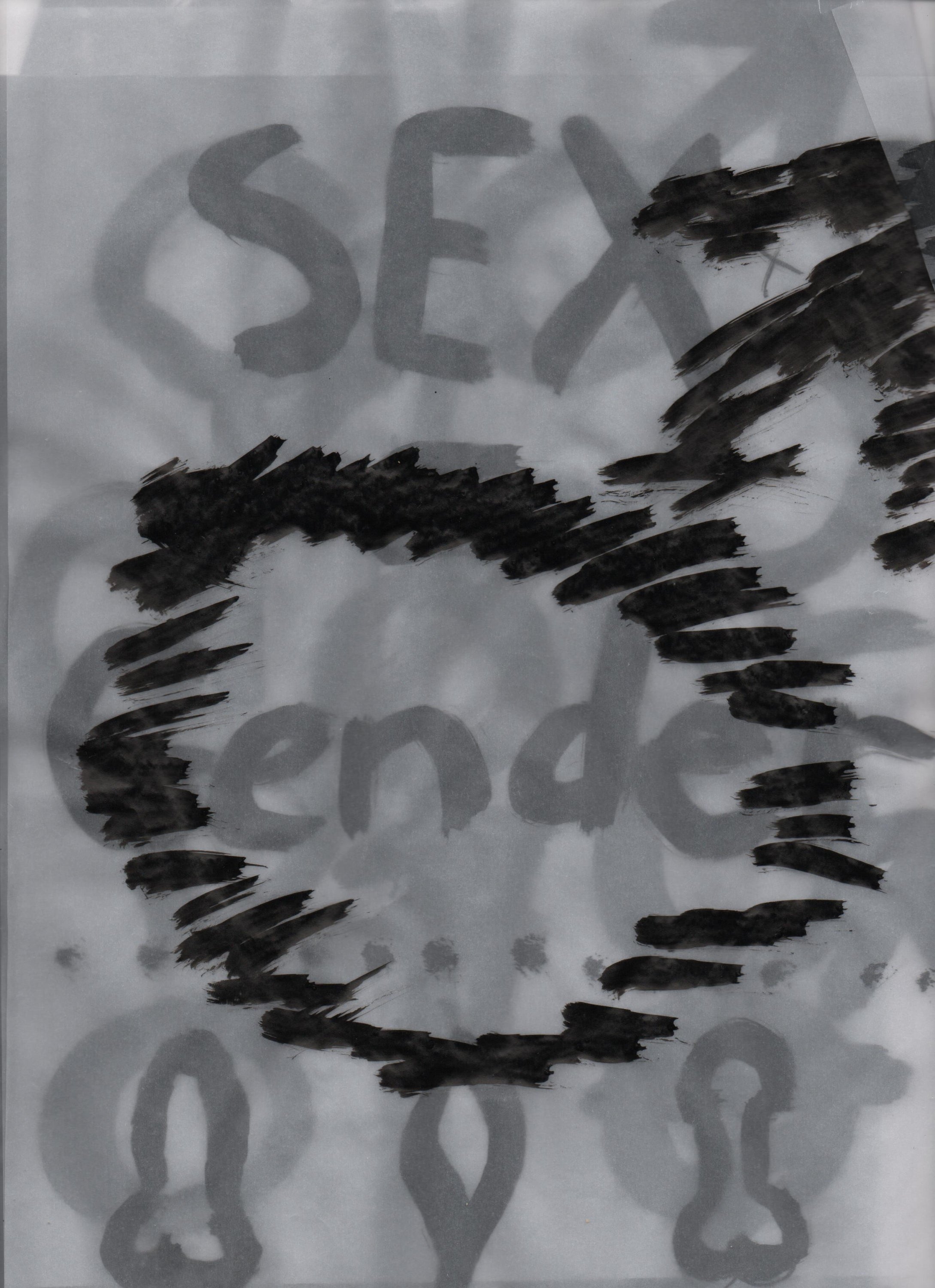
Cut (Future)
Society (Present)
Society (Future)
War (Present)
War (Future)
Human and Nature (Present)
Human and Nature (Future)
Uncertainty (Present)
Uncertainty (Future)
Jenn Addesso
Initially I believe I had a sense that it existed and something was wrong, but I could not put a name to it and therefore spent very little time thinking about what rape culture truly was and the role it played in my life. Now, as I take on this project I am fully confronted by the issue and overwhelmed by the amount of problems and how little things seem to be changing. There are so many things that are wrong with how we are handling sexual assault in our society, from not keeping predators accountable and instead blaming the victims. My hope is that moving forward more and more people can be open to viewing the issue from different perspectives and approaching the problem through different avenues until we can work out a system that is actually effective and prevents these assaults.
Andrew Labre
For my collages, I took a physical cut-and-paste approach. While the guidelines stated
that a digital collage/digital images were encouraged, my limited digital media experience lends my skill-set more so towards physical media. In fact, I prefer making collages with physical media, like magazines, newspapers, brochures, anything I can cut up and paste to a page really. I am a practically minded yet physically tactile person, so being able to reuse and re-purpose these mass-produced items into something creative and expressive is a fulfilling experience for me. For this assignment in particular, where we were articulating our relationships to rape culture over the course our lives, my relationship to rape culture was brought to my conscious awareness. It made me realize the ways in which I was, and currently am, situated within rape culture.
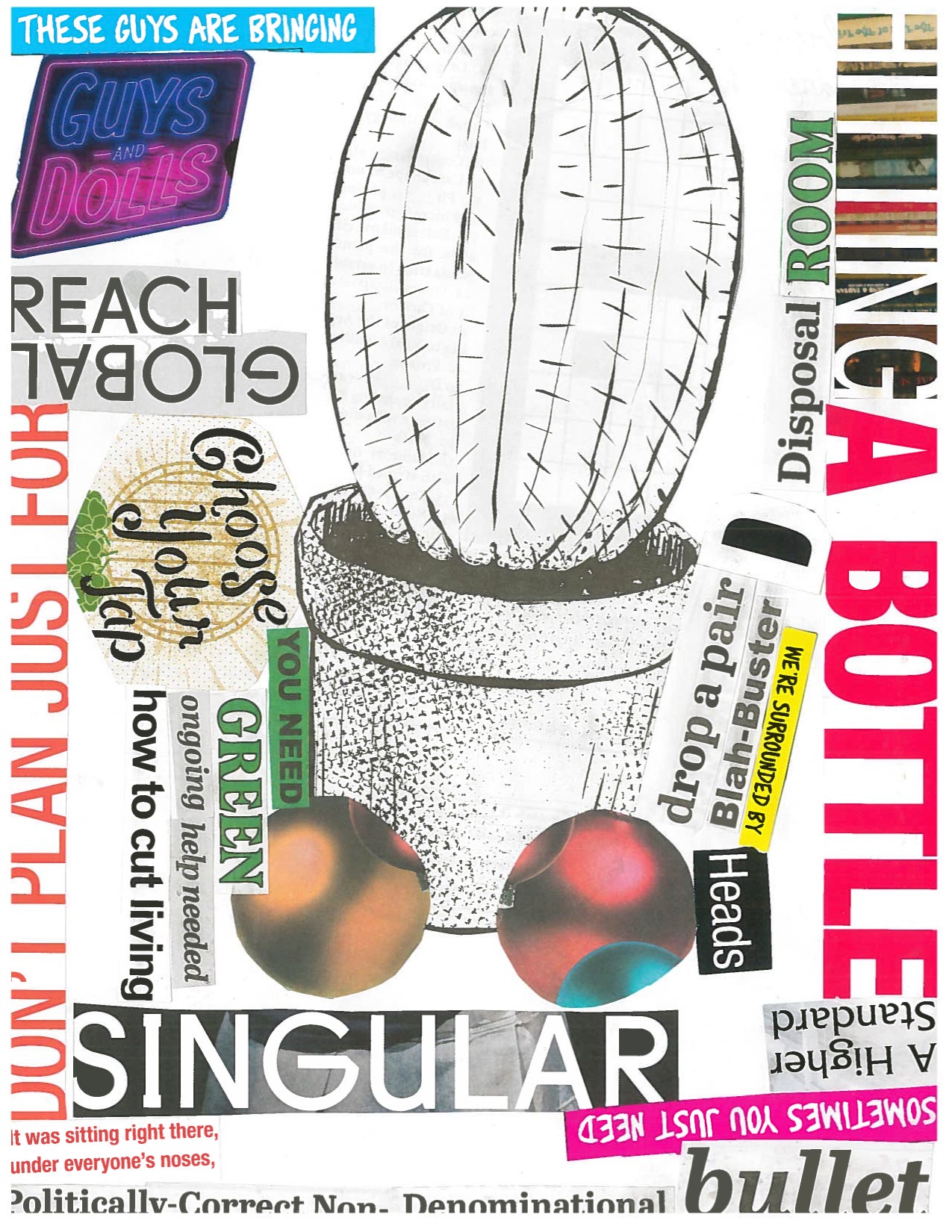
1. (Past)-“Dubious”
This collage represents me being a passive agent in the middle of rape culture: a stationary, non-receptive object that it tries to stick to, surround, and hover around. I was not really aware, let alone knew, what rape culture was. And looking back, I realize that this was reflected in my behaviour and how I was perpetuating rape culture despite trying to be a good, upstanding person. I did not know the wider implications of the things I said to friends when I was out of the classroom and did not have to put up a polite front. Sometimes you are not made truly aware of the things you say or do when it is in conjunction with the people you associate with. It is less peer pressure, and more so group mentality. Certain things are just perceived as normal, or are not addressed for the sake of keeping a stable group dynamic. I did not realize the implications in saying “fuck you,” “kiss my ass,” “what a bitch,” “you’re a cunt,” and other aggression-laden, depowering phrases that seem to pass as normal in everyday life.
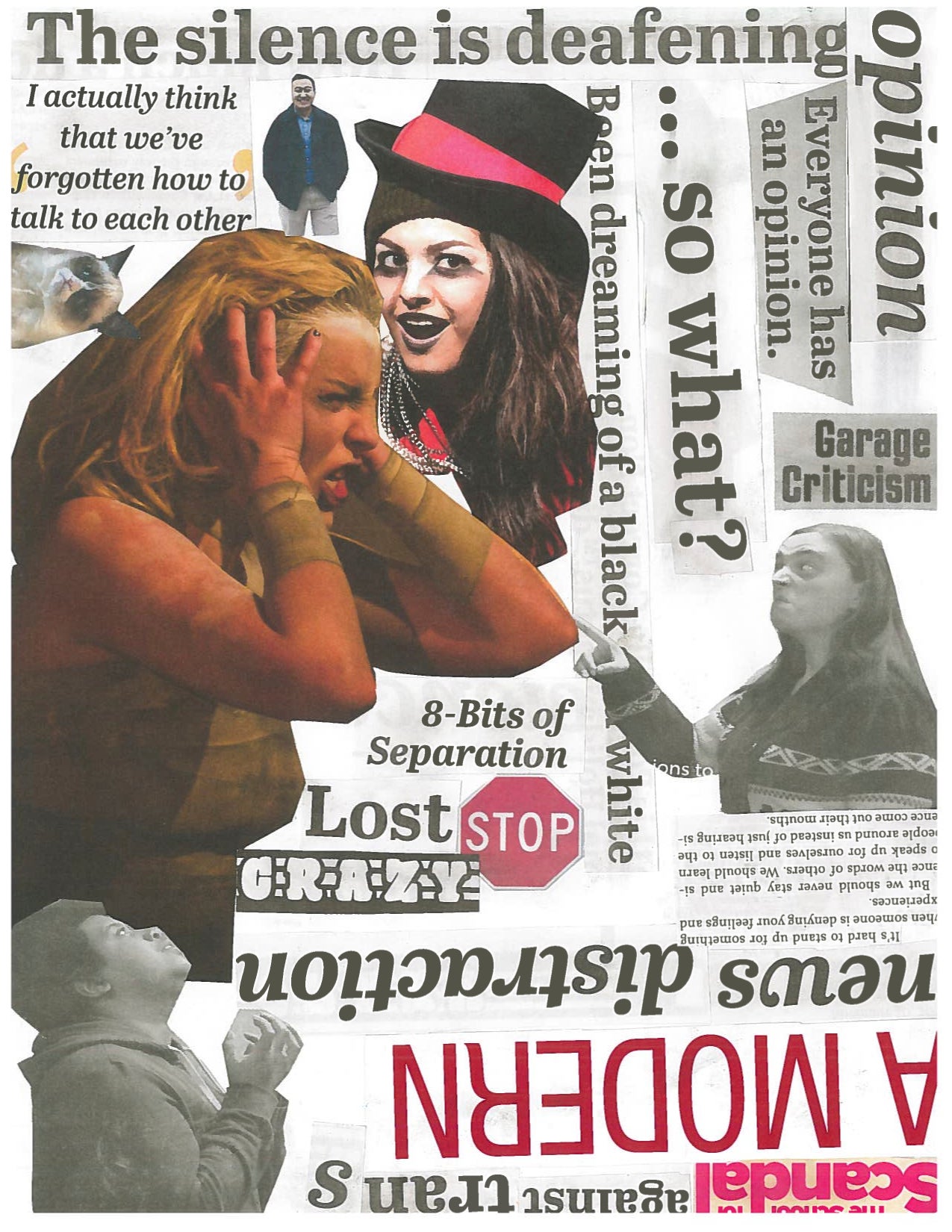
2. (Present)-“NeverStops”
Over the past couple of years I have begun to learn more and more about rape culture, both inside and outside the classroom, as both a social phenomenon and a pervasive issue in everyday life. But it feels like once you are made aware of rape culture, and how it is perpetuated, it is almost unbearable to keep looking at it, because it is quite literally everywhere. It never seems to stop, it never seems to end. It is like a cacophony of voices swarming around you, like little buzzing flies that never leave you alone. Once you go from being a passive to active agent, you see the world for what it truly is, and it is not pretty. It is the little things that are taken for granted, the small things that few notice that causes rape culture to become ingrained in our everyday understanding of the world.
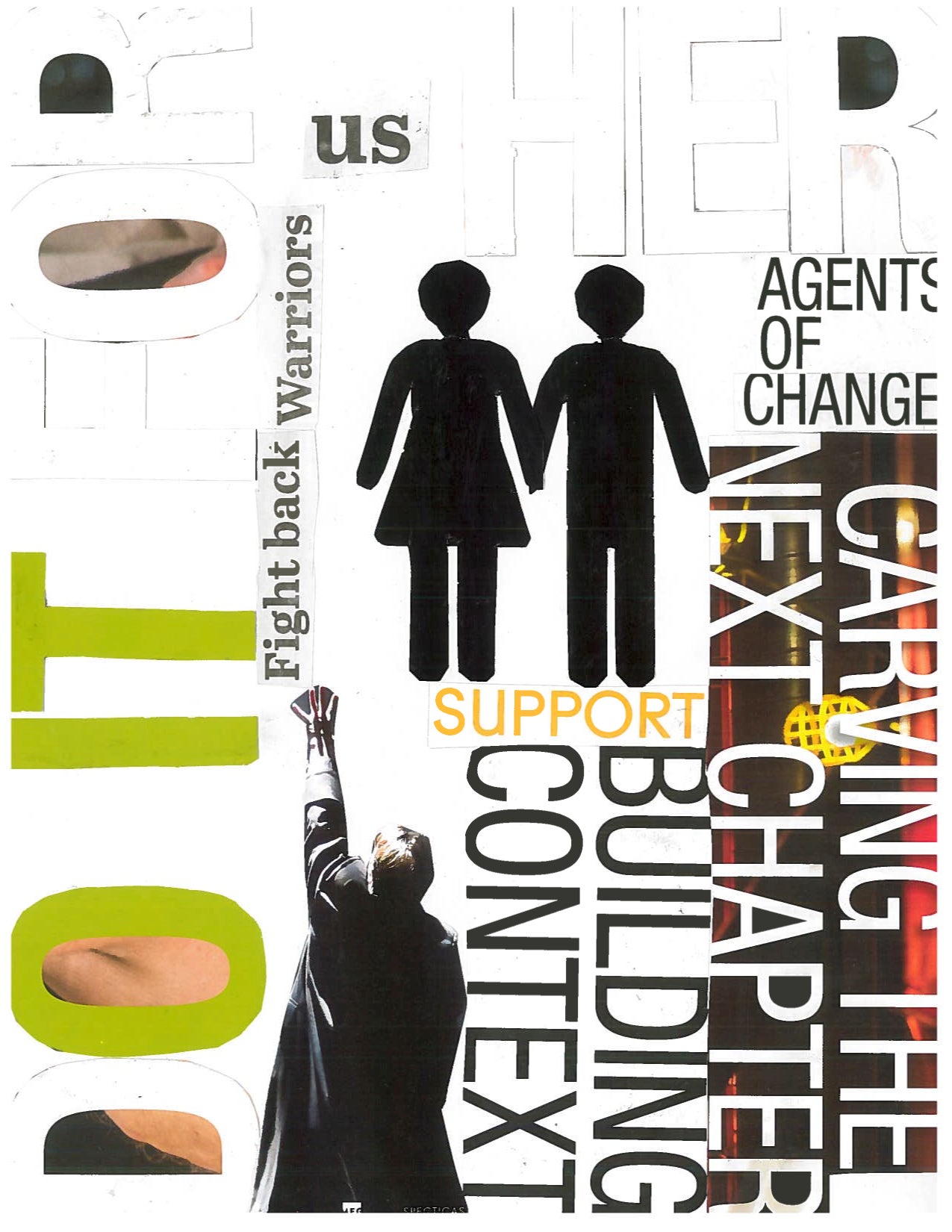
3. (Future)-“Us/Her/Now”
At this point in my life, it is no longer just about me. I can still focus on myself, to keep myself well and in good spirits, but it is not just about that anymore, because we are all implicated in and affected by rape culture. What guides me forward is my relationship with my partner. We have both been severely impacted by rape culture and how it made our lives a struggle. It has beaten us down and torn us apart, but we are still here. We both carry past, lasting trauma with us as we go forward, but we try to work through it. It is not just about me, about me fighting against rape culture, but about the two of us, together, fighting against a world that tells us that it does not want us here. We now have each other to help one another through our troubles and difficulties, both now and going forward. And hopefully we can extend a helping hand to those important to us and give them the support they need. Hopefully we can empower others to take up the fight, to accept their voice, to speak their mind, and enable them as a person to do what they need to so they can be themselves.
Alexandra Porter
My personal relationship with rape culture has at times felt like putting a puzzle together that has no picture. I know pieces go together and that in the end an image will come into focus, but as I search for the right words and struggle to wrap my brain around concepts that I had been taught to think of as normal I’m slowly realizing that my ignorance of what was “normal” is exactly what rape culture is. Growing up I listened to music, read books, and watched shows that taught me that I should want men to have no control around me. I learned that what a woman should be is desirable and chased. I entered into relationships that were unhealthy and never thought twice about how my partner was acting because “boys will be boys”, and I should want them to want me. Entering drama 368 in the fall I was only just beginning to wonder how rape culture affected my own life, and as I grasp fragments of new information and view this topic through different lenses I’m slowly beginning to find the right words to describe my own experiences and reevaluate my life in connection to rape culture.
Past
Present
Future
Cameron Smith
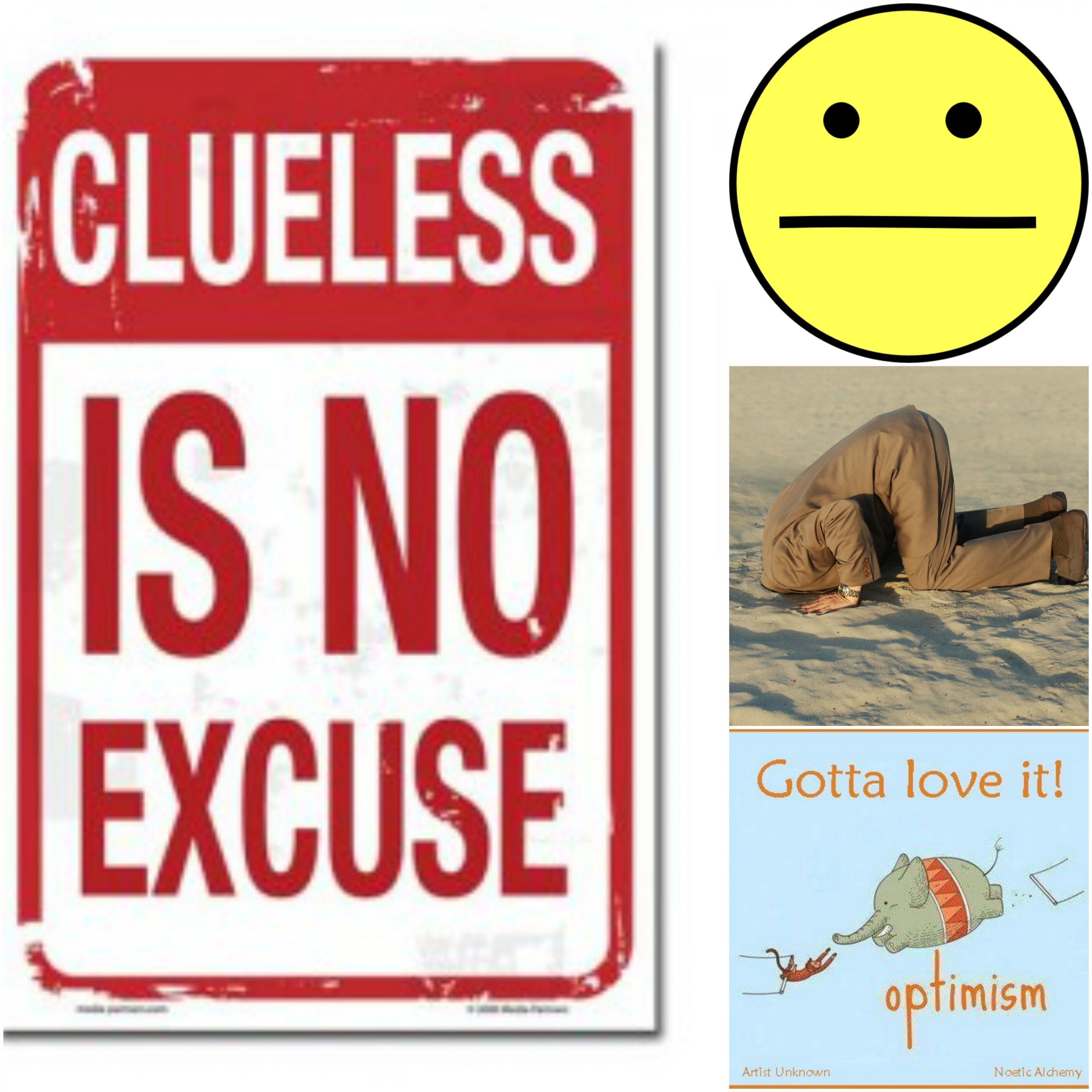
Fortunately I have had no real encounters with an abuser or someone who wanted to hurt me in a sexual way. However I know numerous people (too many people really) who have had this kind of encounter. These people are my peers, my friends, my family. The fact that something like Rape Culture has affected these people at all and continues to affect people in such a way gives me enough of a reason to want to fight against it. Unless we educate people in a way that allows people who perpetuate this behavior to understand what they are doing is wrong - the problem will never be solved. So in short, my relationship with Rape Culture is an understanding that it goes deeper than traditional rape and sexual assault and that it will take a lot of unlearning to truly get past this epidemic. Large and arduous but not impossible.
Past
Present
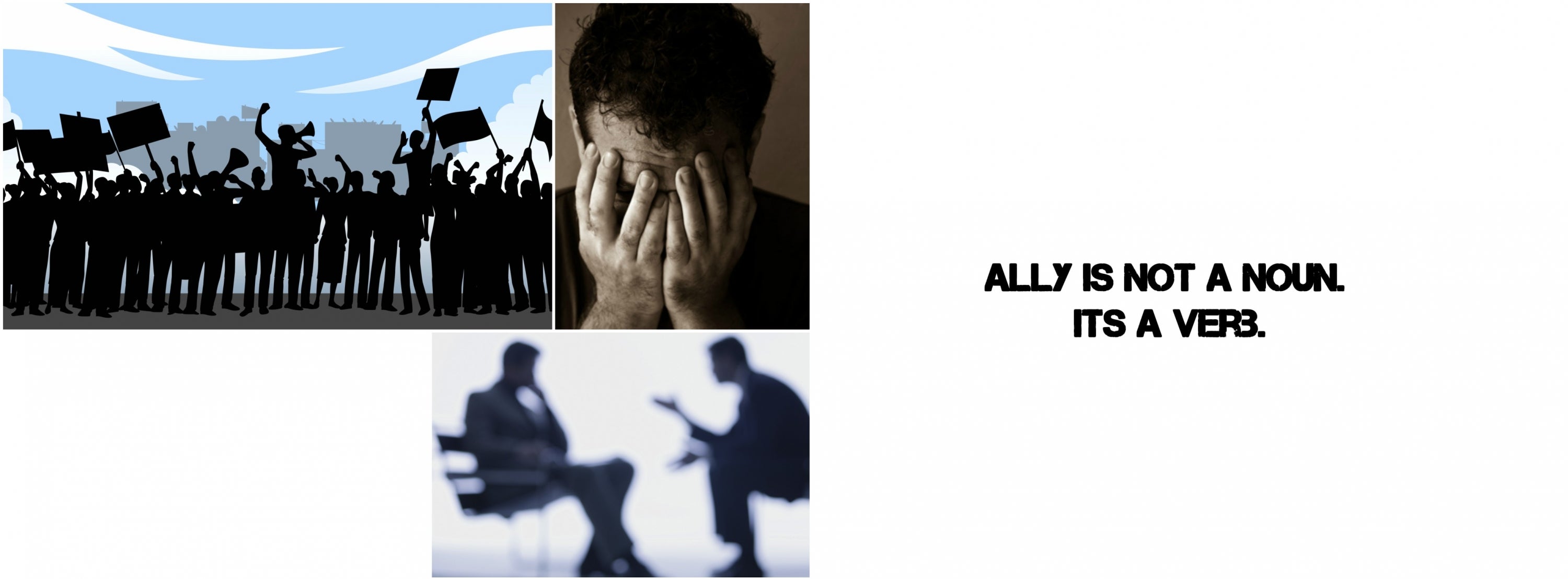
Future
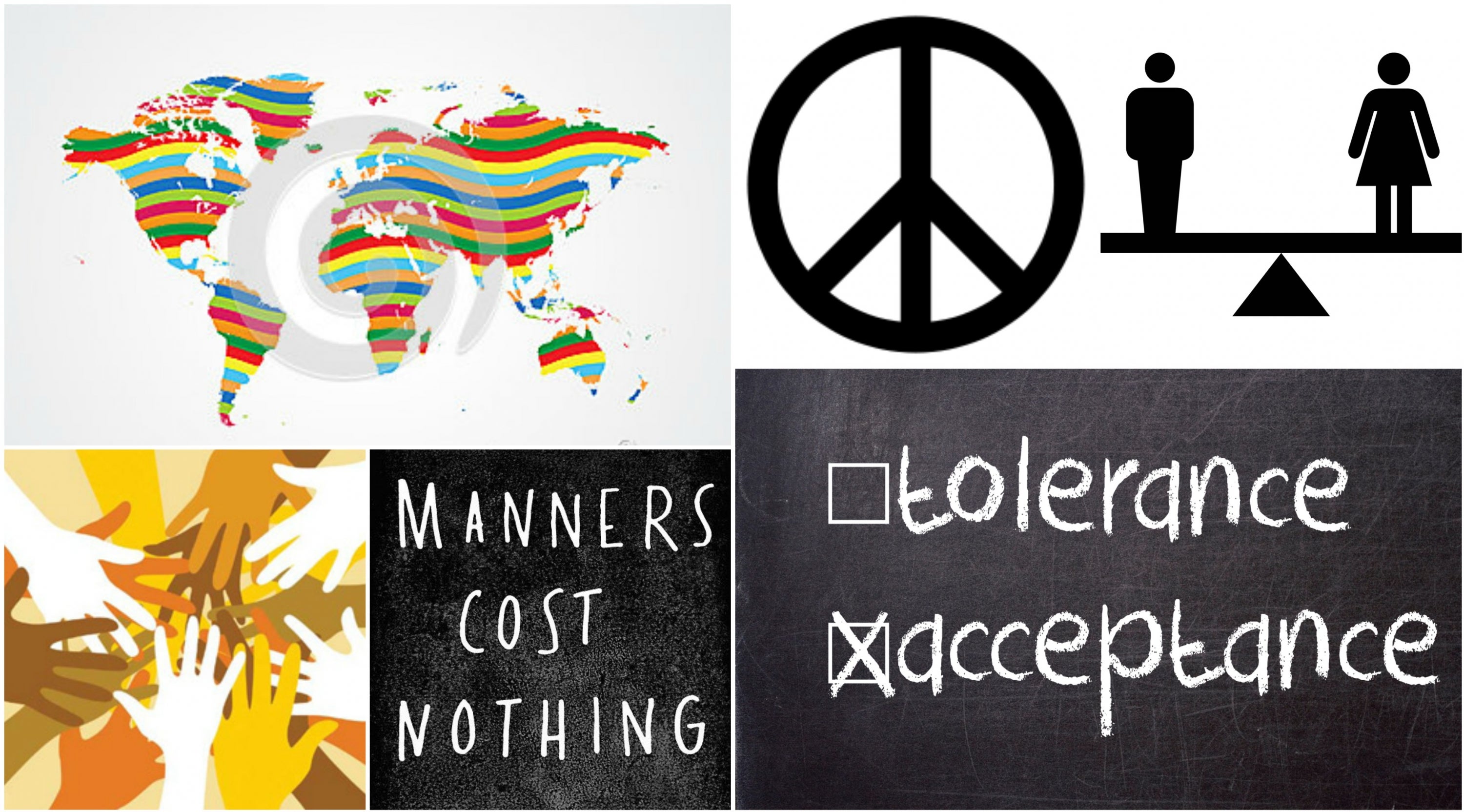
Katrina Romanowich
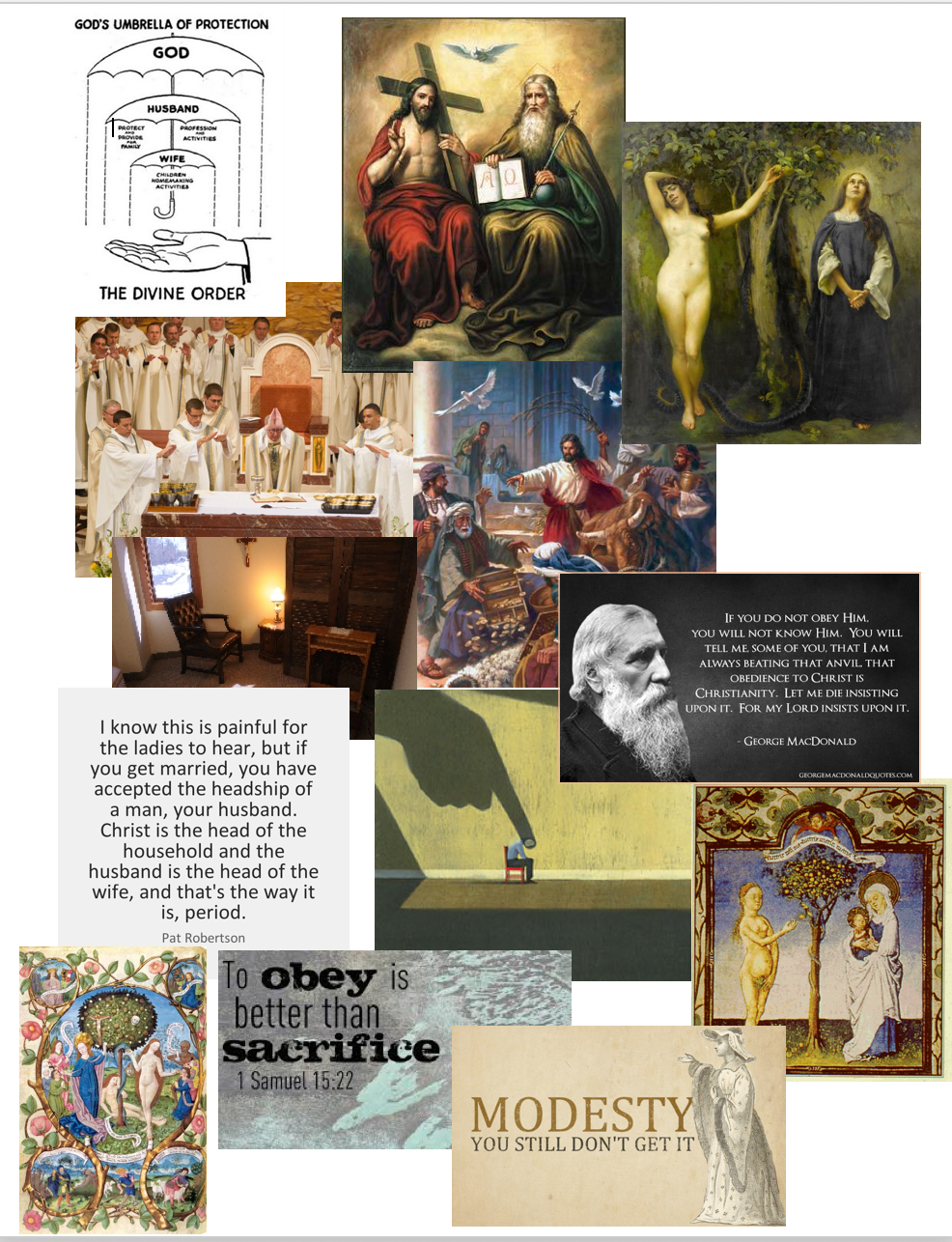
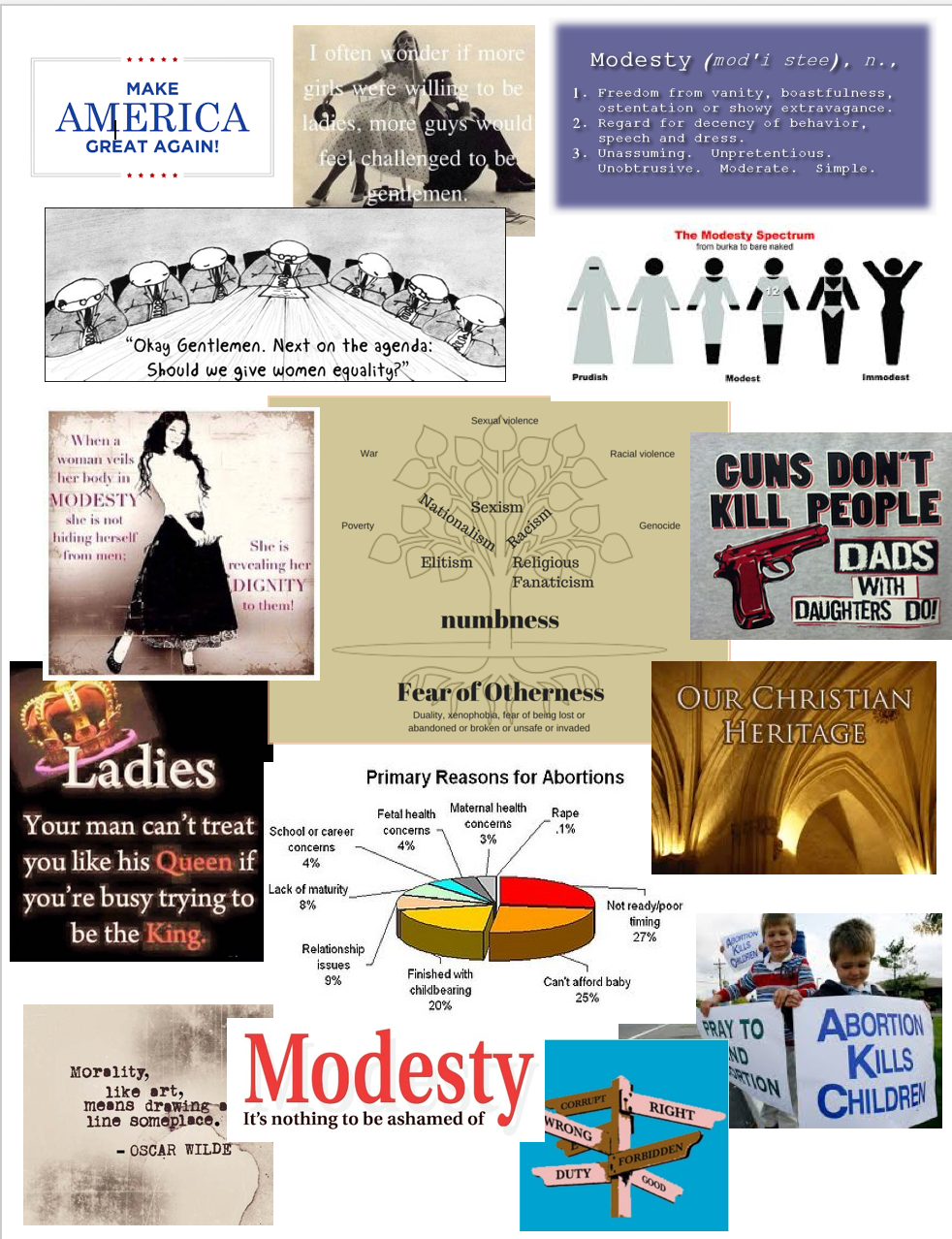
Rape culture, to me, is the result of misconstrued notions of morality brought down to us through organized religious institutions proclaiming there to be a supreme creator of the universe who is specifically male, and who requires all of 'HIS' earthly representatives to be so. The supreme creator of any of these religious institutions has in mind specific rules by which his creations must obey which always include rules regarding the worship of Gods from other religions (and how this is absolutely not allowed and evil) and sex; between whom and under which circumstances it can occur and how women play a role in men deviating from that which is good. This has created hierarchies and otherness between sexes, skin colour differences, and cultures over the centuries.
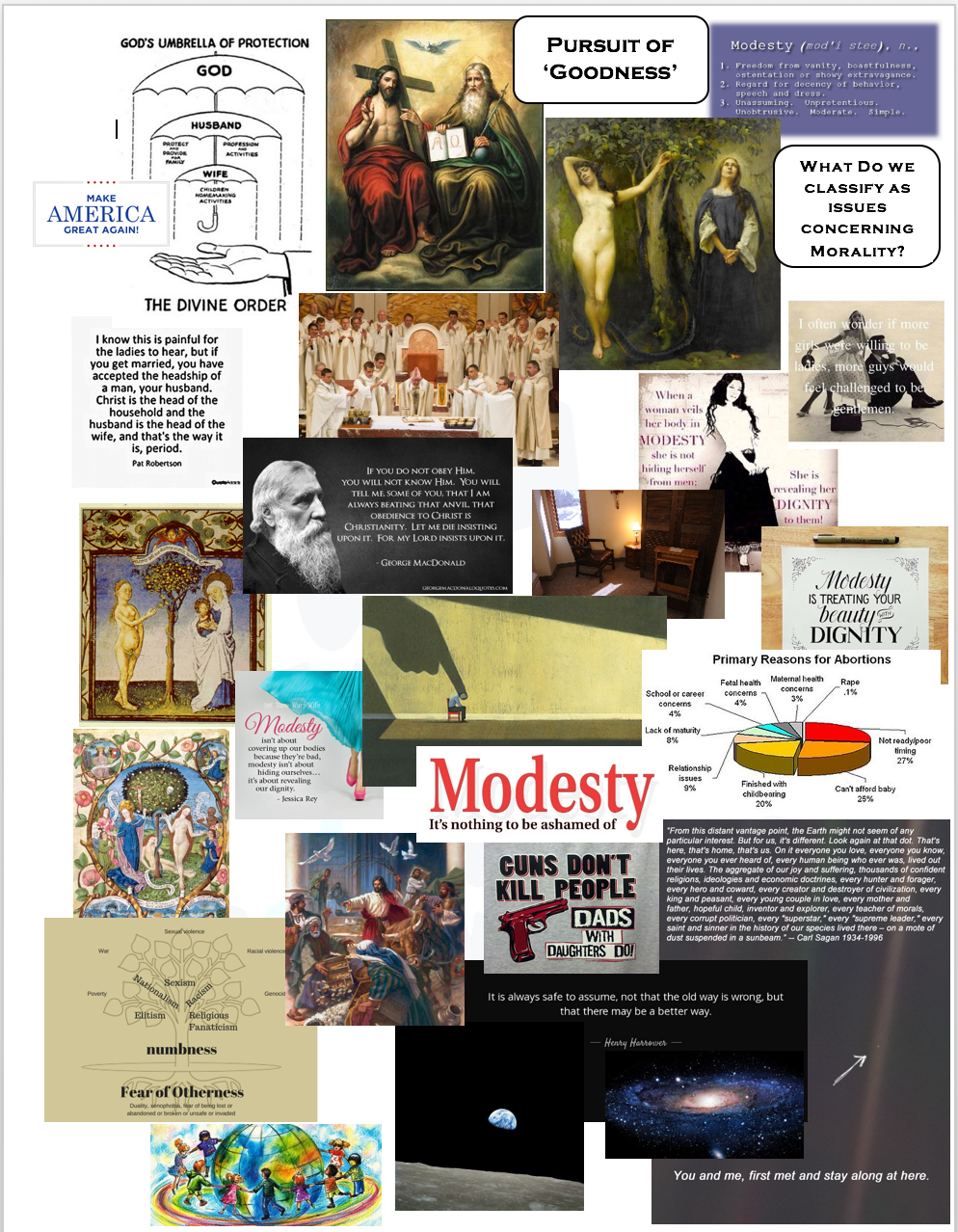
Past
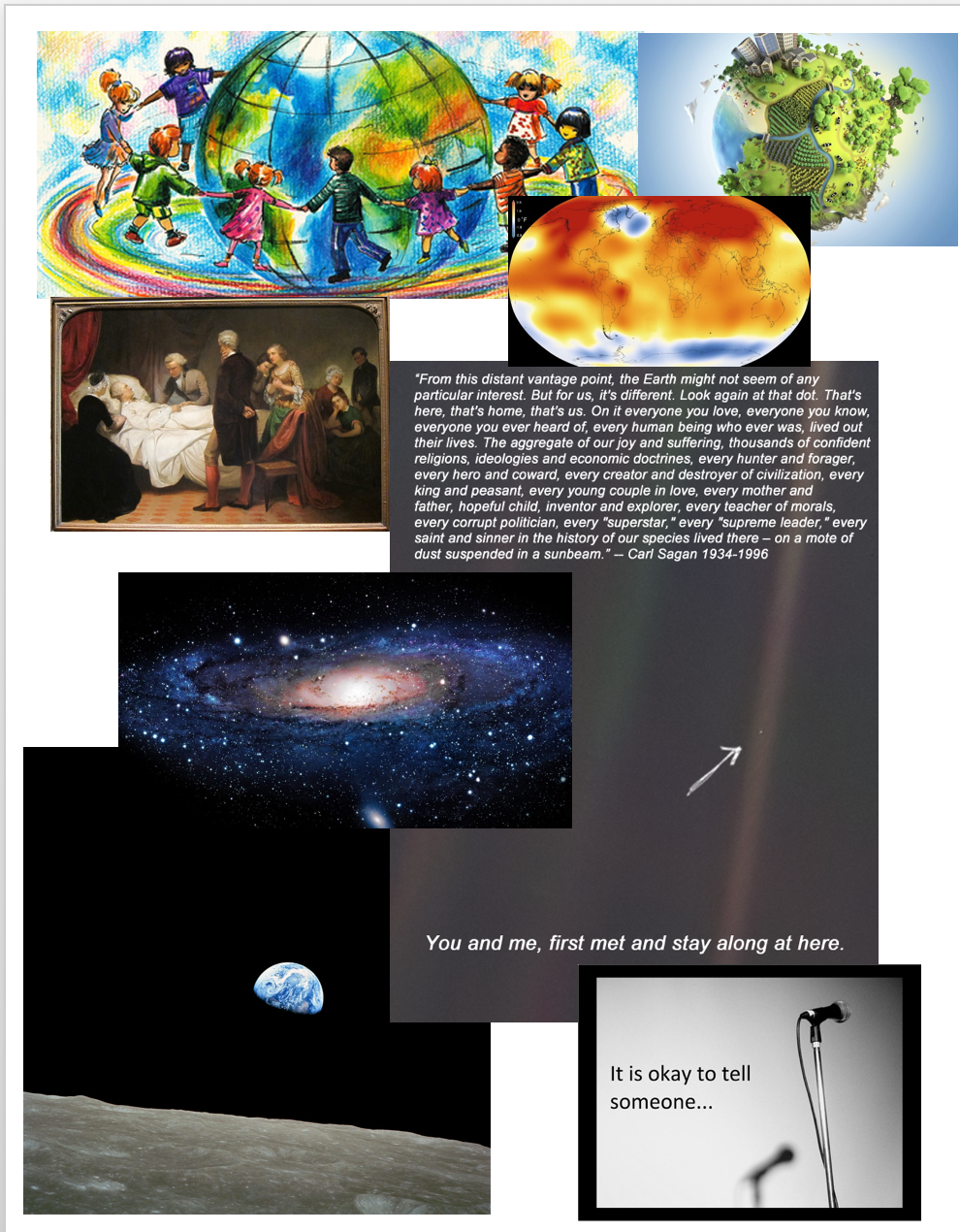
Present
Future
Holly Bouillon
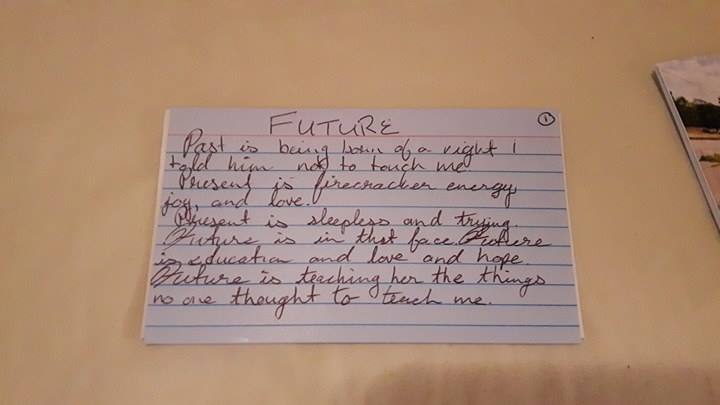
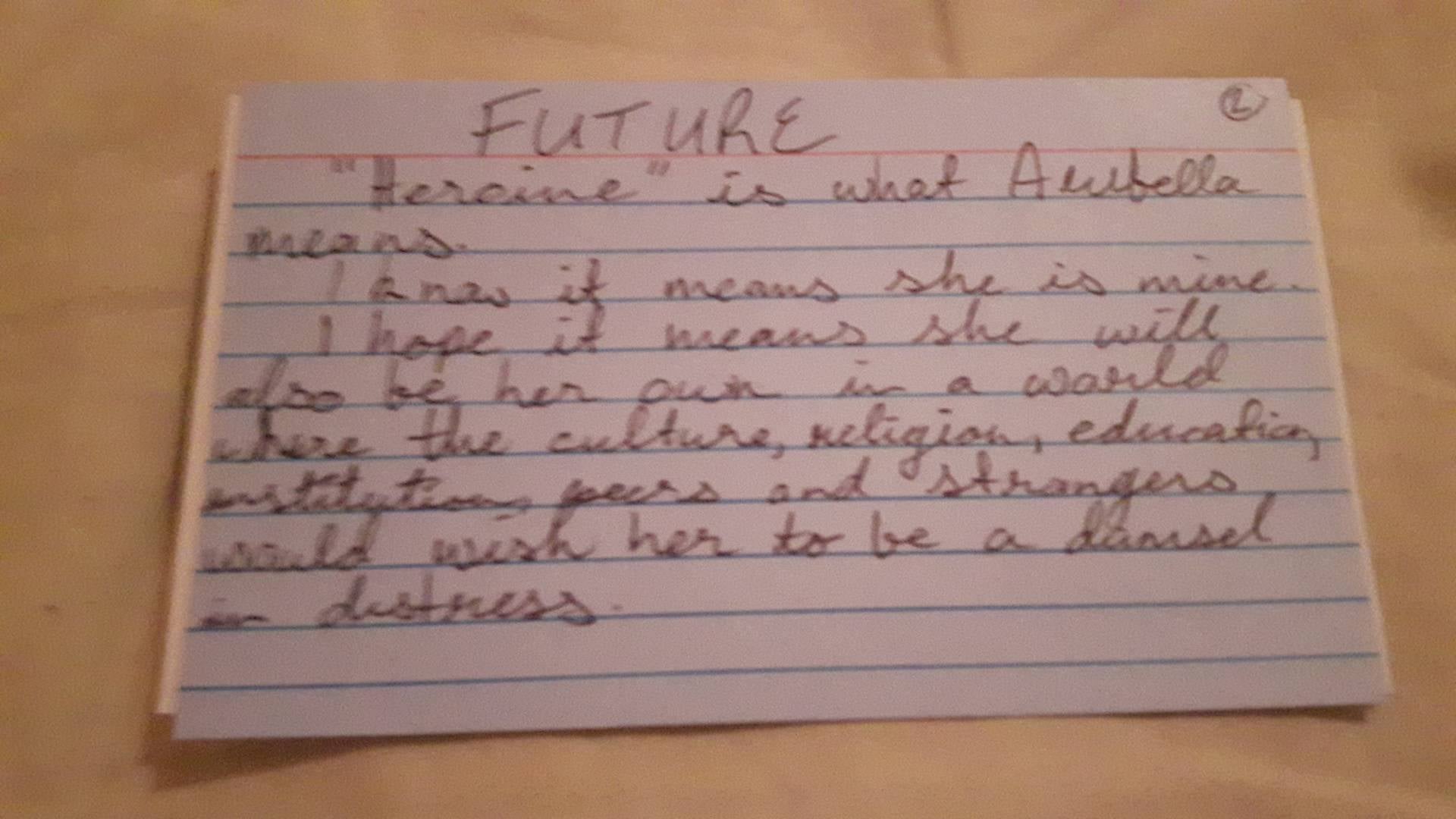
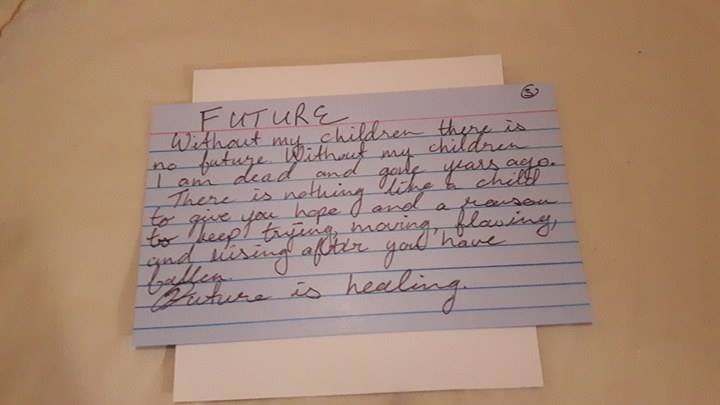
Envelopes: This piece is really meant to be tactile. The experience is different when you watch my past unfold, hold my present in your hands, and flip through my future. Imagine, if you can, we are sitting across from each other and I present you with each sealed envelope containing the story of how rape culture has influenced the ways in which I approach this piece.
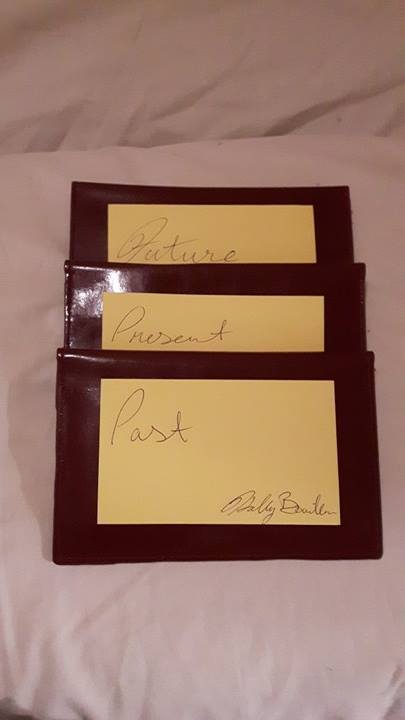
Past:
“I come from a city founded by rape.” I come from a city where we proudly celebrate our history as “Chief Brant’s Crossing,” while housing one of the largest genocides of Aboriginal bodies on Canadian soil. Brantford’s residential school, one of the first to open and the last one to close, is a truth that I, as a white child of the generation after, was sheltered from. It was a story that was hidden from me until my adulthood. But only explicitly.
I come from a city where the bodies of naked women and First Nations Peoples are displayed in celebration of things white men have done.
I come from a city where there are too many reminders of what I am supposed to deserve, and the power I am not supposed to have.
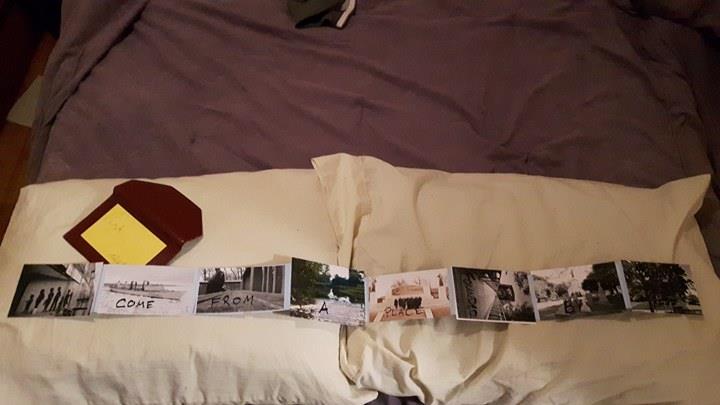
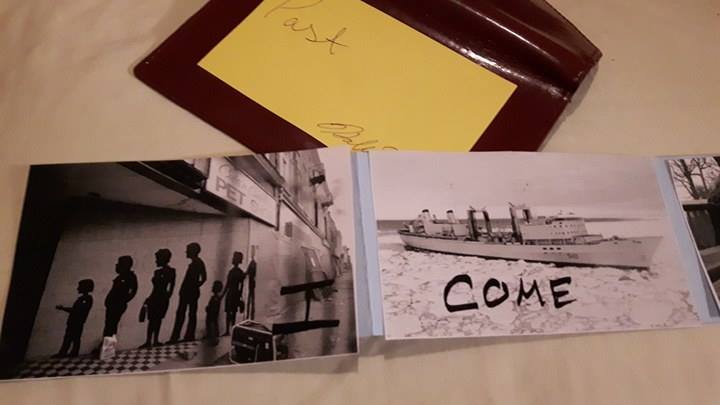
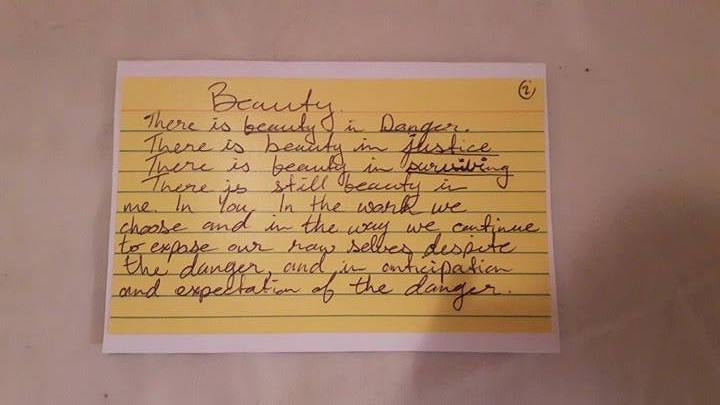
Pictures 1 & 2 (below): The first picture in this series shows the downtown when I was a child. It was empty shops and empty buildings next to the old Eaton Center. My mother told me that an “Indian curse” was the reason the downtown failed. The next picture is of the ship my father sailed in the Royal Canadian Navy. I have so much respect and pride for my father, and he is an amazing man, but the Navy had an influence on his and my views of women, of proper behaviour for men, and on a “boys will be boys” mentality. I think that his time in the Navy is the reason my father felt the need to tell all my boyfriends about his collection of guns.
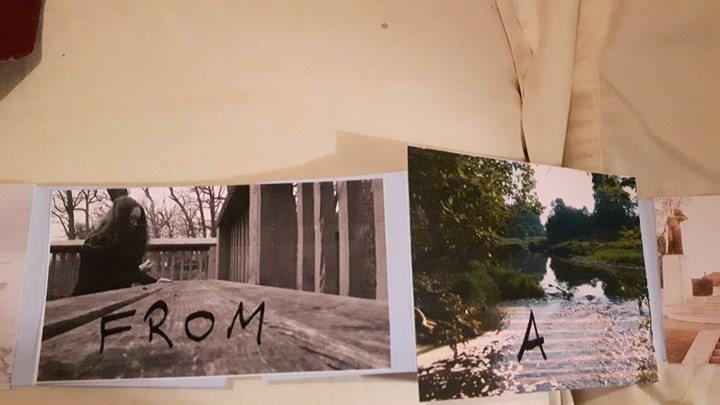
Pictures 3 & 4 (below): The third picture is myself reclaiming a place of trauma. The fourth picture is of the Grand River, similar to the view from the place I reclaimed and from the bridge in a later picture.
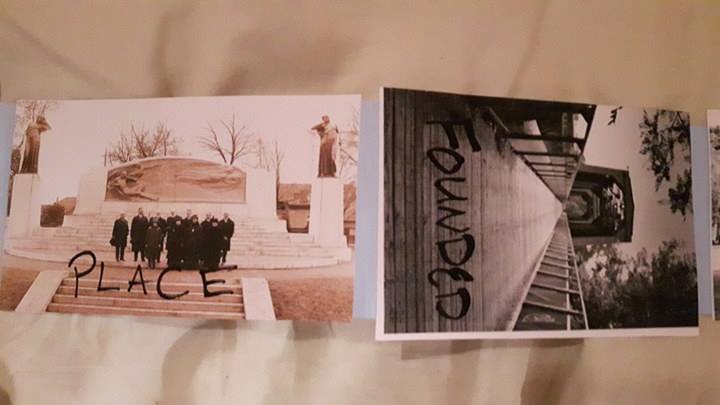
Pictures 5 & 6 (below): The fifth picture is of a monument to Alexander Graham Bell, for “sending sound through space,” flanked by two partially naked women. The sixth picture is of the aforementioned bridge where I went to die as a teenager.
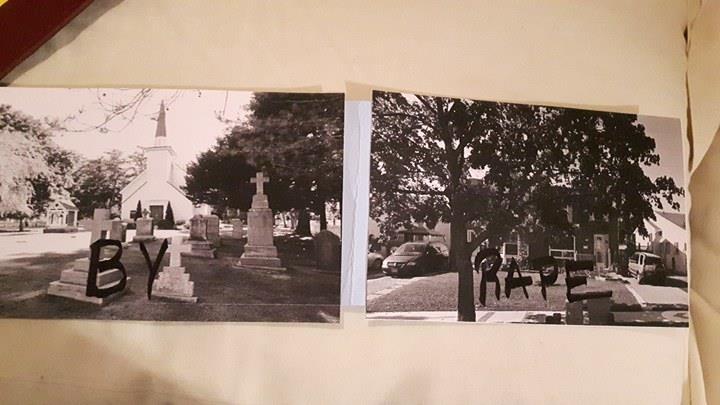
Pictures 7 & 8 (below): The seventh picture is of Mohawk Chapel, a Catholic chapel built near the residential school on Indigenous land. The final picture is of the house where I was raped for the first time.
Present:
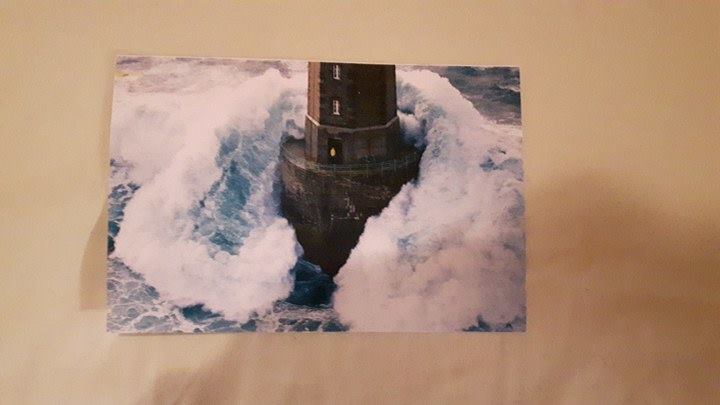
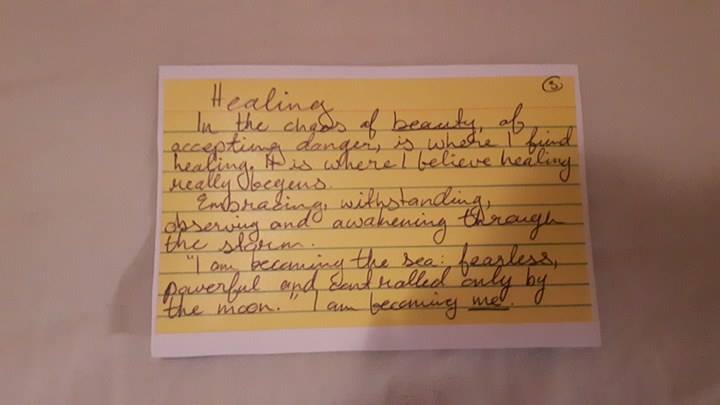
Washing. Clean. Salt. Moving. Flowing. Beauty. Danger. Healing.
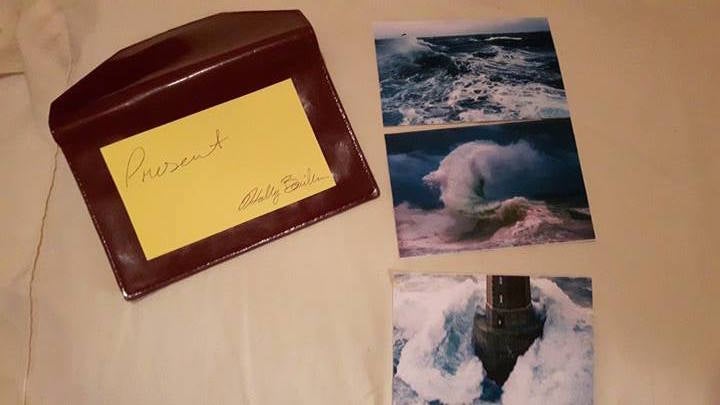
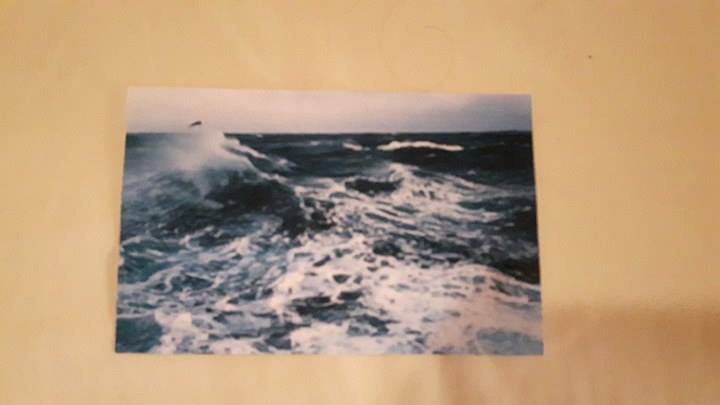
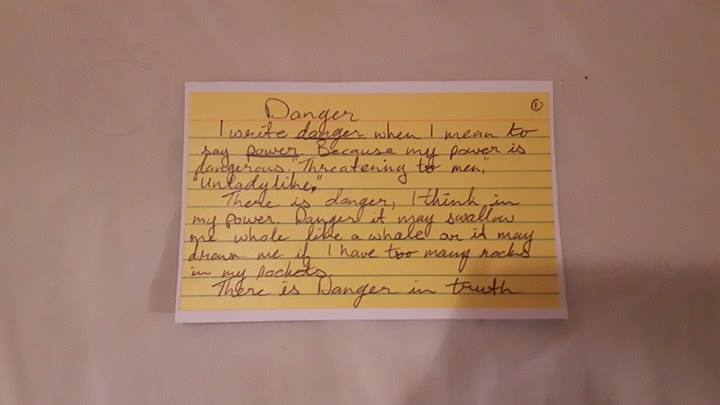
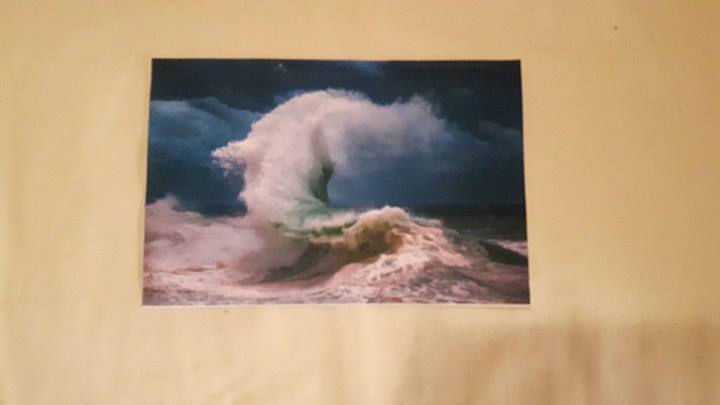
Future:
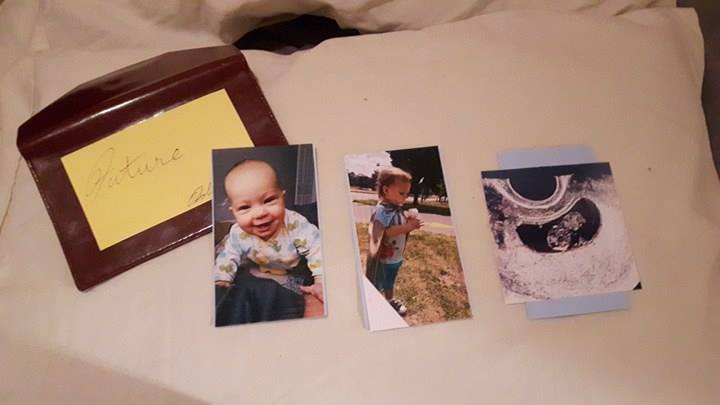
Learned strength, natural strength.
Learned worth, intrinsic worth.
Learned hope, hopefulness.
Carly Ann Derderian
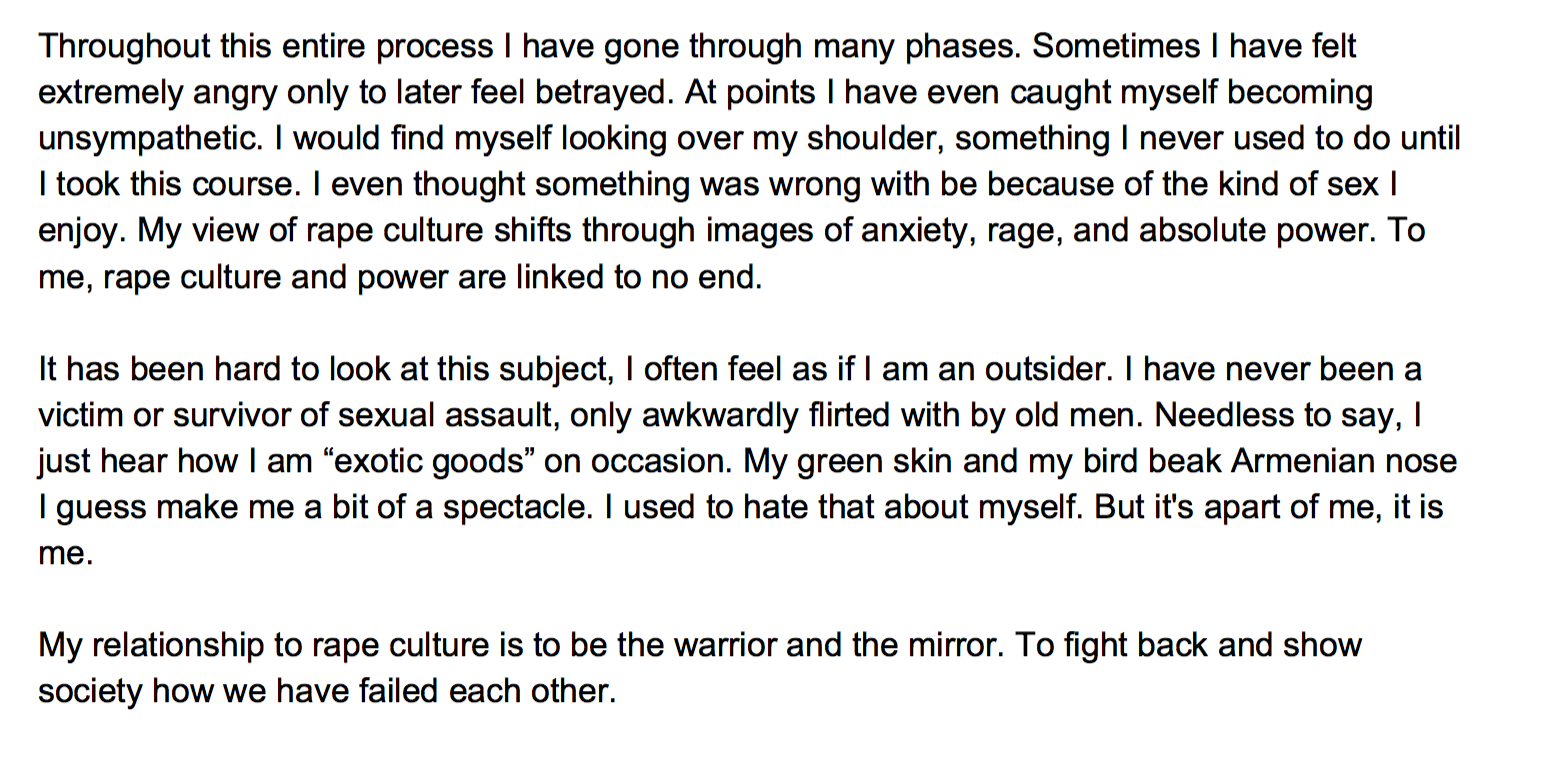
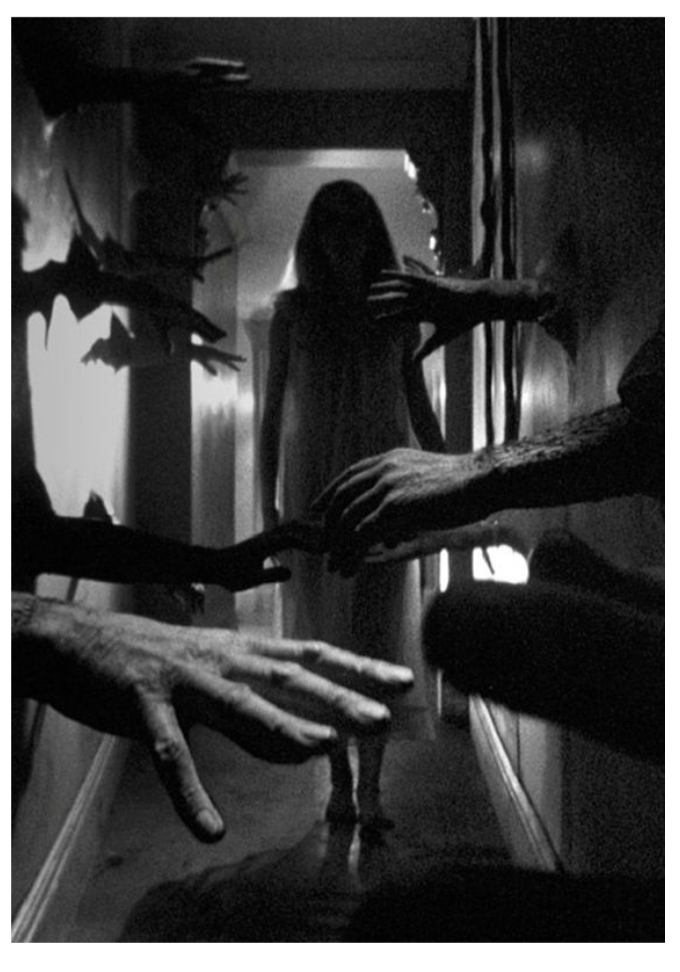
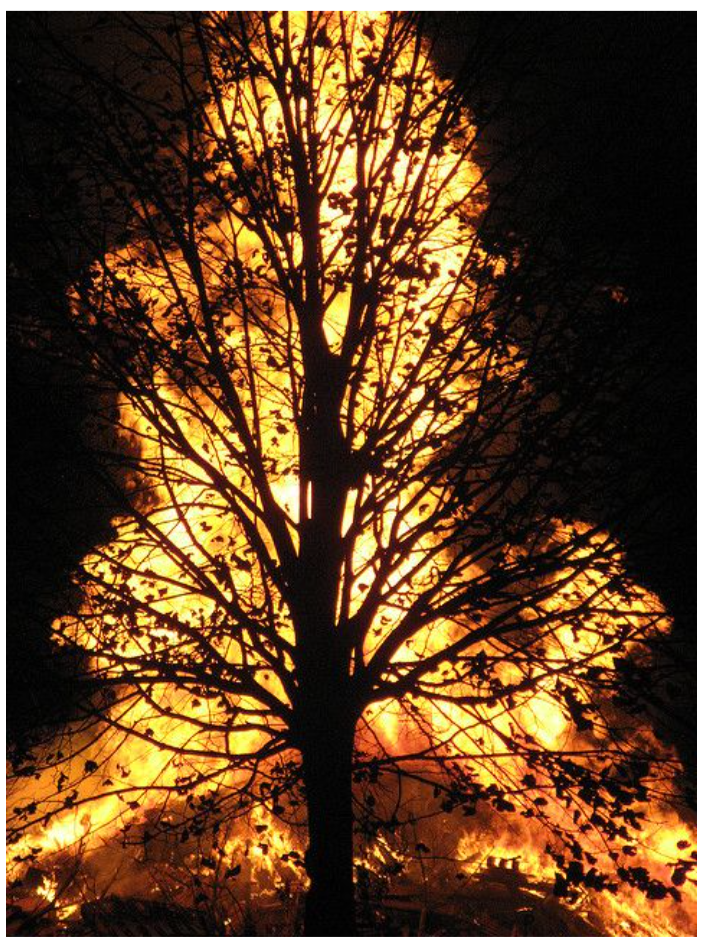
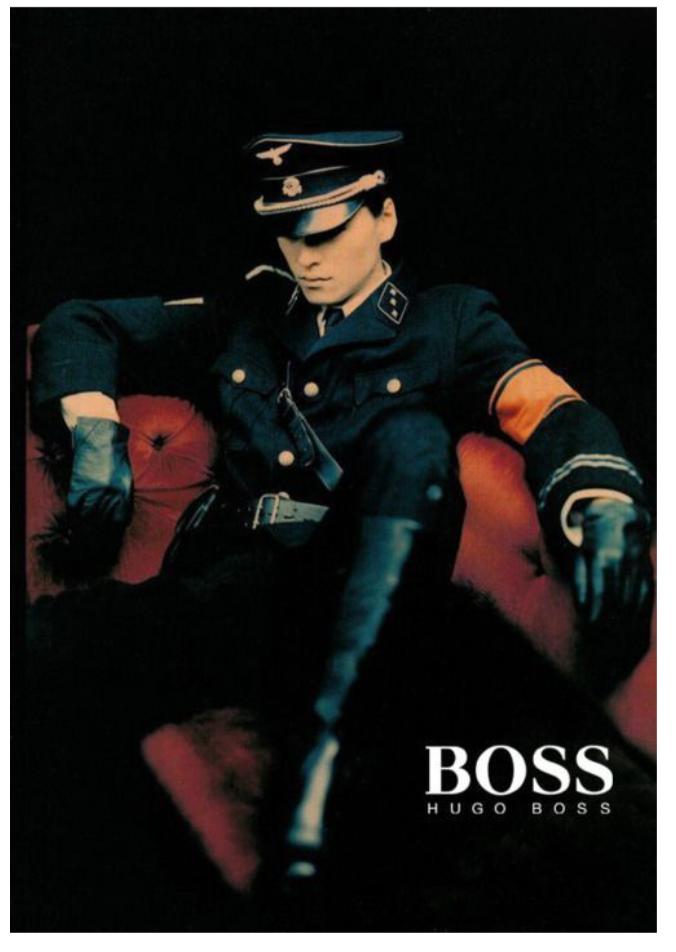
Abbi Longmire
As a woman, I have inherently grown up with a very prescriptive relationship with rape culture. Rape culture was my teacher, it taught me that I was less valuable than men and while I must be attractive but not ‘too slutty’ it does not really matter because ‘boys will be boys’ regardless. I am a prize to be won and if I say no that is jut part of the chase; I owe it to men to ‘give them a chance’. Rape culture was the voice in my head that told me I deserved this treatment and that my high-school boyfriend ignoring my no’s and crying were normal. Rape culture told my friends not to believe me when our mutual friend’s hands explored my semi-conscious body. Rape culture made me doubt my date rape 2 years ago. Rape culture is like an abusive partner, always looming over trying to control you and make you doubt yourself.
Past
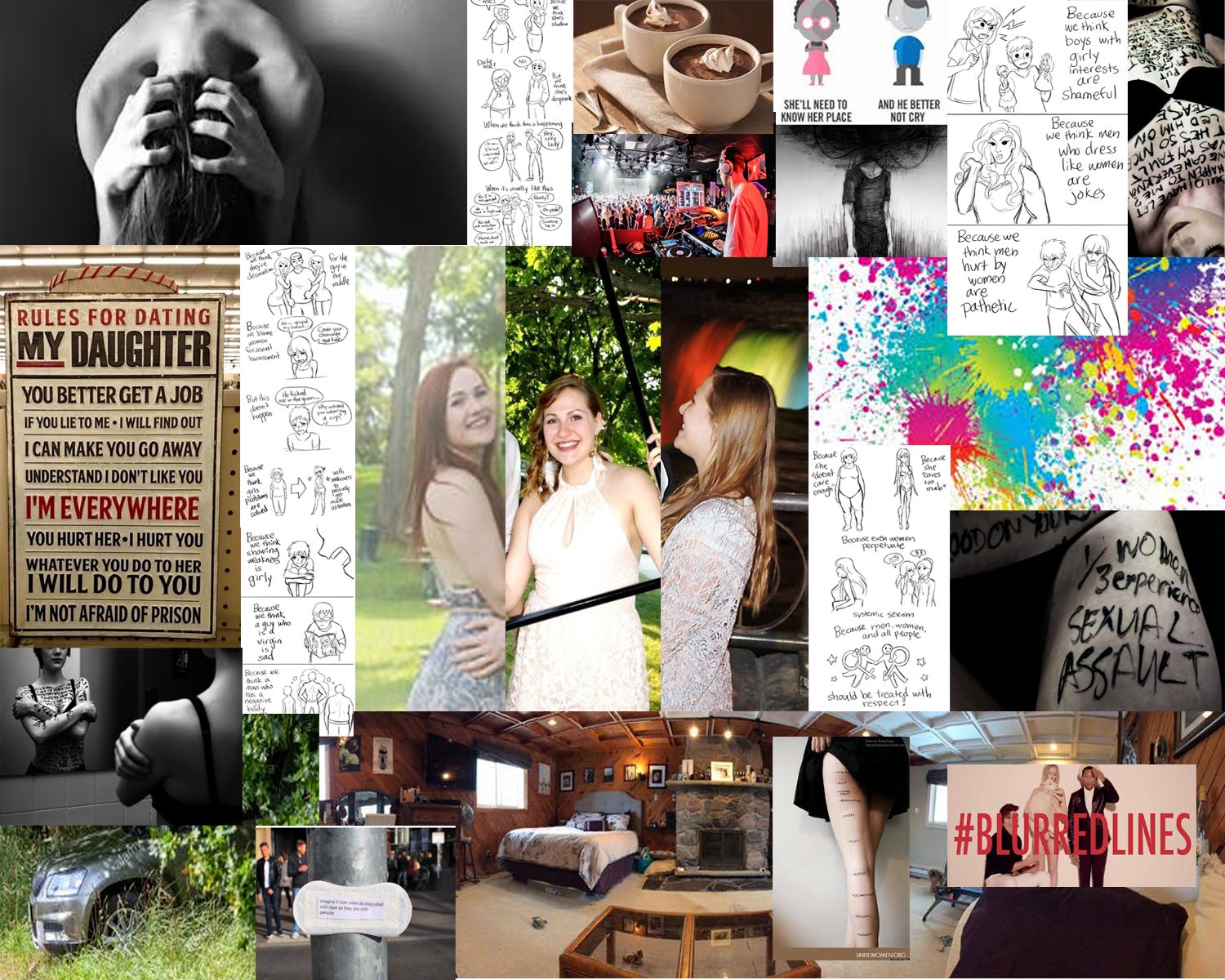
Present
Future